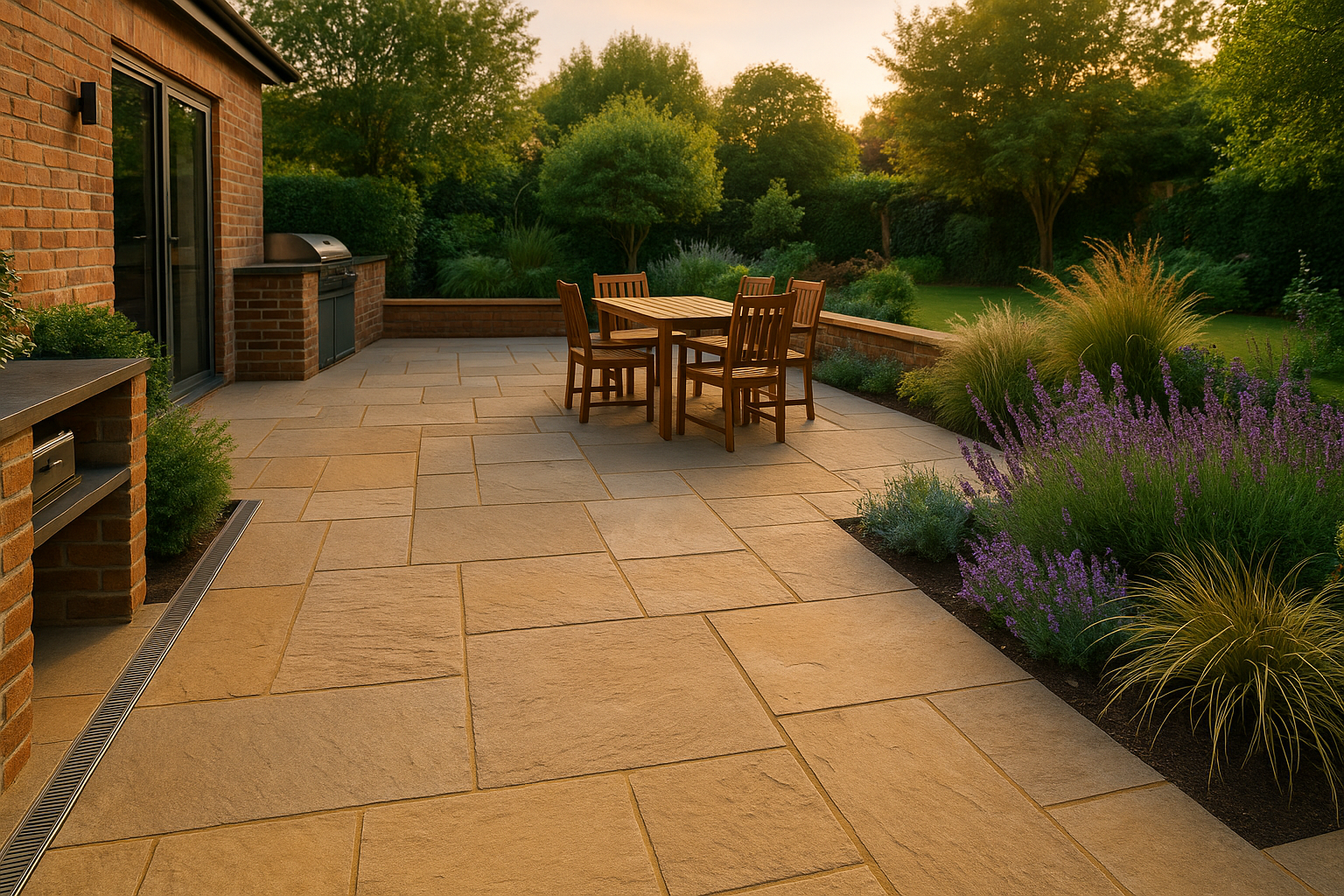
A natural stone patio brings character that manufactured materials struggle to match. Every slab has unique veining and tone, which makes the space feel established from day one. Stone is durable in British weather, easy to live with once detailed correctly, and it pairs beautifully with planting, timber and brick. If you want a terrace that looks at home beside your property and ages gracefully, natural stone is a strong foundation for any outdoor scheme.
Picking the right stone for your home
Start with the style of your property and the light in your garden. Sandstone offers warm, varied shades that suit traditional brick and cottage settings. Limestone gives a tighter, more contemporary grain with cooler tones that flatter render and modern extensions. Granite is dense, speckled and very hard wearing, ideal for busy routes and dining zones. Slate has strong colour and texture for smaller patios or courtyards. Bring samples outside and look at them in sun and shade so you can judge how the tones shift through the day.
Finish and slip resistance
Texture matters in the UK climate. A lightly riven or shot-blasted finish provides grip in the wet while still feeling comfortable underfoot. Very smooth or polished surfaces can be slippery when it rains. For steps and edges, consider a subtle contrast or a pencil line to make the nosing easy to see at night. If you plan a hot tub or cooking area, choose a finish that stays grippy with a film of water or oil.
Colours
Natural stone loves company. Pair warm buff or golden sandstone with honey timber and bronze accents for a relaxed, timeless palette. Match cool grey limestone or granite with charcoal metalwork and mid-tone timber for a clean, modern look. If your home has mixed stone or brick, echo one of the lighter tones in the patio and repeat the darker tone in planters or edging so the whole composition feels intentional.
Laying patterns
The pattern is more than decoration. It guides movement and defines spaces. Random length layouts create a relaxed, informal feel for family terraces. A coursed pattern gives calm order beside contemporary architecture. Setts used as a border frame the space and protect edges from scuffing. Herringbone setts in entrances add traction and a crafted detail. If your patio steps down to a lawn, run a soldier course along the edge to give a crisp transition.
Base, falls and joints
A beautiful patio earns its keep when it drains cleanly and stays level. Prepare a well compacted sub-base on a solid formation. Establish gentle falls away from the house so water never sits at the threshold. Lay stone on a full mortar bed for consistent support, not dabs. Keep joint widths uniform and use an appropriate jointing compound or mortar. On clay sites, include linear channels and silt baskets at key points with easy access for cleaning. These details matter more than any catalogue photo.
Doors and thresholds
Modern bifolds and sliders sit low. Protect them with a discreet channel drain and a small height step down to the patio so wind-driven rain cannot track indoors. A matching stone threshold or a neat metal drain edge keeps the look tidy. On older properties with higher sills, keep the first course of stone consistent to avoid awkward cuts, then step down with a gentle riser or two to the main terrace.
Cooking, dining and lounging
Stone makes a stable base for furniture and outdoor kitchens. Plan a dedicated cooking zone at the edge of the terrace with safe clearances to timber and planting. Keep a landing space either side of the grill so trays can rest without a scramble. Locate dining where evening light falls and allow room to pull chairs back without catching planters. Place lounge furniture where you get winter sun and wind protection. The patio becomes more useful when each area has a purpose.
Stones and Plants
Stone holds warmth and frames foliage beautifully. Use evergreen structure for year-round shape, then weave in soft grasses and seasonal colour. Herbs such as thyme and rosemary thrive near warm stone and release scent when brushed. In small courtyards, climbers on wires lift planting without stealing floor space. Leave occasional pockets between stones or along edges for thyme, saxifrage or creeping rosemary to spill over.
Lightings
Layer light rather than relying on a bright flood. A focused task light by the grill keeps cooking calm. Low bollards or recessed markers along routes prevent trips without glare. A soft wash on a feature wall or specimen tree adds depth. Warm colour temperatures around 2700–3000 K flatter stone and make food look appetising. Put controls where you can reach them without crossing the hot zone.
Heating and shelter
A louvred pergola or simple canopy keeps showers off and controls glare on hot days. Position side screens to take the edge off wind without trapping smoke. Choose discreet radiant heaters aimed at seating rather than large glowing boxes. Shelter and gentle heat make spring and autumn evenings feel generous, which means you get more value from the patio.
Care and maintenance
Natural stone is straightforward if you keep to gentle habits. Sweep little and often to remove grit. Treat algae as soon as it appears in shady corners. Use a pH-appropriate cleaner for your stone type and rinse well. Avoid harsh acids on limestone and slate. Repoint or top up joints if they open so water does not sit under edges. Heavy pressure washing should be rare and followed by joint repairs where needed.
Common mistakes to avoid
The most frequent problems come from flat levels, narrow joints and incomplete support under slabs. Another is choosing a colour that fights the house. Test samples against your walls and look at them when wet. Finally, resist the urge to build right up to the fence on every side. Leaving a planting strip softens the edge, improves drainage and gives you a place for lighting cable routes.
Budgeting and sensible phasing
If funds are tight, build the base and core terrace now and leave planters, a pergola or the outdoor kitchen for phase two. Services such as conduit for power and future lighting should go in with the patio so you do not need to lift slabs later. Spend on the base and drainage first. Everything else is easier to upgrade in time.
When natural stone beats alternatives
Porcelain is excellent for low maintenance, yet natural stone wins when you want texture, patina and a look that belongs with older brick or varied façades. Stone feels cooler in heat, settles visually with age, and it tells a story in a way that printed finishes cannot. If your home has character, stone is often the finish that respects it best.
The takeaway
A natural stone patio can transform how you use your garden. Choose a stone that suits your home, pick a finish with safe grip, and build in falls and drainage that handle real weather. Zone the space for cooking and relaxing, add planting that softens the edges, and light it so evenings feel easy. Do the fundamentals well and your patio will look beautiful on day one and still feel solid five winters from now.