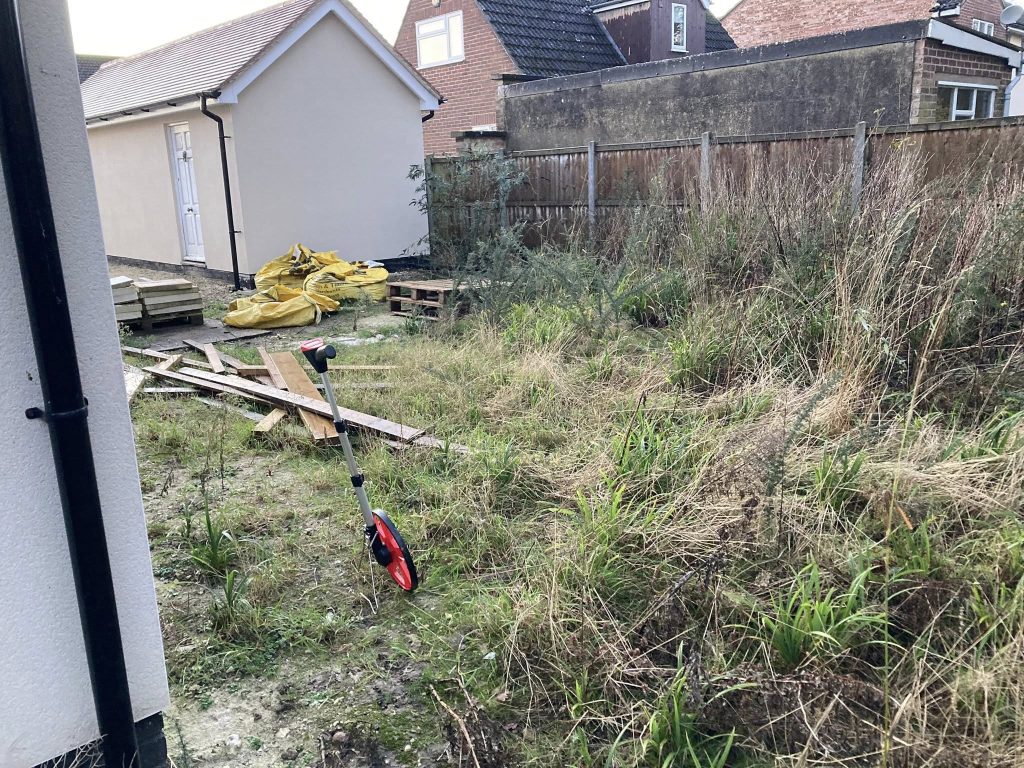
 The starting point for this project was a typical but challenging scenario. An underused area of rough ground with poor structure, uneven levels, and no clear purpose. The space felt disconnected from the house, visually untidy, and impractical. Overgrown vegetation, exposed soil, and leftover materials made it difficult to imagine how the area could be used effectively.
This is a situation we see regularly across Essex. Gardens that have space but no structure. Areas that exist, but do not function.
The transformation was not about simply paving over the problem. It was about creating a layout that worked with the property, improved usability, and introduced a sense of order and balance.
Establishing Levels and Structure
The first and most important change was addressing levels and ground preparation. Before any visible improvement could happen, the ground needed to be stabilised and shaped properly. Poor levels not only affect how a space looks, they determine drainage, longevity, and comfort underfoot.
Once the groundwork was corrected, the space immediately felt more intentional. The new layout clearly defines walking routes, seating areas, and circulation space. This is where many projects succeed or fail. Without correct levels, even the best materials will never sit comfortably.
A Clear Layout With Purpose
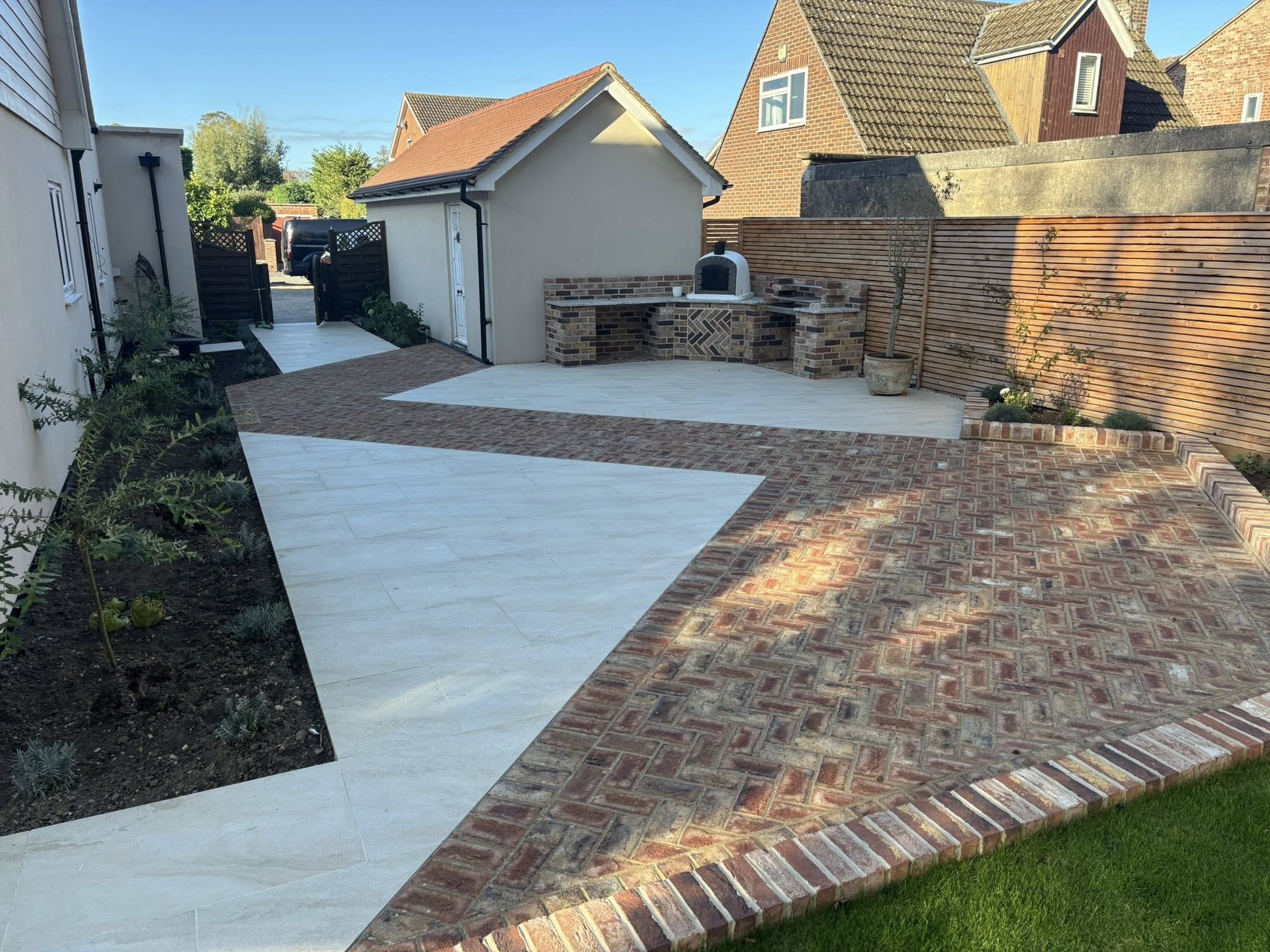
One of the strongest improvements in the finished space is clarity. The new design introduces clear zones rather than one undefined area.
The lighter paving creates clean, open walkways that guide movement naturally through the garden. These paths feel generous without being excessive and provide a strong visual contrast to the surrounding surfaces.
The brick paving introduces warmth and texture, grounding the space and tying it visually to the existing buildings. This choice avoids the flat, sterile look that can occur when a single material is used everywhere.
Together, these surfaces create rhythm and direction, which was completely absent in the original space.
Integrating Built Features Naturally
The outdoor kitchen and seating area have been positioned to feel like part of the garden, not something added on afterwards. The brickwork complements the paving and surrounding structures, while the layout encourages the space to be used rather than admired from a distance.
Importantly, this feature does not dominate the garden. It sits comfortably within the space, leaving room for planting and movement. That balance is essential if an outdoor area is going to be practical year round rather than only on occasion.
Softening the Space With Planting
Planting has been used carefully to soften edges and introduce life without cluttering the layout. The beds alongside the paved areas break up the hard landscaping and will continue to improve as the plants establish.
This approach is deliberate. Hard landscaping provides structure, but planting provides maturity over time. The finished garden will look better in two years than it does today, which is always a sign of a well considered design.
A Practical, Long Term Result
What this transformation demonstrates is the value of planning and restraint. The improvement is not about excess materials or unnecessary features. It is about proportion, alignment, and function.
The space is now usable in all seasons. It is easy to maintain, comfortable to walk through, and visually connected to the house. Most importantly, it no longer feels like leftover ground. It feels like part of the home.
This is the difference between simply installing paving and properly designing an outdoor space.
The Bigger Picture
Transformations like this are rarely about one surface or one feature. They are about understanding how people move through a space, how materials interact, and how gardens evolve over time.
By starting with structure, addressing levels, and designing with purpose, an unused area has been turned into a refined, functional outdoor environment that will continue to improve as it matures.
It is a clear example of how thoughtful landscaping can completely change the way a property feels and functions, without needing to overcomplicate the design.
Considering an Outdoor Transformation of Your Own?
If you have an area of your garden that feels underused, poorly laid out, or disconnected from the house, a structured approach can make a significant difference. Starting with proper assessment and design ensures the finished space works practically and improves over time.
If you are considering an outdoor transformation and would like experienced, straightforward advice, get in touch to arrange a site visit and discuss what is possible for your space.