Driveway Paving Ideas for Essex Homes (And What Actually Lasts Here)
Choosing a new driveway is one of those jobs homeowners often get wrong the first time, not because the design was bad, but because it was not chosen with Essex’s soil, weather and planning rules in mind. A driveway that looks stunning in a brochure can crack, sink or fall foul of drainage regulations within a couple of years if it is not right for the ground it sits on.
At Essex Elite Paving, we design and install driveways across Essex, from London clay areas near Chelmsford and Brentwood to the chalkier ground further out towards Colchester and the coast. Here are eight driveway paving ideas that consistently work well for Essex properties, along with the practical details most guides skip.
1. Understand Essex’s Clay Soil Before You Choose a Material
A large part of Essex sits on London clay, which expands when wet and contracts when dry. This movement is one of the leading causes of cracked driveways, particularly with poorly laid concrete or budget block paving that has not been installed on a proper sub-base.
A well-prepared foundation, typically a compacted MOT Type 1 sub-base with adequate depth, matters more than the surface material itself when it comes to long-term durability on Essex clay.
2. Block Paving Remains a Reliable Choice for Essex Driveways
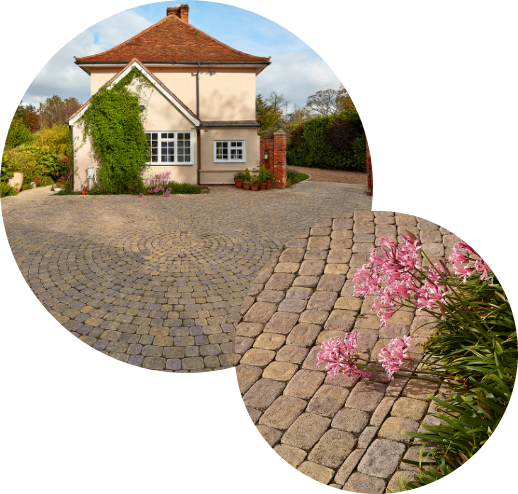
Block paving continues to be one of the most popular driveway choices across Essex, and for good reason. It handles ground movement better than poured concrete because it is made up of individual units rather than one rigid slab, and it is straightforward to repair if a section does settle.
Herringbone laying patterns are particularly well suited to driveways, since they distribute the weight of vehicles more evenly than a stretcher bond pattern.
3. Resin Driveways for a Modern, Low-Maintenance Finish
Resin-bound driveways have grown in popularity across Essex over the past few years, particularly in newer developments around Basildon and Harlow. The appeal is a smooth, seamless finish that resists weeds, requires little maintenance and comes in a wide range of colours to suit period or contemporary homes.
The key with resin is installation quality. A resin driveway laid on a poorly prepared or inadequately drained base will fail regardless of how good the resin itself is.
4. Factor in Permeable Paving and Drainage Rules
Since 2008, planning rules have required permeable paving or proper drainage provision for any new or replacement driveway over 5 square metres at the front of a house in England, unless the water is directed to a lawn or border rather than the road. This applies across Essex and is one of the most commonly missed requirements by homeowners planning a DIY driveway.
Permeable block paving, resin-bound surfaces and gravel with a proper sub-base all satisfy these drainage requirements while still giving a high-quality finished look.
5. Natural Stone for Period and Village Properties
Essex has no shortage of period cottages and village properties, particularly around areas like Thaxted, Finchingfield and the Dedham Vale. For these homes, natural stone such as Indian sandstone or granite setts often suits the character of the property far better than modern paving materials.
Natural stone is more expensive upfront than block paving but tends to weather attractively over time rather than looking dated.
6. Design for Practical Parking, Not Just Kerb Appeal
Many Essex homes, particularly in commuter towns like Billericay, Rayleigh and Shenfield, need driveways that accommodate two or more vehicles comfortably. Good driveway design plans turning circles, access widths and parking bay marking or edging at the outset, rather than trying to retrofit these once the paving is down.
7. Choose Edging and Borders That Frame the Driveway Properly
A driveway without well-considered edging can look unfinished, regardless of how good the main paving material is. Contrasting block borders, natural stone kerbing or simple brick edging all help frame the space and give a cleaner transition to lawns, borders or the front door path.
8. Work with an Essex Paving Company Who Understands Local Ground Conditions
The single biggest factor in whether a driveway lasts fifteen years or needs relaying within five is whether it was installed with local soil and drainage conditions properly accounted for. A driveway plan that ignores Essex’s clay, planning rules and typical rainfall patterns is a driveway more likely to need expensive repairs down the line.
Frequently Asked Questions
Do I need planning permission for a new driveway in Essex? Most driveways do not require planning permission, but if the surface is more than 5 square metres and is not permeable or does not drain to a garden area, permission is required under national planning rules that apply across England, including Essex.
What is the most durable driveway material for Essex homes? Block paving on a properly compacted sub-base tends to be the most durable choice for Essex’s clay soil, since it flexes with ground movement rather than cracking like a single poured surface.
How much does a new driveway cost in Essex? Costs vary depending on size, material and groundwork required, though clay soil conditions across much of Essex often mean sub-base preparation is a larger part of the job than homeowners initially expect.
Is resin or block paving better for an Essex driveway? Both work well when installed correctly. Resin gives a smoother, more contemporary finish with less maintenance, while block paving is generally easier and cheaper to repair if a section is damaged.
Ready to Plan Your Essex Driveway?
Essex Elite Paving designs and installs driveways across Essex that are built to handle our clay soil and drainage requirements, not just look good on installation day. Get in touch for a free quote and site assessment.
[Book Your Free Driveway Quote