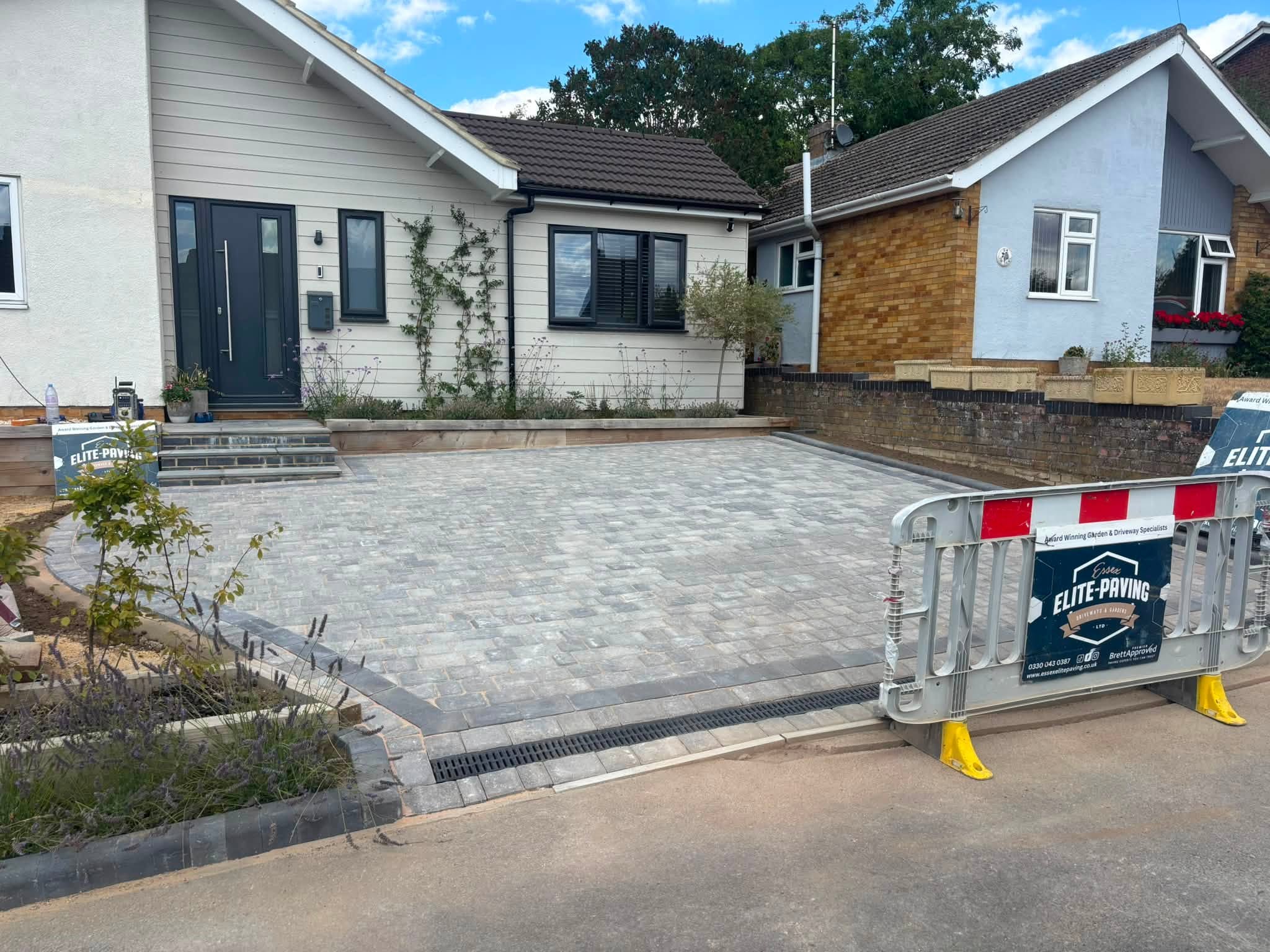
After an exceptionally dry summer across much of England, water-wise garden design has moved from a niche idea to something many homeowners are actively considering. In Essex, a new patio or complete garden transformation should not only look impressive. It should also make sensible use of water and cope with both dry spells and sudden heavy rain.
Here are seven ways to create a more drought-resistant garden without sacrificing style.
1. Design the paving and planting together
One of the biggest mistakes in garden design is treating the patio and planting as separate jobs. The best schemes use hard landscaping to frame planting areas, create shade and direct rainfall where it can be useful.
Natural stone, porcelain and block paving can all work beautifully, but the overall layout should include suitable falls, drainage and enough soft landscaping to stop the space feeling overly hard.
2. Choose drought-tolerant plants
Lavender, rosemary, thyme, ornamental grasses, sedums and many hardy shrubs can handle dry conditions well once established. The right choice depends on your soil, sun levels and the style of garden you want.
A professional planting plan can still deliver colour, structure and seasonal interest while reducing the amount of watering required.
3. Mulch borders to keep moisture in the soil
A layer of mulch can significantly reduce moisture loss from the soil and help suppress weeds. Decorative gravel can work well in contemporary gardens, while organic mulches can improve soil condition over time.
4. Make your patio drainage part of the design
Drought and flooding can happen in the same year. Very dry ground can struggle to absorb sudden downpours, so surface water needs somewhere to go. Correct levels, channels and permeable areas can help manage rainfall and protect the surrounding garden.
5. Harvest rainwater
If you have a shed, garage, extension or garden room, the roof can become a useful source of water. A simple water butt can provide rainwater for pots and new planting without relying entirely on mains water.
6. Reduce thirsty lawn areas
You do not need to remove the lawn completely. Instead, consider whether every square metre needs to be grass. Expanding a patio, adding a path, creating a gravel area or increasing planted borders can reduce maintenance and make the garden more interesting.
7. Build for long-term maintenance, not just day-one impact
A garden should still look good after the installation team leaves. That means choosing materials that weather well, creating accessible planting areas, using sensible drainage and making maintenance realistic for the homeowner.
Essex Elite Paving specialises in paving, natural stone, garden design and construction across Essex. By planning the paving, levels, drainage and planting as one complete outdoor space, you can create a garden that looks premium and is better prepared for hotter summers.
If you are considering a new patio, driveway or complete garden transformation in Essex, contact Essex Elite Paving to discuss your project.