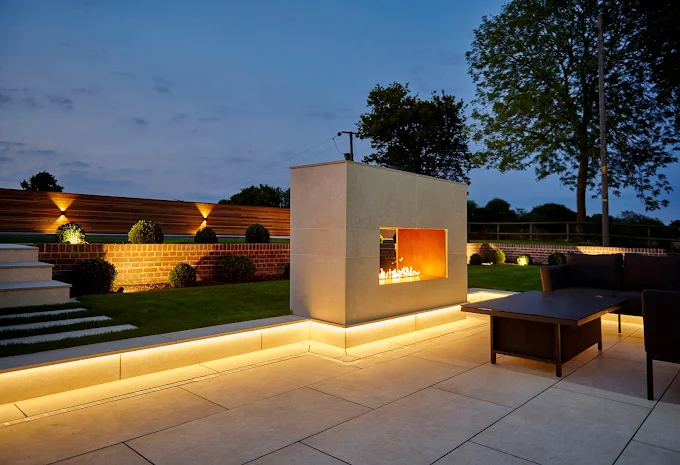
Designing a patio isn’t just about picking a slab and a size. In Essex, orientation is one of the biggest factors in how comfortable, practical and beautiful your outdoor space feels across the year. A south-facing terrace can be a sun-trap in July but harsh in glare and heat; a north-facing garden can be blissfully cool in summer yet feel flat in spring. This guide explains how each orientation behaves through the seasons, what materials and features work best, and how to plan seating so you actually use your patio every week, not just on the three hottest days of the year.
How Orientation Shapes Light (and Life)
At our latitude, the sun tracks low in winter and higher in summer, rising roughly in the east and setting in the west. South-facing patios receive the strongest, longest midday sun; north-facing spaces get mainly ambient light and brief, low-angle sun in early morning or late evening at midsummer. That difference drives temperature, glare, planting choices, and how long your furniture stays dry after rain. Get orientation right, and your patio will feel “set and forget” comfortable; get it wrong, and you’ll constantly chase shade or warmth.
South-Facing Patio
A well-planned south-facing patio is your all-day entertainer from late spring to early autumn. You’ll enjoy warm, bright conditions from late morning through late afternoon, perfect for long lunches, outdoor kitchens and loungers. Drying times are faster after showers, which helps with maintenance and algae control, and solar gain means evening meals can still feel comfortable without heaters in shoulder seasons.
The trade-offs are heat build-up and glare at the height of summer, plus sun bleaching on some materials and fabrics. Without shade, porcelain or pale limestone can dazzle around midday. Wind exposure also matters: in open plots the combination of heat and breeze can dehydrate planting and make parasols unstable without proper bases or fixed structures.
Seating Plans
Think in zones rather than one big rectangle. Place the primary dining area close to the kitchen doors to reduce back-and-forth, ideally under a pergola or retractable awning that gives midday shade but lets low winter sun in. Create a secondary “late-sun” lounge further from the house to catch the softer afternoon light, perfect for a small L-shaped sofa and a fire bowl. If you’re adding an outdoor kitchen, locate it to the side of the dining zone so smoke exits with prevailing breezes and doesn’t blow across seats.
Small south-facing patios benefit from vertical shade: slim pergola posts, climber-covered screens and a narrow planting strip with tall ornamental grasses soften glare without consuming floor area. For families, reserve a shaded corner for a play mat or sand table, ensuring anti-slip paving and smooth transitions between levels.
Best Materials and Finishes
Choose surfaces that manage glare and heat gracefully. Mid-tone porcelains (light greys, warm taupes) balance brightness and comfort better than very pale whites or polished finishes. Textured, matt porcelain helps underfoot grip and reduces visual glare. If you love natural stone, look for sawn sandstone or lightly textured limestones in mid tones; sealers with UV protection will slow colour fade. Dark pavers absorb heat and can be great for evening use, but may feel hot under bare feet at midday, so use them in shaded sections or mix with lighter borders.
North-Facing Patio
North-facing patios shine when the rest of the garden is too hot. They’re naturally cooler and more even in light, which is ideal for reading, working from the garden and relaxed conversation. Furnishings last longer with less UV fade, and you’ll rarely need heavy shade structures. In dense urban plots, north-facing spaces can also feel pleasantly private.
The drawbacks are slower drying and limited direct sun outside midsummer. That means algae and black spot can be more persistent, and winter can feel gloomy unless you plan lighting well. Planting should favour shade-tolerant species, and your material choices should resist damp staining.
Seating Plans
For comfort, design two micro-zones that track the day. Place a compact “morning coffee” perch nearer the eastern edge to catch any early sun. Your main seating, sofas, a reading chair, or dining for four to six, can sit centrally where light is even and cool. If you have space, add a small raised pad or step-out deck on the western edge to catch the last of the evening rays in midsummer. North-facing patios pair beautifully with soft furnishings, cushions, throws, outdoor rugs, because they’re less prone to bleaching; just allow for fast-dry covers and storage to handle showers.
Best Materials and Finishes
Prioritise durability in shade. Dense porcelain with a light-to-mid tone is low-porosity and resists algae better than many open-grained stones. If you prefer natural stone, sawn and flame-textured granites or well-sealed sandstones are practical choices. Avoid highly riven stones with deep crevices that harbour moisture. Choose a jointing system suited to damp conditions; resin-based or high-performance slurry joints often outlast basic brush-in sands in shaded, wetter areas.
Drainage, Levels and Door Thresholds
Orientation influences how quickly surfaces dry, but good drainage is non-negotiable either way. We design falls away from the property, maintain correct DPC clearances at thresholds, and specify channels or discreet slot drains where needed. On south-facing patios, adequate falls reduce glare from standing water; on north-facing patios, they’re your first defence against algae growth by limiting puddling. If your garden slopes, consider a two-level solution: a sunny upper breakfast terrace and a lower, shaded lounge, linked with wide, well-lit steps.
Shade, Shelter and Wind Management
South-facing spaces need planned shade more than umbrellas pulled out in a panic. Fixed pergolas with retractable canopies, timber slat screens, and vine-covered frames create dappled light that’s comfortable for eyes and skin. In breezier Essex plots, louvre roofs and glass wind screens can extend your season without turning the patio into a greenhouse. North-facing spaces often benefit more from shelter than shade: a slimline awning keeps drizzly days usable and protects furniture, while clear polycarbonate over a side return lets light in but sheds rain.
Planting for Microclimate
Use planting to tune temperature and privacy. On hot, south-facing terraces, combine evergreen structure (bay, pittosporum, small olives) with airy grasses and long-flowering perennials to break up heat and soften edges. Consider a climber-covered pergola, wisteria, grapevine, or star jasmine, for scent and seasonal cover. In north-facing gardens, lean into texture and foliage contrast: ferns, hostas, heuchera and hydrangea thrive, while variegated species brighten shade. Raised planters improve drainage and define seating nooks without building high walls.
Lighting and Heating
South-facing patios generally need less heat but more layered lighting to counter long twilight glare. Low-level step lights, under-bench strips and warm white wall lights keep things comfortable without attracting insects to a single bright source. North-facing patios benefit from a couple of discrete heat sources, a compact electric infrared heater near the main seats or a sheltered fire bowl for weekend evenings, plus generous ambient lighting so the space feels welcoming after dusk in shoulder seasons.
Two-Stop Garden
If your plot allows, the most flexible solution is two smaller terraces with different aspects: a sunny breakfast nook and a cooler evening lounge. A simple path, stepping stones or a central lawn connects the two. This approach spreads wear, gives you seasonal choice and often looks better than one oversized slab of paving. We frequently pair a light mid-tone porcelain near the house with a contrasting, slightly darker stone or sett detail further out for a more intimate feel.
What We Recommend
When Essex Elite Paving visits, we look at how the sun moves across your plot in spring and summer, neighbouring boundaries that cast shade, prevailing winds, privacy lines, and door thresholds. We’ll discuss how you actually live: do you eat outside on weeknights, work on a laptop outdoors, host big family gatherings, or want a quiet morning spot with coffee? From there we shape your layout, choose materials that behave well for your orientation, and specify drainage, lighting, and shade so your patio performs year-round.
Ready to Plan a Patio?
Whether your garden faces south, north, or you’re not sure yet, our design-and-build team can map the sun, solve drainage, and create seating zones that work with your lifestyle. Book a free site survey with Essex Elite Paving, and we’ll propose a tailored layout, material palette and fixed quote to suit your aspect and budget. Let’s build a patio that feels “just right” in June and October.