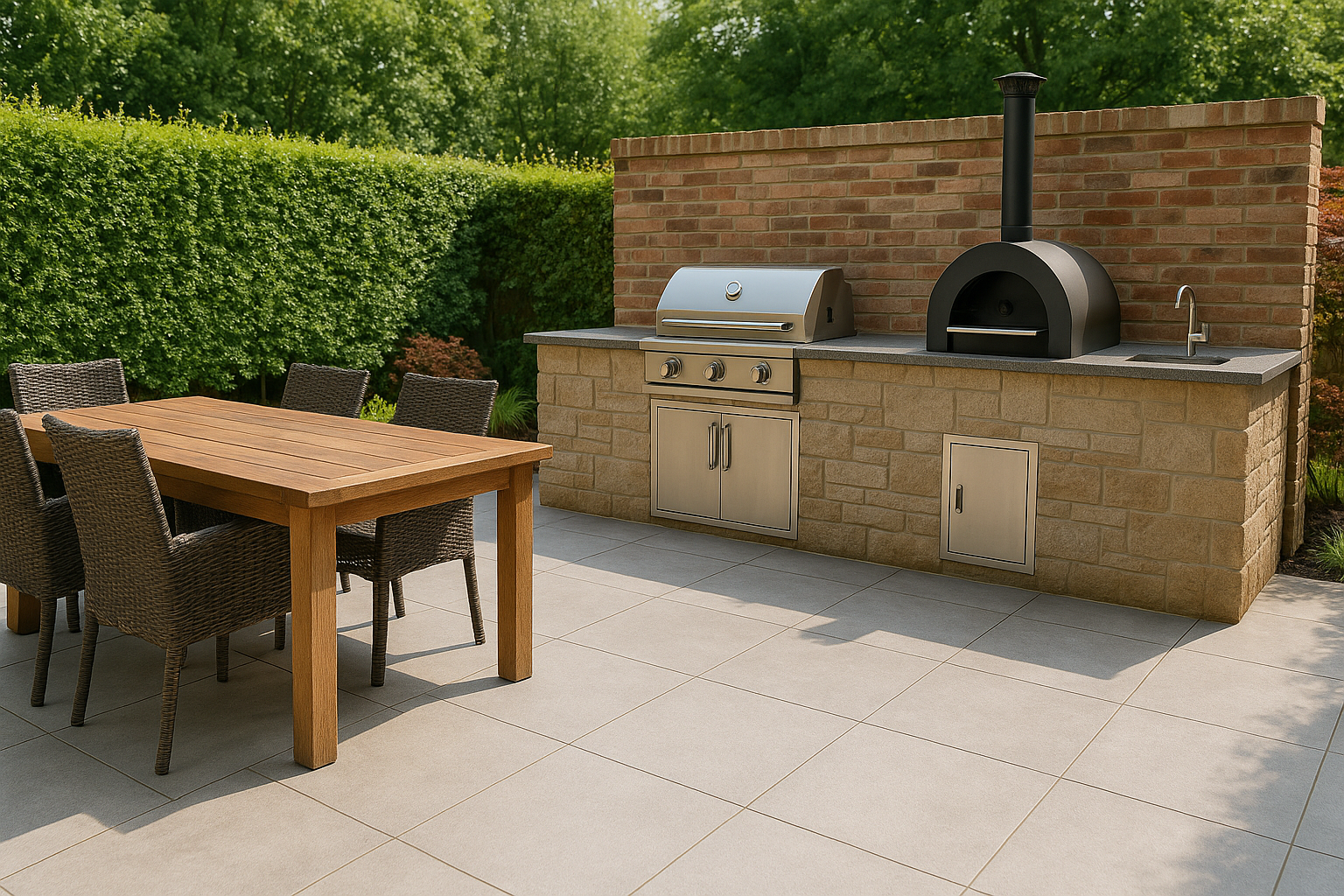
Creating an outdoor kitchen is one of the most popular ways to elevate your garden and add both functionality and luxury to your outdoor living space. However, one of the most important decisions you’ll face during planning is choosing the right paving material for the kitchen area. Porcelain paving has gained traction in recent years due to its sleek look and impressive durability. But is it the right choice for your outdoor kitchen?
In this article, we’ll explore whether porcelain paving is suitable for outdoor kitchens in the UK, its benefits and potential drawbacks, and how it compares to other paving materials.
What Is Porcelain Paving?
Porcelain paving is a type of outdoor tile made from refined clay that is fired at high temperatures to create a strong, non-porous, and hard-wearing surface. It’s designed to withstand the elements and offers a modern, clean look that suits both contemporary and traditional garden styles.
Unlike natural stone or concrete slabs, porcelain tiles have a very low water absorption rate and come in a wide variety of colours, finishes, and textures that can mimic wood, stone, or concrete.
Is Porcelain Paving Durable Enough for an Outdoor Kitchen?
One of the biggest concerns homeowners have when designing an outdoor kitchen is whether the flooring can handle the weight of appliances and the wear-and-tear of constant use. Porcelain paving scores highly in this area.
Porcelain tiles are incredibly strong, scratch-resistant, and highly resistant to staining. This makes them ideal for high-traffic areas like outdoor kitchens where spills from cooking oils, wine, or sauces are likely. Their resistance to cracking and fading also means they maintain their appearance over time, even when exposed to harsh British weather.
Is Porcelain Slip-Resistant for Cooking Areas?
Safety is crucial when choosing paving for an outdoor kitchen, particularly where cooking is involved. The last thing you want is a slippery surface near open flames or hot surfaces.
Many high-quality outdoor porcelain tiles are manufactured with anti-slip finishes that provide additional grip even when wet. This makes them a smart choice for outdoor cooking and dining areas. Be sure to look for tiles with a high slip resistance rating (usually an R11 or above) when choosing porcelain for these applications.
Can Porcelain Withstand UK Weather Conditions?
Outdoor kitchens in the UK must deal with a wide range of weather, from hot summers to rainy winters and the occasional frost. Fortunately, porcelain paving is frost-proof and UV-resistant, which means it won’t crack or fade due to sudden temperature changes or sun exposure.
Because it is non-porous, porcelain doesn’t absorb water. This prevents moisture from seeping in and freezing, which can cause cracking in some natural stone or concrete surfaces.
Is Porcelain Paving Hard to Maintain?
Porcelain paving is one of the easiest outdoor surfaces to maintain. It doesn’t require sealing like natural stone and can be cleaned with just water and mild detergent. Its non-porous surface prevents mould, moss, and algae from growing, making it ideal for busy homeowners who want a beautiful patio space with minimal upkeep.
This low-maintenance quality is especially beneficial in an outdoor kitchen, where food and drink spills are common.
How Does Porcelain Paving Compare to Other Materials?
While porcelain offers many advantages, it’s important to consider how it compares to other paving options:
-
Natural Stone (e.g., sandstone, limestone): Offers a traditional look but can be more porous and less resistant to staining. Typically requires sealing and more frequent maintenance.
-
Concrete Slabs: Affordable and strong, but less refined in appearance. Prone to staining and may fade over time.
-
Resin Bound Surfaces: Attractive and low-maintenance but less suitable for supporting heavy structures like built-in BBQs or countertops.
-
Decking: Warm and natural-looking, but not as durable or fire-resistant as porcelain.
Porcelain strikes a balance between aesthetics, performance, and longevity, making it a versatile choice for most outdoor kitchen projects.
What Style Options Are Available?
Porcelain paving comes in a wide variety of styles, including tiles that mimic natural materials like granite, slate, wood, or concrete. Whether you’re building a rustic outdoor kitchen or a modern alfresco cooking space, there is a porcelain finish to match.
You can opt for large-format tiles for a sleek, seamless look or choose textured tiles for added grip and a more tactile appearance.
Are There Any Downsides to Using Porcelain Paving?
While porcelain is an excellent choice for many outdoor spaces, there are a few considerations:
-
Installation can be tricky: Porcelain tiles require a solid sub-base and must be laid with precision. It’s not a typical DIY job and should be handled by experienced installers.
-
Higher upfront cost: Porcelain tiles can be more expensive than other paving options, but their long-term durability and low maintenance often justify the investment.
Should You Use Porcelain Paving for Your Outdoor Kitchen?
If you’re looking for a durable, low-maintenance, and stylish surface that can handle the demands of an outdoor kitchen, porcelain paving is an excellent choice. Its resistance to stains, moisture, and weather changes makes it ideal for UK gardens and cooking areas. When combined with expert installation and proper planning, porcelain paving can elevate your outdoor kitchen both visually and functionally.
Ready to transform your garden into a chef’s paradise?
Whether you’re dreaming of a built-in BBQ, a pizza oven setup, or a full al fresco dining area, porcelain provides a solid and beautiful foundation for your vision.
Essex Elite Paving specialises in premium porcelain paving installations that are perfect for your outdoor kitchen. Contact us today for a free design consultation and see how we can bring your outdoor cooking space to life — beautifully and professionally.