If your garden or exterior is not evolving, it may look dated before it’s even used. For Essex homeowners, the right trends balance beauty, durability and adaptability to shifting weather. A well-chosen trend doesn’t just look good—it stands the test of wind, frost, clay soils and changing tastes. Use trends as inspiration, not as a rigid template.
1. All-season outdoor kitchens
Gardens built for summer only are losing ground. In 2025, more Essex homes will adopt sheltered cooking zones with louvred pergolas, integrated lighting and heat sources so the outdoor kitchen is usable through autumn and spring. These kitchens blur the boundary between inside and out and make the garden a core living area.
2. Subtle structure, strong layering
Rather than obvious pergolas or bulky summerhouses, trend in 2025 leans toward structures that feel embedded. Think slim steel frames, partially open screens, or glass roof elements. These allow light and airflow while giving definition to garden rooms. Layered planting in front softens the edges and helps sites breathe.
3. Climate-resilient surfaces
Drainage, slip resistance and durability are non-negotiable. Porcelain paving with fine textures, flexible grouts and hidden drainage systems are rising fast. Resin bound paths now pair with planted edges to absorb surface water. Essex’s clay soil demands finishes that cope with rutting and heavy rain.
4. Native and pollinator-friendly planting
2025 gardens are richer when they help nature. Expect mixes of native grasses, perennial herbs, wildflower margins and pollinator corridors woven around paths and hardscapes. Gardens that hum with bees, hoverflies and butterflies are not only beautiful; they support ecosystems. In Essex, species like wild thyme, oxeye daisy and native grasses are taking centre stage.
5. Natural stone and earthy palettes
Landscapes that echo Essex’s geology are trending. Mixed natural stone, sandstone, flint, pale limestone and warm greys lend timeless appeal. Paving, retaining walls or driveways done in local stone (or porcelain matching it) help gardens feel rooted in place.
6. Outdoor lighting
It is no longer enough to have a single floodlight. 2025 lighting includes task lighting at work zones, ambient glow under seating, feature uplights on specimen trees and path lights for safety. Smart controls—dimming, motion triggers, colour change modes—are becoming standard.
7. Water features
Small ponds, rill channels, frog bogs and wetland edge beds deepen connection to nature. Placed near terraces or kitchen zones, they create audio cues and microclimates. In Essex’s wetter seasons, they also support drainage via attenuation.
8. Outdoor tech
WiFi uplifts, subtle speakers, integrated plug points and hidden sensor lighting are now expected. The trick is to blend them seamlessly—concealed wiring, flush sockets, wireless control. The garden must feel natural, not gadgetry exposed.
9. Statement planters and islands
Moveable, oversized planters in corten, galvanized metal or stone allow flexible layout changes. In paved gardens, island planting zones break up expanses and introduce height. In Essex, low-maintenance evergreens with seasonal colour—e.g. box, holly, viburnum—are popular.
10. Texture contrast and tactile finishes
Mixing smooth porcelain with honed stone, ribbed cladding or fluted panels gives depth. Timber decking beside paving, gravel stripes or stone insets create visual rhythm. The trend is away from flat uniform surfaces to layered, tactile surfaces.
11. Low-maintenance
Designers are laying the groundwork for gardens that stay tidy. Bold shapes with evergreen structure, clipped hedges, grasses, and low-maintenance perennials reduce annual work. Essex homeowners prefer gardens that look good even off-season.
12. Outdoor rooms
Garden designs now conceive of zones: dining, cooking, lounging, play and fire. These rooms get soft edges—paths, planting and screens—and flow. Even a modest plot in Essex can feel expansive when zoned well.
13. Fire and heat features
Instead of freestanding fire pits, 2025 sees fireboxes in masonry islands, slender linear gas fires, and recessed heaters under pergolas. The aim is comfort without bulky furniture.
14. Seasonal colour
Designs now include bulbs and heritage shrubs to guarantee colour early and late in the year. In Essex, hellebores, camellias, witch hazel, early daffodils and late cyclamen add spice when most gardens feel dormant.
Example design sketch
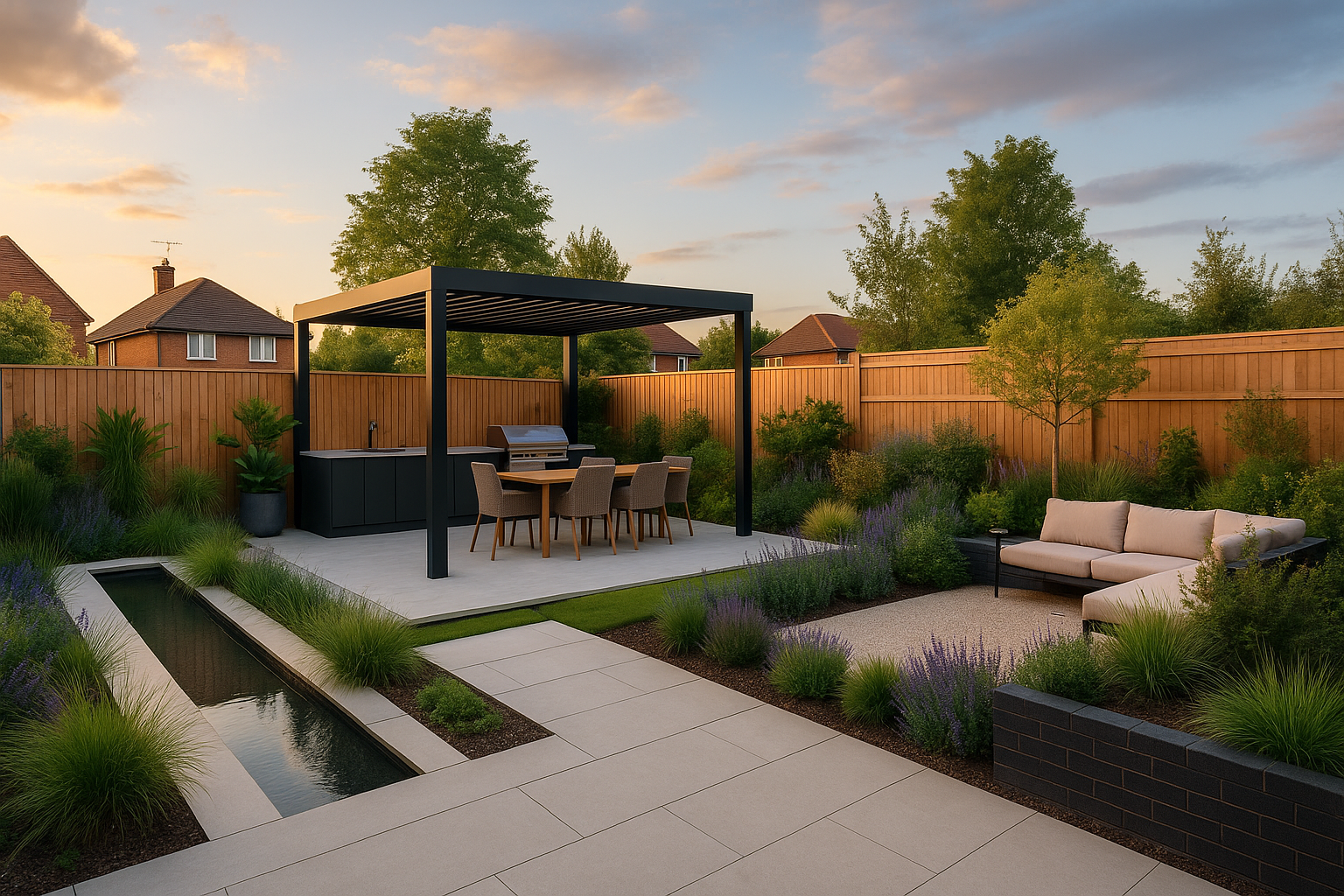
Imagine a long, narrow Essex terrace garden. The hardscape is porcelain in soft greige. A central kitchen island with charcoal cabinetry and clay-toned accents sits under a slim pergola. Alongside, a narrow rill runs to a small pond tucked behind plant screens. Planting alternates native grasses and lavender. Lighting uplights a mature tree, while path lights guide the route across the garden. Hidden sockets and speakers mean you barely see the tech.
How to pick what fits your site
-
Start with a mood board: pick two trends to test.
-
Map microclimate: where is sun, wind, shade?
-
Order sample materials and test outside at dawn and dusk.
-
Build core zones first—kitchen, dining, walkway—then layer in planting and features.
-
Leave budget and space for surprises—better to add a cool tech detail later than overspend early.
The best landscaping trends in Essex for 2025 combine beauty, climate sense and effortless comfort. Think all-season kitchens, textured surfaces, bold structure softened by native planting, and lighting that whispers instead of shouting. Choose the few ideas that speak to your site and let them guide your garden’s transformation—not the other way round.
👉 Ready to bring these trends into your garden? Book a free design consultation with Essex Elite Paving »