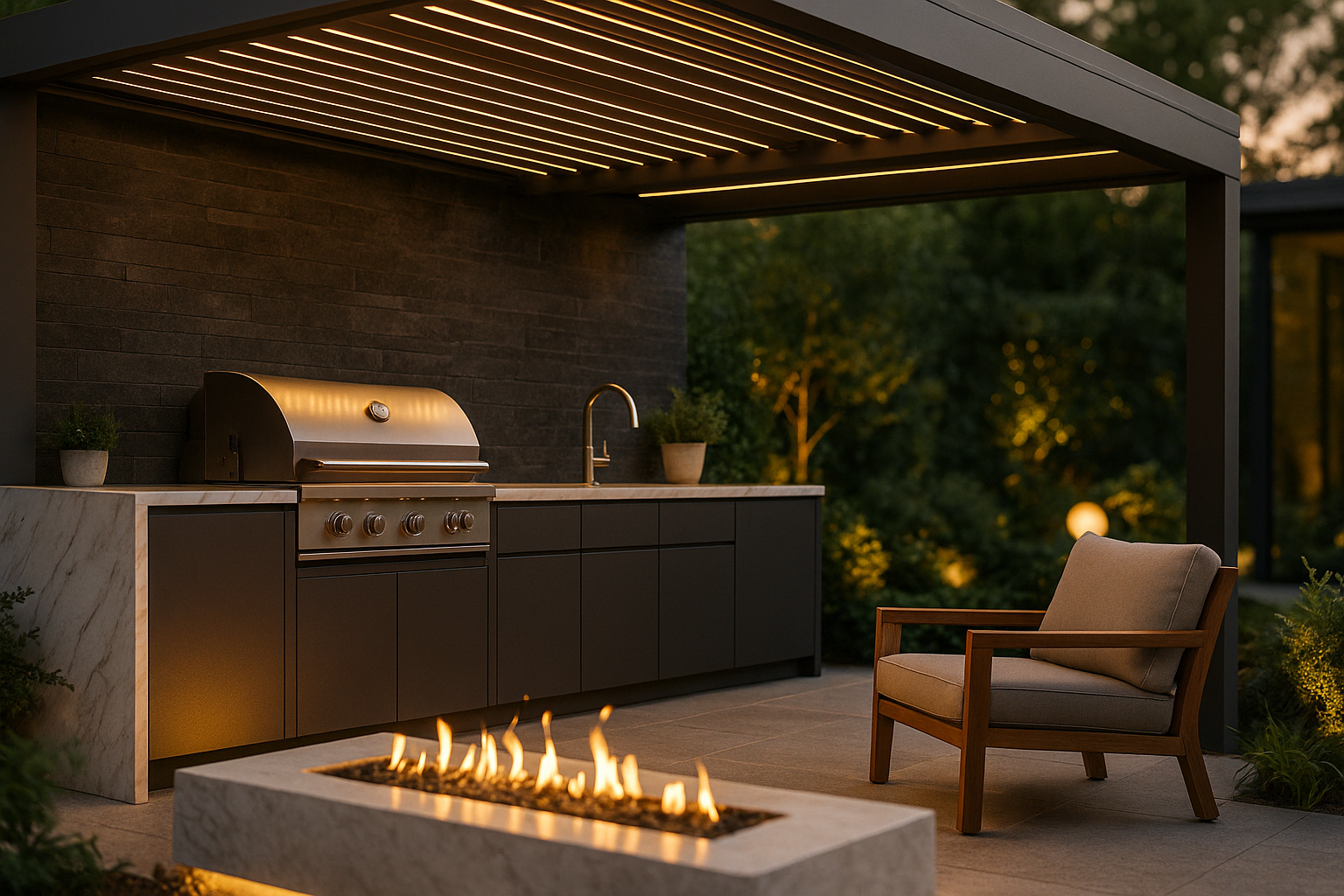
People want to live more of life at home without it feeling cramped. An outdoor kitchen turns the garden into another room, adds social space, and makes weeknight meals feel like mini holidays. With better shelter, smarter appliances and durable materials, it now works in real UK weather rather than just on the two hottest days of the year.
From trend to everyday habit
Not long ago, a barbecue on the lawn counted as “alfresco.” Today, families want a place to prep, cook, eat and linger that feels as comfortable as the dining room. The shift is part lifestyle and part practicality. Working from home means lunch in the sun is suddenly possible. Weekends at home feel richer when there is a spot to gather that is not the sofa. The outdoor kitchen earns its keep because it is always there, ready for a quick midweek cook or a long, easy Saturday.
Making rooms
House extensions are brilliant but costly and disruptive. An outdoor kitchen creates usable space with less upheaval. A modest run of cabinetry, a reliable main grill, safe worktops and a simple pergola deliver a new “room” for a fraction of the time and budget. Add seating and soft lighting and you have somewhere to host twelve without squeezing indoors.
Cooking
Food tastes different outside. A gas grill makes fast, controlled midweek meals. A kamado or pizza oven adds theatre at weekends. Electric planchas and portable induction bring low-smoke options for tight gardens. The mix is flexible, which means the space serves quick family dinners as well as slow, sociable evenings.
Year-round comfort
What changed in recent years is shelter and drainage. Louvred or lightweight roofs keep showers off while letting steam out. Porcelain paving stays grippy with the right texture and drains cleanly if levels are set correctly. Layered lighting and discreet radiant heaters turn shoulder seasons into real cooking months. The result is a space that works in March, July and October, not only in heatwaves.
Better for togetherness
Indoor cooking can push the chef into a corner. Outdoors, the cook stays in the conversation. Kids drift between lawn and table. Friends gather without hovering over a hob. The layout naturally slows everyone down. It is easier to say yes to “come round for a quick bite” when reset is simple and crumbs live outside.
Kerb appeal
Buyers respond to homes that feel larger and more useful. A tidy, well designed outdoor kitchen signals care, adds a lifestyle image to the listing, and helps a property stand out. Even a compact, honest setup reads as premium if materials match the house and the details are neat.
Low-maintenance materials
External-grade porcelain for paving, sintered stone or granite for worktops, powder-coated metals and a few warm timber accents form a practical palette. These materials wipe clean, resist frost and suit UK light. Keep colours in mid tones so day-to-day marks vanish and the space stays calm.
Simple designs
Put the hot zone at the edge of the terrace with clear routes behind the cook. Keep at least 900 mm of walkway and give the grill landing space on both sides for hot trays. Build subtle falls away from the house and use channel drains where water gathers. Plan power on RCD-protected circuits and fit an outdoor-rated hood if you sit under a roof with sheltered sides.
Smoke, neighbours and good manners
A well sited grill faces the breeze so smoke drifts away from doors and seating. Lids-down cooking and dry fuel reduce odours. In tight terraces, a plancha or electric element covers low-smoke nights, with the charcoal or pizza ritual saved for weekends when air is still and windows are shut.
Budget and timelines
A compact “essentials” kitchen with porcelain terrace, gas grill, lighting and power can be delivered in weeks once on site. Larger builds with louvred roofs, bespoke worktops and multiple appliances take longer, mostly due to lead times. The quickest projects happen when decisions are made up front and services are planned before paving goes down.
Avoidable mistakes
Common pitfalls include flat paving that pools, grills squeezed under solid roofs without extraction, tiny worktops that force a balancing act, and buying appliances before the layout is agreed. Solve these with early drawings, measured clearances and a short list of materials that behave outdoors.
Where to start
Walk the garden and find the spot with winter sun and a little shelter from the prevailing wind. Sketch a simple line: prep, cook, serve, seat. Choose one main heat source you will use three nights a week, then add a flavour appliance later if you still want more. Keep the palette simple and let planting soften the edges.
The takeaway
Outdoor kitchens are having a moment because they meet a real need. They give homes more space, make everyday meals feel special, and invite people to linger together. Build the bones right with drainage, power and safe clearances, choose honest materials and a layout that breathes, and you will use the space through the seasons with a smile.
Ready to plan yours? Book an outdoor kitchen consultation.