Why Is My Driveway Sinking? Common Causes in Essex (and How to Fix It)
If you’ve noticed dips, low spots, rocking blocks, puddles that never used to form, or a driveway that suddenly looks “wavy”, you’re not alone. Sinking driveways are a common issue in Essex, especially on older installations or where the base wasn’t built correctly in the first place.
This guide explains the most common reasons a driveway sinks in Essex, what to look for, and the best repair options so you can stop it getting worse (and avoid paying twice).
Driveway sinking in Essex: the quick answer
A driveway usually sinks because the ground underneath has moved or the base has failed. In most cases, it comes down to poor sub-base depth, weak compaction, drainage problems, or ground conditions that cause the sub-base to soften and settle over time.
1. The sub-base wasn’t deep enough (the most common cause)
Your driveway is only as strong as what’s underneath it. If the installer didn’t dig out enough and lay a proper sub-base (typically MOT Type 1 or equivalent), the driveway will eventually settle.
This is especially common where a driveway was laid over an old surface, or where the base was rushed to save time and cost.
What you’ll normally see is a gradual dip forming in one area, often where vehicles sit most, like near the entrance or where you turn the wheels.
2. Poor compaction during installation
Even with the right materials, the driveway can sink if the layers weren’t compacted properly.
Compaction needs to happen in stages, with the correct plate compactor or roller, and with the right moisture levels. If the base or bedding layer is left “loose”, it will compress over time under vehicle load and the surface will drop.
A common sign is block paving that starts to rock or separate, with joints widening and sand washing out faster than normal.
3. Drainage issues and water washing the base away
In Essex, we see plenty of driveways that fail because of water. Water is the silent killer of sub-bases.
If your driveway doesn’t have the correct falls, channels, or a permeable solution where needed, water can sit, soak into the layers, then weaken the foundation. Over time, the bedding layer moves and the surface starts to sink.
Typical warning signs include:
- Puddles that remain long after rain.
- Algae growth or staining where water regularly sits.
- Sand loss around blocks or edges.
- Soft areas near gullies, ACO drains, or the driveway entrance.
4. Clay soil and ground movement (common in parts of Essex)
Some areas of Essex have clay-heavy ground. Clay expands when wet and shrinks when dry, which can cause movement beneath the driveway.
If the driveway base is borderline or drainage is poor, this seasonal movement can accelerate settlement and lead to low spots.
This doesn’t mean you can’t have a strong driveway on clay. It just means the groundwork and drainage need to be done properly.
5. Heavy vehicles or repeated turning on the same spot
Many residential driveways are built for cars, not vans, tippers or repeated heavy turning. If your driveway regularly takes heavier loads, the sub-base needs to be designed for it.
If the base is too light, you’ll often see sinking where the wheels track, or where vehicles turn sharply (the surface can twist and compress underneath).
This is one reason block paving driveways can sink around parking bays or near the entrance if the foundation wasn’t built for the real-world use.
6. Edge restraints failing or missing
Edges keep everything “locked” in place. If the edge restraint is weak, cracked, or not installed correctly, the blocks can drift outwards and the driveway will start to lose its structure.
Once the edge goes, movement spreads inward and the surface can drop.
This often happens near kerbs, flower beds, or where a driveway meets a path or wall.
7. Utilities trenches and poorly backfilled areas
If there’s been work under your driveway for drainage, water, gas, fibre, or electric, a trench may have been dug and backfilled. If it wasn’t compacted properly, it can settle months later and create a long dip.
The sinking usually follows a straight line, which is a big clue.
How to fix a sinking driveway (the right repair depends on the cause)
The best repair is the one that fixes the foundation, not just the surface.
Option 1: Lift and relay (best for block paving that has sunk)
If it’s block paving, the proper repair is to lift the affected area, rebuild the base if needed, then relay the blocks and re-sand.
This is usually the most cost-effective option when the rest of the driveway is in good condition.
Option 2: Localised dig-out and rebuild (for base failure)
If the sub-base has collapsed or washed out, a deeper repair may be required. That means digging out the affected area to solid ground, rebuilding the foundation, correcting drainage, then reinstating the surface.
Option 3: Full replacement (when the driveway was built wrong)
If multiple areas are sinking, or the driveway was laid on an inadequate base throughout, patch repairs can become a money pit. In those cases, replacing the driveway with the correct dig-out, sub-base depth, and drainage design is usually the better long-term decision.
**Only option 3 comes with a full Essex Elite Paving Guarantee (we cannot guarantee someone else’s work)
Can I just add more sand or resurface over it?
In most cases, no. Adding sand or resurfacing over a sinking area doesn’t fix the cause. It can hide the problem for a short time, but it usually comes back worse because the foundation continues to move.
If you want it properly sorted, the base and drainage need to be checked.
How to tell if your driveway sinking is serious
If you have one small dip that isn’t changing, it may be a simple lift and relay.
If the driveway has sinkage and this dip was growing, spreading, or causing water to sit near your home, it’s time to get it assessed quickly. Water pooling can lead to further base washout and, in some cases, moisture issues near the property.
Sinking driveway repair in Essex
If your driveway is sinking, the key is identifying the real cause, then fixing it properly so it doesn’t happen again. A professional driveway contractor should check sub-base depth, compaction, edge restraints, and drainage falls before quoting a repair.
If you’re in Essex and you want it sorted properly, Essex Elite Paving can inspect the area, explain what’s happening underneath, and recommend the most cost-effective fix, whether that’s a lift and relay or a deeper rebuild.
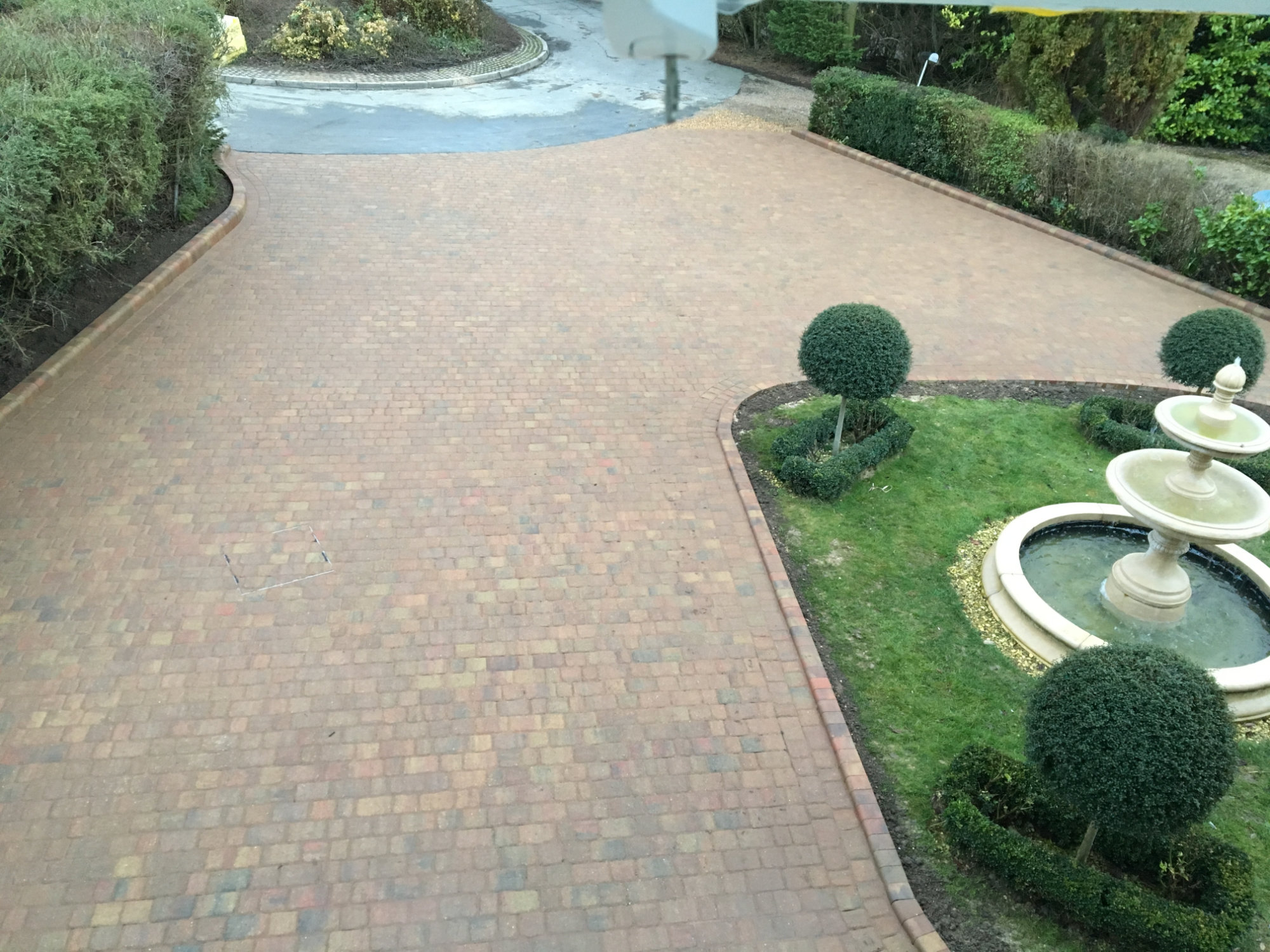

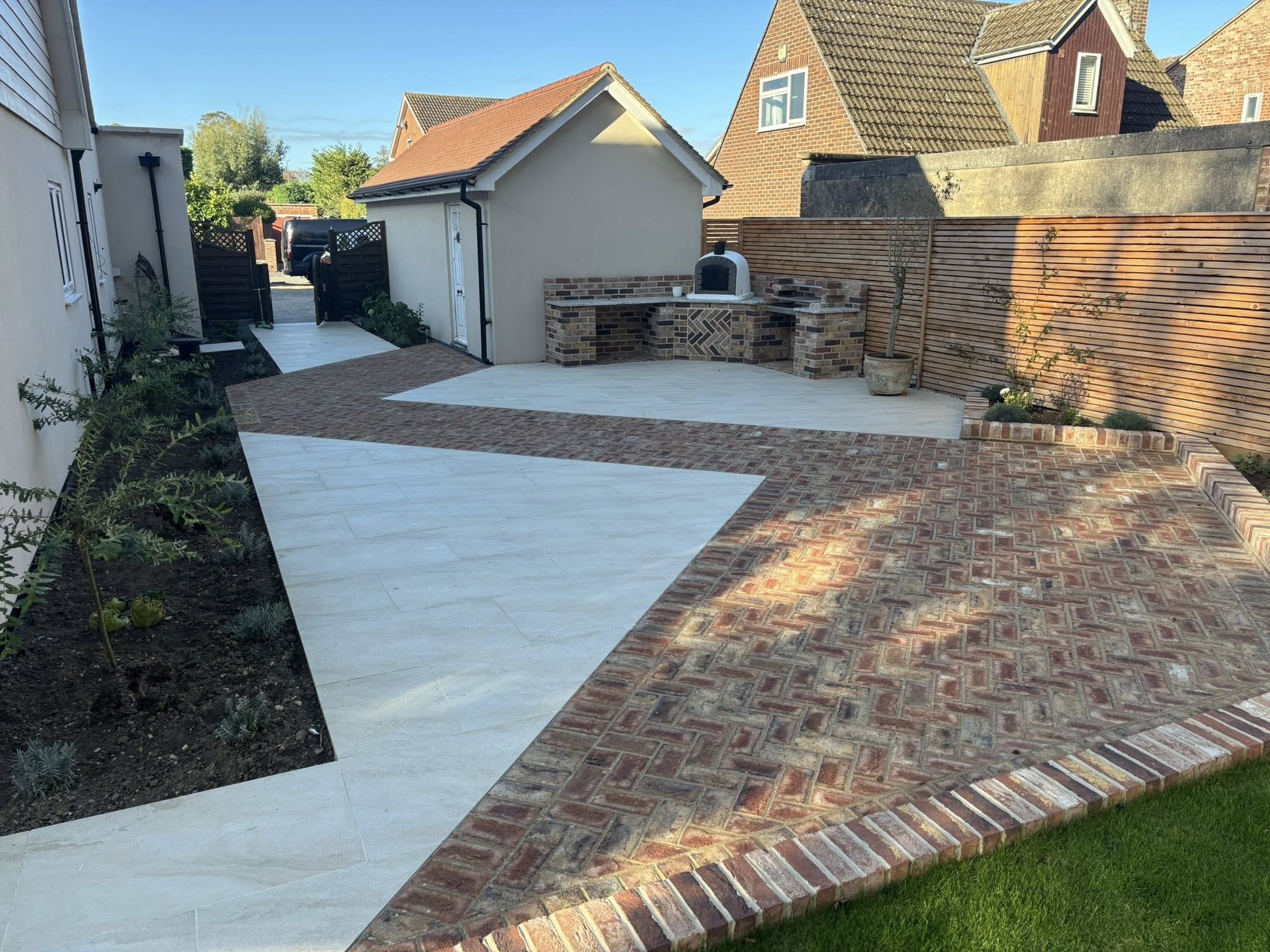
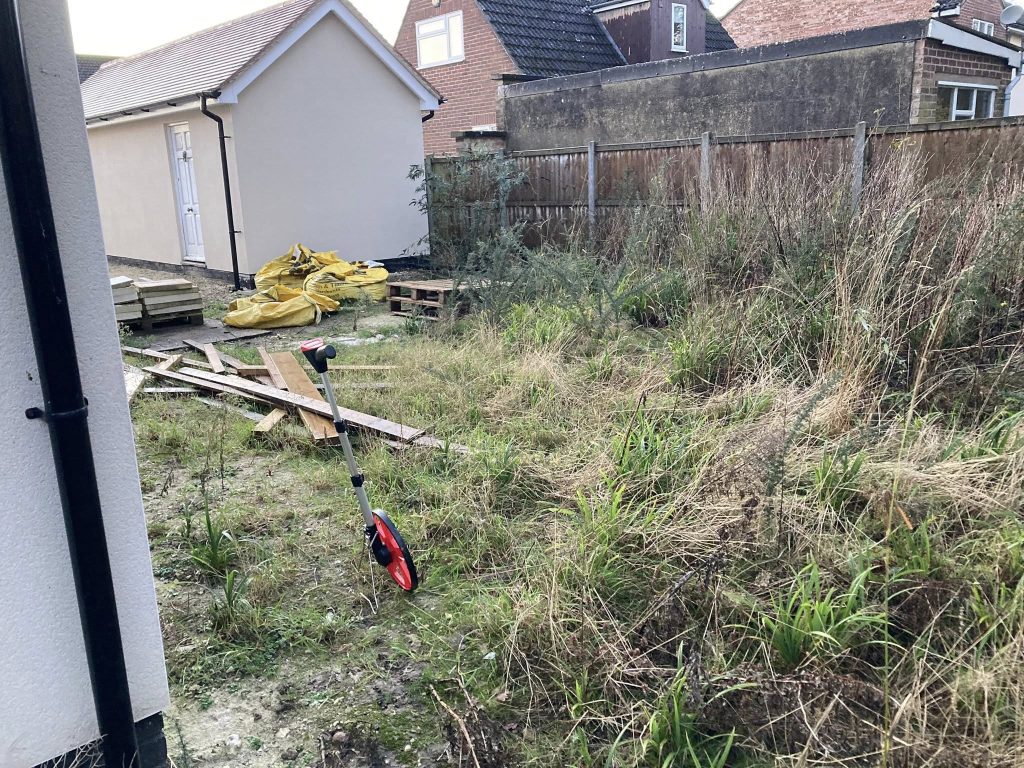 The starting point for this project was a typical but challenging scenario. An underused area of rough ground with poor structure, uneven levels, and no clear purpose. The space felt disconnected from the house, visually untidy, and impractical. Overgrown vegetation, exposed soil, and leftover materials made it difficult to imagine how the area could be used effectively.