What Is the Best Time of Year to Landscape a Garden in Essex?

What Is the Best Time of Year to Landscape a Garden in Essex?

Many homeowners wait until the sun comes out before thinking about their garden.

That makes sense. As soon as spring arrives, you start noticing the small patio, tired lawn, awkward levels or lack of space for outdoor dining. The problem is that by then, you may already be behind if you want your garden ready for summer.

The best time to landscape a garden in Essex depends on what you are planning. A new patio, driveway, drainage project, fencing, raised beds, turf and planting all have slightly different ideal times.

In many cases, the smartest time to start planning is well before you want the project finished.

The RHS advises that landscaping work can take place through much of the year, with autumn and winter often useful for soil preparation and spring or autumn generally better for planting.

Spring is great for finishing touches and planting

Spring is when most people want to get outside and enjoy their garden again.

It is a brilliant season for planting, turfing, adding borders and completing the final touches on an outdoor space. The weather is usually becoming more reliable and the garden starts to look alive again.

Spring can be ideal for:

  • Planting borders and shrubs
  • Laying turf
  • Updating smaller patios
  • Adding steps or pathways
  • Building raised beds
  • Refreshing tired outdoor areas

The downside is that spring is often one of the busiest times for paving and landscaping companies.

If you wait until April or May to begin looking for a contractor, you may find that availability is limited. It is much better to start conversations during winter so your project can be properly planned and scheduled.

Summer helps you see what your garden is missing

Summer is when you truly understand how your outdoor space works.

You can see where the sun falls, which areas are too hot, where you need shade and whether your patio is large enough for family gatherings. You might also notice poor access from the house, lack of privacy or nowhere practical for children to play.

Summer is ideal for deciding whether you need:

  • A larger patio
  • A dedicated seating area
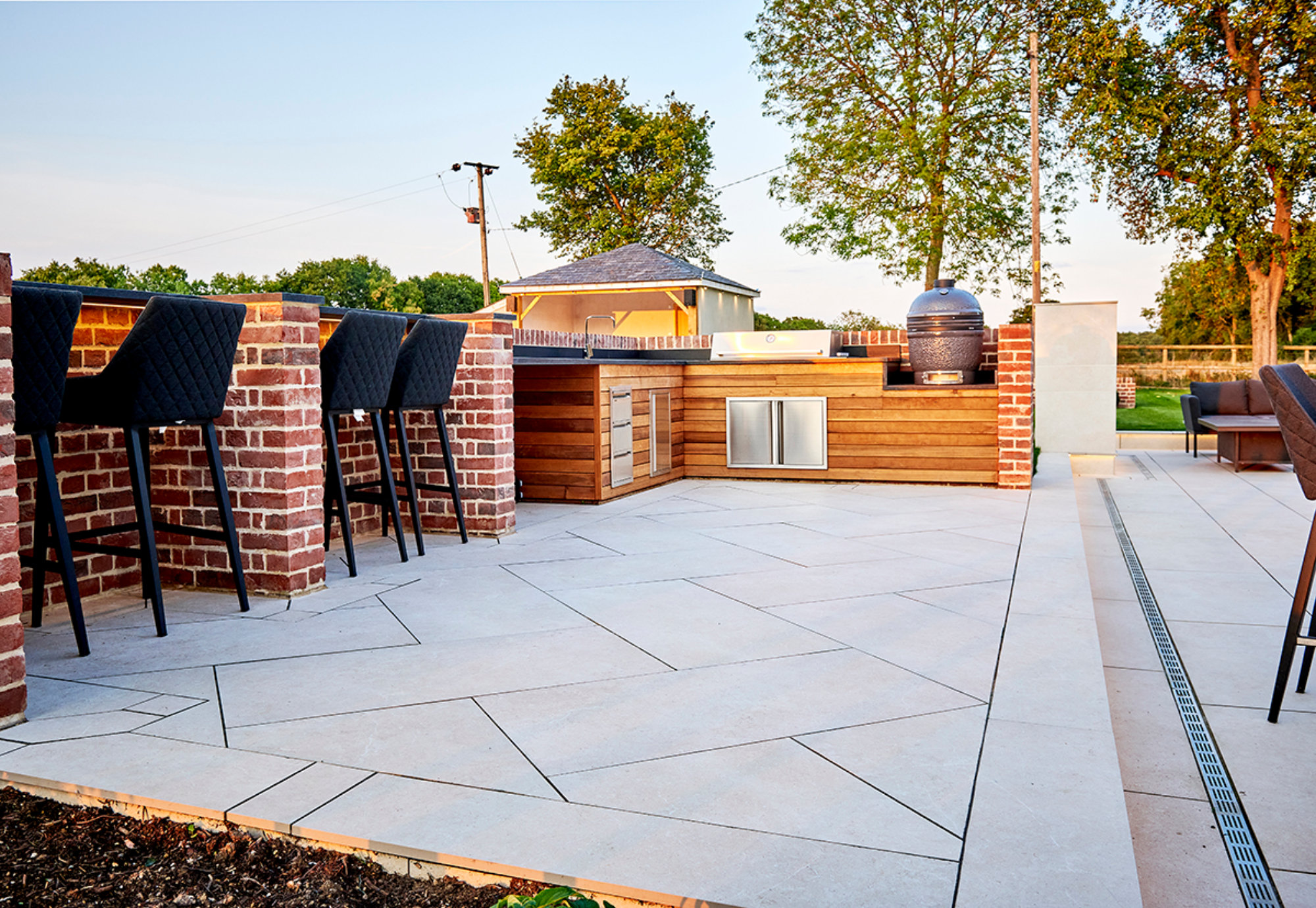
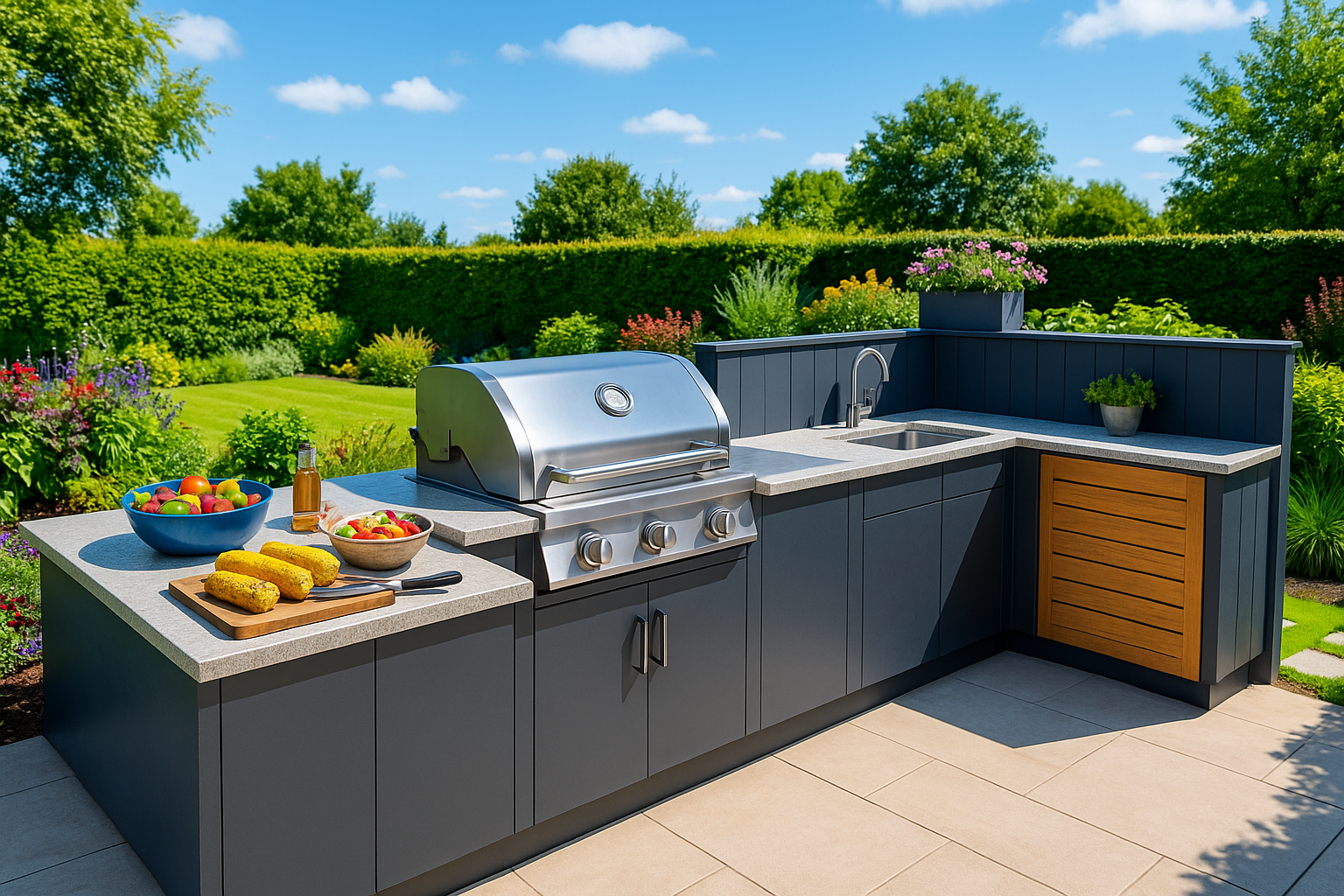
  • An outdoor kitchen or entertaining space
  • Better drainage
  • More privacy
  • A new lawn area
  • Better levels and steps
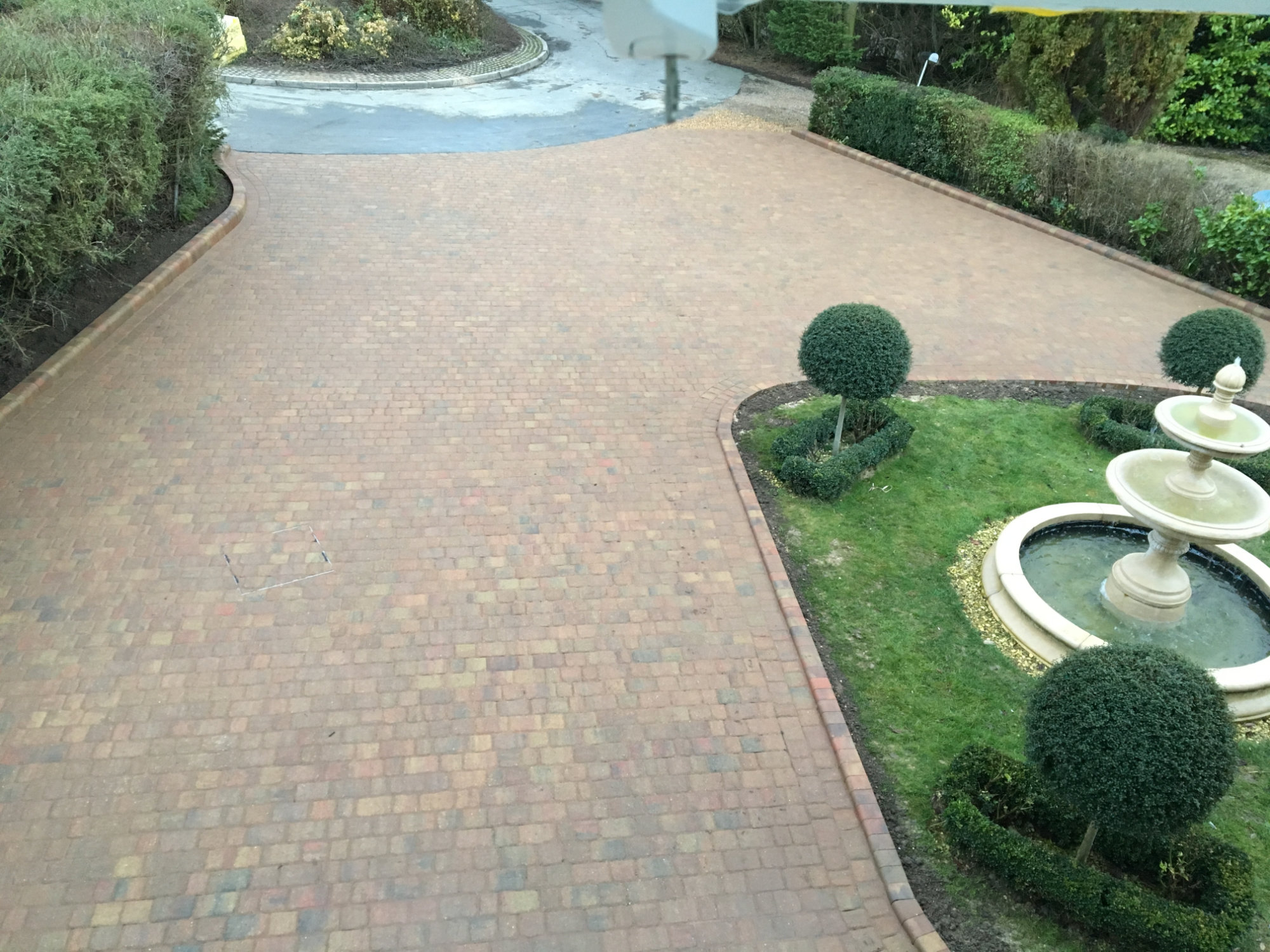
  • A driveway or front garden upgrade

Summer work is absolutely possible, but planting and turfing can need more attention in dry spells. New plants and lawns need regular watering while they establish.

For larger projects, summer is often the best time to design, finalise your plans and secure a place in the diary for autumn or winter.

Autumn is one of the best times to begin landscaping work

Autumn is often overlooked, but it can be one of the best times to landscape a garden in Essex.

The heat of summer has passed, the ground is still relatively warm and there is often more natural moisture in the soil. This makes it an excellent time for many hard landscaping and planting projects.

Autumn is particularly good for:

  • Patio installation
  • Garden paths
  • Raised beds
  • Drainage improvements
  • New turf
  • Tree and hedge planting
  • Garden clearance
  • Preparing the garden for spring

Starting a project in autumn can also mean your garden is ready to enjoy as soon as warmer weather returns.

Instead of spending next spring watching contractors work in your garden, you could be sitting on a finished patio with the garden already starting to establish.

Winter can be ideal for major groundwork and paving

Winter is not necessarily a bad time for landscaping. In fact, it can be the best time to tackle the bigger structural jobs.

Projects involving excavation, patios, retaining walls, fencing, drainage, pathways and garden levels can often be completed through winter, provided the weather conditions are suitable.

Winter is a good time for:

  • Digging out old patios
  • Installing new paving
  • Building retaining walls
  • Improving garden levels
  • Installing drainage
  • Replacing fencing
  • Creating a new layout
  • Preparing planting areas for spring

There can be delays during heavy rain, frost or waterlogged ground, but a professional paving company will plan the work around conditions and keep you informed.

The key advantage is simple: by doing the major hard landscaping work before spring, you are not losing the best months of the year to building work.

Is there a bad time to install a patio?

There is no single bad time to install a patio, but some conditions can affect the schedule.

Very wet weather can make groundwork more difficult. Freezing temperatures can affect certain materials and mortar work. Extremely dry conditions can create challenges for turf and planting.

However, patio installations and paving projects can be carried out for much of the year when properly planned.

The best approach is to speak to a specialist early. They can advise you on the best time for your particular garden, access, soil conditions and project scope.

When is the best time to lay turf?

Autumn and spring are generally the best seasons for laying turf.

The temperatures are cooler than summer and there is usually more natural rainfall, which helps the turf establish. Turf can still be laid at other times, but it may need more watering and care.

If you are having a full garden transformation, it often makes sense to complete patios, drainage, levels and borders first, then lay turf at the most suitable stage.

When should you book a paving or landscaping company?

The best time to book is before you feel desperate to have the work completed.

For a garden ready for summer, start planning in autumn or winter. For a larger transformation next year, have the conversation early so you have time to make the right decisions.

This gives you time to:

  • Set a realistic budget
  • Choose materials
  • Finalise the layout
  • Plan drainage properly
  • Consider access and levels
  • Secure availability
  • Avoid rushed decisions

A new patio or landscaped garden should last for years. Taking time to get the layout and materials right is always worth it.

The best time is when you are ready to make the garden work better

The best season depends on the job, but the best time to start planning is now.

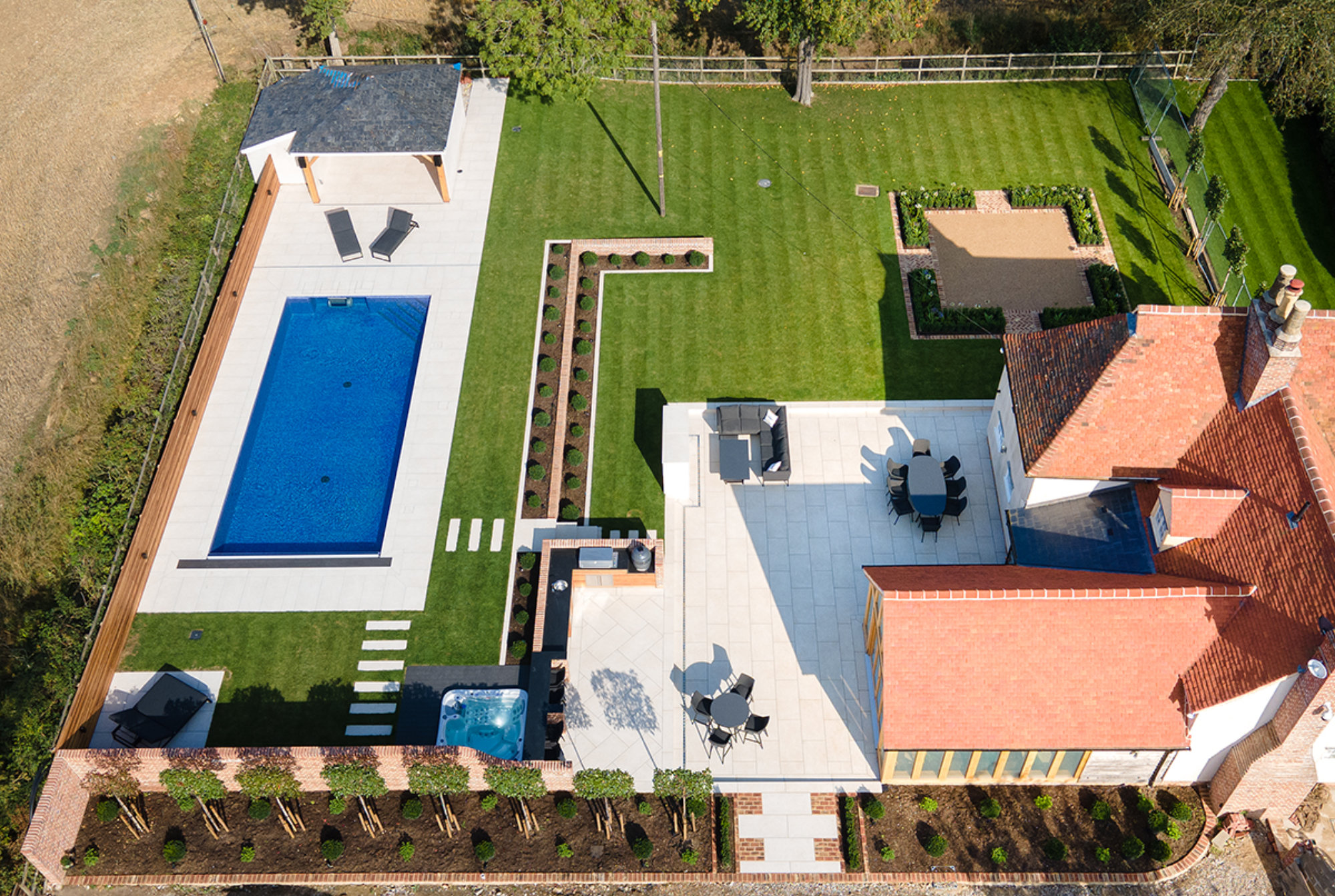
Whether you need a larger patio for entertaining, a front driveway upgrade, better drainage or a complete garden transformation, the earlier you start the process, the more choice you will have.

At Essex Elite Paving, we create patios, driveways and outdoor spaces designed around how you want to live. From paving and drainage to full garden transformations, we help homeowners across Essex create spaces that look great and work properly all year round.

To start planning your project, contact Essex Elite Paving. You can also check out our awards and see why homeowners trust us with their outdoor spaces.

FAQs

What is the best month to landscape a garden?

Autumn is often one of the best times for larger landscaping work, while spring and autumn are both strong options for planting and turfing.

Can a patio be installed in winter?

Yes. Patio installation can often be completed in winter, depending on frost, rainfall and ground conditions.

Is spring too late to landscape a garden?

No, but spring is often busy. It is best to plan ahead if you want your garden ready for summer.

When is the best time to lay turf in Essex?

Spring and autumn are usually best because temperatures are cooler and there is more natural moisture.

Should I wait until summer to contact a paving company?

No. Contacting a paving company in autumn or winter often gives you more time to plan and better availability for the following year.

Internal link suggestions:
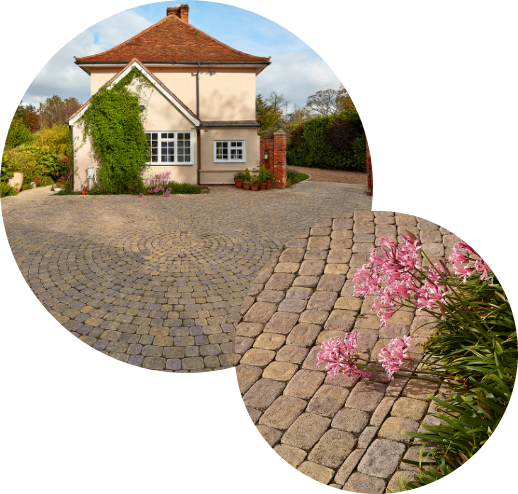
Driveway Paving Ideas for Essex Homes (And What Actually Lasts Here)

Driveway Paving Ideas for Essex Homes (And What Actually Lasts Here)

Choosing a new driveway is one of those jobs homeowners often get wrong the first time, not because the design was bad, but because it was not chosen with Essex’s soil, weather and planning rules in mind. A driveway that looks stunning in a brochure can crack, sink or fall foul of drainage regulations within a couple of years if it is not right for the ground it sits on.

At Essex Elite Paving, we design and install driveways across Essex, from London clay areas near Chelmsford and Brentwood to the chalkier ground further out towards Colchester and the coast. Here are eight driveway paving ideas that consistently work well for Essex properties, along with the practical details most guides skip.

1. Understand Essex’s Clay Soil Before You Choose a Material

A large part of Essex sits on London clay, which expands when wet and contracts when dry. This movement is one of the leading causes of cracked driveways, particularly with poorly laid concrete or budget block paving that has not been installed on a proper sub-base.

A well-prepared foundation, typically a compacted MOT Type 1 sub-base with adequate depth, matters more than the surface material itself when it comes to long-term durability on Essex clay.

2. Block Paving Remains a Reliable Choice for Essex Driveways

Block paving continues to be one of the most popular driveway choices across Essex, and for good reason. It handles ground movement better than poured concrete because it is made up of individual units rather than one rigid slab, and it is straightforward to repair if a section does settle.

Herringbone laying patterns are particularly well suited to driveways, since they distribute the weight of vehicles more evenly than a stretcher bond pattern.

3. Resin Driveways for a Modern, Low-Maintenance Finish

Resin-bound driveways have grown in popularity across Essex over the past few years, particularly in newer developments around Basildon and Harlow. The appeal is a smooth, seamless finish that resists weeds, requires little maintenance and comes in a wide range of colours to suit period or contemporary homes.

The key with resin is installation quality. A resin driveway laid on a poorly prepared or inadequately drained base will fail regardless of how good the resin itself is.

4. Factor in Permeable Paving and Drainage Rules

Since 2008, planning rules have required permeable paving or proper drainage provision for any new or replacement driveway over 5 square metres at the front of a house in England, unless the water is directed to a lawn or border rather than the road. This applies across Essex and is one of the most commonly missed requirements by homeowners planning a DIY driveway.

Permeable block paving, resin-bound surfaces and gravel with a proper sub-base all satisfy these drainage requirements while still giving a high-quality finished look.

5. Natural Stone for Period and Village Properties

Essex has no shortage of period cottages and village properties, particularly around areas like Thaxted, Finchingfield and the Dedham Vale. For these homes, natural stone such as Indian sandstone or granite setts often suits the character of the property far better than modern paving materials.

Natural stone is more expensive upfront than block paving but tends to weather attractively over time rather than looking dated.

6. Design for Practical Parking, Not Just Kerb Appeal

Many Essex homes, particularly in commuter towns like Billericay, Rayleigh and Shenfield, need driveways that accommodate two or more vehicles comfortably. Good driveway design plans turning circles, access widths and parking bay marking or edging at the outset, rather than trying to retrofit these once the paving is down.

7. Choose Edging and Borders That Frame the Driveway Properly

A driveway without well-considered edging can look unfinished, regardless of how good the main paving material is. Contrasting block borders, natural stone kerbing or simple brick edging all help frame the space and give a cleaner transition to lawns, borders or the front door path.

8. Work with an Essex Paving Company Who Understands Local Ground Conditions

The single biggest factor in whether a driveway lasts fifteen years or needs relaying within five is whether it was installed with local soil and drainage conditions properly accounted for. A driveway plan that ignores Essex’s clay, planning rules and typical rainfall patterns is a driveway more likely to need expensive repairs down the line.

Frequently Asked Questions

Do I need planning permission for a new driveway in Essex? Most driveways do not require planning permission, but if the surface is more than 5 square metres and is not permeable or does not drain to a garden area, permission is required under national planning rules that apply across England, including Essex.

What is the most durable driveway material for Essex homes? Block paving on a properly compacted sub-base tends to be the most durable choice for Essex’s clay soil, since it flexes with ground movement rather than cracking like a single poured surface.

How much does a new driveway cost in Essex? Costs vary depending on size, material and groundwork required, though clay soil conditions across much of Essex often mean sub-base preparation is a larger part of the job than homeowners initially expect.

Is resin or block paving better for an Essex driveway? Both work well when installed correctly. Resin gives a smoother, more contemporary finish with less maintenance, while block paving is generally easier and cheaper to repair if a section is damaged.

Ready to Plan Your Essex Driveway?

Essex Elite Paving designs and installs driveways across Essex that are built to handle our clay soil and drainage requirements, not just look good on installation day. Get in touch for a free quote and site assessment.

[Book Your Free Driveway Quote

How to Clean Your Patio Properly in Essex

How to Clean Your Patio Properly in Essex

A patio should be somewhere you enjoy spending time, whether that means summer barbecues, family dinners outside or simply sitting with a coffee on a dry morning.

But after a few months of wet weather, falling leaves, muddy shoes and general day-to-day use, even a beautiful patio can start to look tired. Green algae, moss, black spots and dirt can quickly build up, especially in shaded parts of the garden.

The good news is that most patios can be cleaned and refreshed without replacing the paving. The key is using the right method for the material you have.

Manufacturer aftercare advice is clear on the basics: sweep first, test pressure washing in a hidden area, avoid excessive force and check your joints afterwards, as overly aggressive cleaning can damage paving or wash out jointing material.

Start by working out what your patio is made from

Before you bring out a pressure washer or chemical cleaner, it is important to understand what type of paving you have.

Common patio materials include:

  • Indian sandstone
  • Porcelain paving
  • Limestone
  • Slate
  • Concrete slabs
  • Block paving
  • Natural stone setts

Different paving materials need different levels of care.

Porcelain is usually one of the easiest patio surfaces to maintain because it is less porous. Natural stone, sandstone and limestone need more caution, particularly when it comes to harsh cleaning products or high-pressure water.

If you are unsure what material you have, start gently. Use warm water, a stiff brush and a cleaner that is specifically suitable for the paving.

Clear the patio before you start cleaning

The first step is simple but makes a huge difference.

Move garden furniture, plant pots, barbecues and anything else sitting on the paving. Then sweep away loose leaves, soil, weeds and debris with a stiff outdoor brush.

This lets you see the areas that actually need attention and prevents grit being dragged across the surface while cleaning.

Regular sweeping also helps prevent staining and organic build-up. Leaves and dirt left sitting on patios can trap moisture and encourage moss, algae and weeds to return.

Treat algae, moss and black spots properly

Green algae is one of the most common patio problems. It can make paving look old and neglected, but it can also become slippery when wet.

For algae, moss and lichen, use a suitable patio cleaner or biocide designed for outdoor paving. Apply it carefully, follow the manufacturer’s instructions and protect nearby lawns, planted beds and ponds.

Do not assume stronger is better.

Some harsh chemicals can damage natural stone or affect the colour of your paving. Avoid acidic products unless they are specifically approved for your patio material.

Stubborn black spots can take time to remove. It is often better to treat them, allow the solution to work and repeat if needed rather than blasting the area with maximum pressure.

Use warm water and a stiff brush for general dirt

For lighter dirt, surface marks and everyday grime, you may not need a pressure washer at all.

A bucket of warm water, a paving-safe cleaner and a stiff brush can make a huge difference. Work in smaller sections so the water does not dry out too quickly, then rinse the area with clean water.

Pay close attention to:

  • Shaded areas
  • Patio edges
  • Steps
  • Areas underneath pots and furniture
  • Paving beside lawns and flower beds
  • Places where water tends to sit

This is often the safest option for older patios, softer stone and paving with worn or loose joints.

Be careful when pressure washing a patio

Pressure washing can be an effective way to remove built-up dirt and surface algae, but it needs to be done carefully.

Using too much pressure can scar paving, chip softer stone, loosen pointing and wash out jointing compound. It can also leave stripy marks across the slabs if the nozzle is held too close or kept in one place for too long.

When using a pressure washer:

  • Start on a lower setting
  • Test a small hidden area first
  • Keep the nozzle moving
  • Use slow, controlled passes
  • Work diagonally rather than blasting directly into joints
  • Keep a sensible distance from the paving
  • Avoid maximum pressure on sandstone, limestone or natural stone

Marshalls advises using controlled movements and lower pressure on natural stone, sandstone and porcelain, as excessive water pressure can damage surfaces and joints.

Do not forget the joints between your paving

Once the patio is clean, take a look at the joints.

Pressure washing and general weathering can remove sand or jointing material over time. Empty joints can allow weeds to grow, make a patio look untidy and eventually lead to movement in the paving.

If you have block paving or a patio with sand-filled joints, you may need to brush fresh kiln-dried sand back in once the area is completely dry.

For mortar-jointed patios, cracked or missing pointing should be repaired properly before it causes further problems.

A patio can look freshly installed again once the paving is clean and the joints are neat.

Check for drainage problems

Sometimes a patio looks constantly dirty because there is an underlying drainage issue.

If water pools on your paving after rainfall, algae and moss are more likely to return. Standing water can also indicate that the patio does not have the correct falls, has settled over time or needs drainage improvements.

Cleaning will improve the appearance, but it will not solve a patio that is holding water.

If you regularly see puddles, loose slabs or areas that stay green and damp, it may be time to get professional advice.

How often should you clean a patio?

Most patios benefit from a proper clean once or twice a year.

A spring clean gets the garden ready for summer. An autumn clean removes leaves, dirt and algae before winter takes hold.

You may need to clean more regularly if your patio is:

  • Under trees
  • In a shaded garden
  • Beside a lawn or planted area
  • Used heavily by children or pets
  • Prone to standing water
  • Surrounded by fencing that limits airflow

The more regularly you sweep and treat small issues early, the easier the larger clean will be.

When a patio needs more than cleaning

A good clean can completely transform a patio, but sometimes the issue is more than surface dirt.

You may need professional help if you have loose slabs, sunken paving, poor drainage, damaged pointing or a patio that no longer works for how you use your garden.

At Essex Elite Paving, we help homeowners create patios and outdoor spaces that are practical, attractive and built to last. Whether your patio needs repaired, extended or completely replaced, our team can help.

To arrange a visit and discuss your project, contact Essex Elite Paving. You can also check out our awards to see the standard of work and recognition behind the business.

FAQs

Can I pressure wash an Indian sandstone patio?

Yes, but use low pressure, keep the nozzle moving and avoid spraying directly into the joints.

What is the best cleaner for patio algae?

Use a patio cleaner or biocide that is suitable for your paving material. Always test it in a hidden area first.

Will pressure washing remove black spots?

It can help, but stubborn black spots often need a dedicated treatment before washing.

Should I seal my patio after cleaning it?

Some paving may benefit from sealing, but it depends on the material. Always use a suitable product and follow the manufacturer’s guidance.

Why does my patio keep going green?

Shade, moisture, leaves, poor airflow and standing water can all encourage algae and moss growth.

Garden Landscaping Cost Essex

Garden Landscaping Cost Essex: What Should You Expect?

How much does it cost to landscape a garden in Essex?

It is one of the biggest questions homeowners ask before starting a garden project.

The answer depends on the size of the garden, the materials, the access and the amount of preparation needed.

A small patio or garden refresh may cost a few thousand pounds. A full garden makeover with porcelain paving, fencing, drainage, lawns and outdoor living areas can cost much more.

At Essex Elite Paving, we help homeowners across Essex create smart, practical and long lasting outdoor spaces.

What Affects Landscaping Cost in Essex?

Garden landscaping costs depend on more than the final finish.

The work underneath matters.

Ground preparation, drainage, waste removal, access and materials all affect the price.

If the garden has old concrete, poor levels, soft ground or drainage problems, it may need more preparation before new paving or turf can be installed.

This is why two gardens of the same size can have very different costs.

Small Garden Landscaping Cost in Essex

A small garden landscaping project in Essex may cost around £5,000 to £10,000.

This could include a small patio, turf, fencing repairs, gravel, edging or a simple seating area.

This type of project is ideal if you want to freshen up the garden before summer.

Medium Garden Makeover Cost in Essex

A medium garden makeover may cost around £10,000 to £30,000.

This could include porcelain paving, new fencing, lawn, drainage, raised beds, steps and a better layout.

This is ideal if your current garden feels tired, messy or hard to use.

A better layout can make the garden feel bigger and much more practical.

Full Garden Transformation Cost in Essex

A full garden transformation in Essex can cost from £30,000 upwards with some reaching over £100,000. 

This may include large patio areas, premium porcelain paving, pergolas, fencing, artificial grass, lighting, planting and water features.

For homeowners who want a true outdoor living space, this is often the best option.

Porcelain Paving Cost in Essex

Porcelain paving is a popular choice across Essex.

It looks modern, clean and premium. It is also low maintenance and easy to keep tidy.

Porcelain paving usually costs more than basic paving, but it offers a high quality finish that works well for patios, pathways and entertaining areas.

If you want a garden that feels sharp and ready for summer, porcelain paving is a strong choice.

Why Proper Installation Matters

A patio or garden may look good when first finished.

However, the real test comes later.

If the base is weak, drainage is poor or levels are wrong, problems can appear quickly.

Slabs can move. Water can sit on the surface. Edges can fail. The garden can become frustrating to use.

Essex Elite Paving focuses on proper preparation, strong installation and a finish that lasts.

Get a Garden Landscaping Quote in Essex

The best way to know the cost of your project is to arrange a quote.

Essex Elite Paving can look at your garden, discuss your ideas and give you clear advice on what is possible within your budget.

Contact Essex Elite Paving today for garden landscaping in Essex.

FAQ

How much does garden landscaping cost in Essex?

Most garden landscaping projects in Essex range from £5,000 to £35,000 plus.

What is the best paving for patios?

Porcelain paving is a popular choice because it is modern, hard wearing and low maintenance.

Can landscaping improve property value?

Yes. A well built patio, garden or driveway can improve kerb appeal and buyer interest.

Add value to your home with a new driveway in Essex

When homeowners think about adding value to their property, they usually think about kitchens, bathrooms, loft conversions, or extensions.

But one of the most powerful upgrades is often sitting right in front of the house.

Your driveway.

A well-designed driveway does far more than create a place to park. It changes the entire first impression of your home. It can make the property look cleaner, more modern, better cared for, and far more attractive from the street.

At Essex Elite Paving, we have seen firsthand how the right driveway can completely transform the front of a home and give it a more premium feel almost immediately.

First impressions matter more than people think

Before anyone steps through your front door, they see the outside first.

They notice the driveway.
They notice the paving.
They notice whether the front of the property looks sharp and well maintained, or tired and neglected.

A cracked, stained, uneven, or outdated driveway can pull down the whole appearance of your home, even if the inside looks fantastic.

On the other hand, a professionally installed driveway creates a sense of quality straight away. It makes the property feel finished. It gives the home a more polished appearance and often makes it look more expensive than it did before.

That is why driveway upgrades are one of the most effective ways to improve kerb appeal in Essex.

A new driveway is about more than appearance

Of course, looks matter. But the value of a new driveway goes beyond appearance.

A properly designed driveway can improve day-to-day life in ways many homeowners do not think about until the job is done.

It can make parking easier and safer.
It can improve drainage.
It can reduce maintenance.
It can create a cleaner entrance to the home.
It can help the front of the property feel more organised and functional.

If the current space is awkward, sloped badly, or has started to deteriorate, it can become a daily frustration. Replacing it is not just a cosmetic decision. It is a practical one too.

Why Essex homeowners are investing outside, not just inside

More homeowners are choosing to improve what they already have rather than move.

That makes sense.

Moving house is expensive. It is stressful. It often comes with compromises. But upgrading the outside of your home can deliver a fresh, high-impact transformation without the disruption of major internal work.

A new driveway is one of the clearest examples of that.

It is visible every single day.
It improves the way you feel when you pull up at home.
It adds function as well as style.
And it can help your property stand out for the right reasons.

In many parts of Essex, where presentation matters and homes are judged quickly from the outside, this kind of upgrade can make a real difference.

What type of driveway adds the most value?

There is no one-size-fits-all answer. The best driveway depends on the style of the home, the space available, and the look the homeowner wants to achieve.

Block paving remains a popular choice because it offers a timeless look, strong durability, and plenty of design flexibility.

Resin driveways are often chosen for their sleek, modern finish and low-maintenance appeal.

Paved or slabbed driveways can work brilliantly where a more contemporary or structured design is needed.

The key is not simply choosing a material. It is choosing the right design and having it installed properly.

Poor layout, weak edging, bad levels, and drainage issues can ruin even the most expensive materials. That is why workmanship matters just as much as product choice.

The emotional value is just as important

When people talk about adding value, they often mean resale value.

That matters, of course.

But there is also emotional value.

There is something powerful about pulling up at your house and feeling proud of it.

A great driveway can make the whole property feel elevated. It can make the home feel more finished, more welcoming, and more in line with the standard the homeowner wants.

That emotional lift is real.

It is why so many people say after a driveway transformation that they wish they had done it sooner.

Common signs your driveway is letting your property down

Sometimes homeowners live with a poor driveway for years without realising how much it is affecting the overall look of the house.

Some of the most common signs include cracked or broken surfaces, weeds coming through joints, uneven areas, staining, poor drainage, dated materials, or a layout that no longer suits the way the household uses the space.

If the front of the property feels tired, scruffy, or awkward, the driveway is often a big part of the reason.

Why professional installation matters

A driveway is not just a surface. It is a structural part of your home’s exterior.

If it is installed badly, it will show.

Poor preparation underneath can lead to sinking and movement.
Weak edging can cause breakdown over time.
Incorrect falls can create drainage problems.
Rushed finishing can make even a brand-new driveway look average.

At Essex Elite Paving, we focus on building driveways that not only look the part on day one, but continue to perform well over time. Quality groundwork, smart design, and attention to detail are what separate a premium result from a disappointing one.

A driveway can change the whole feel of your home

This is what many people underestimate.

A new driveway does not just improve the space under the car. It changes the feel of the whole frontage.

The house looks smarter.
The entrance looks cleaner.
The home feels more complete.
The outside finally matches the standard of the inside.

That is a major reason why this kind of project can have such a strong visual and emotional impact.

Thinking about upgrading your driveway in Essex?

If your current driveway is cracked, dated, uneven, or simply letting the property down, now could be the perfect time to upgrade it.

At Essex Elite Paving, we create driveways that are built to last, designed to suit your home, and finished to a high standard.

If you want to improve kerb appeal, add practical value, and completely transform the front of your home, get in touch with our team today.


FAQ.

Does a new driveway add value to a home in Essex?

A new driveway can improve kerb appeal, enhance practicality, and make a property look more modern and better maintained. While every property is different, it is widely seen as a worthwhile exterior improvement.

What is the best driveway option for Essex homes?

That depends on the style of the property and the finish you want. Block paving, resin, and paved driveways are all popular choices in Essex.

How do I know if my driveway needs replacing?

If it is cracked, uneven, stained, poorly drained, or looks outdated compared to the rest of the property, it may be time to consider a replacement.

Why is professional driveway installation important?

Good installation affects appearance, durability, drainage, and long-term performance. A poorly installed driveway can quickly develop problems even if the materials look good at first.

Transform Your Outdoor Space with Essex Elite Paving

When most people think about improving their home, they think about kitchens, bathrooms, or extensions.

But one of the most overlooked ways to completely transform a property in Essex is right outside your front or back door.

A well-designed driveway, patio, or landscaped garden does more than make your house look better. It changes how you live. It gives you more usable space, boosts kerb appeal, makes maintenance easier, and can add serious value to your home.

At Essex Elite Paving, we help homeowners create outdoor spaces that are practical, beautiful, and built to last.

Why More Essex Homeowners Are Investing in Their Gardens and Driveways

Across Essex, more people are choosing to improve what they already own rather than move.

That makes sense.

Moving is expensive. Stamp duty is painful. Renovating indoors can be disruptive. But transforming your outdoor space can give you that same fresh feeling without turning your home upside down.

A new driveway can instantly modernise the front of your property.

A new patio can create the perfect place for entertaining friends and family.

A full garden redesign can turn dead space into somewhere you actually want to spend time.

And in areas across Essex, where first impressions matter, that can make a huge difference.

Your Garden Should Feel Like an Extension of Your Home

The best landscaping does not feel separate from the house.

It flows.

It connects indoor and outdoor living.

It makes the home feel bigger, smarter, and more enjoyable.

That could mean:

A porcelain patio that lines up perfectly with your interior flooring

A fresh lawn and planting scheme that softens the look of the space

Raised beds or sleeper features that create structure and depth

Pathways that guide you naturally through the garden

Lighting that makes the space work just as well in the evening

Done properly, landscaping can make the outdoors feel like another room of the house.

That is where the real value lies.

A Driveway Does More Than Just Park Cars

Your driveway is one of the first things anyone sees when they arrive at your property.

If it is cracked, stained, uneven, or tired-looking, it drags the whole house down.

A professionally installed driveway can:

Make the front of your home look cleaner and more premium

Improve access and parking

Reduce maintenance

Increase kerb appeal

Help your home stand out for the right reasons

Whether you prefer block paving, resin, slabs, or a more contemporary finish, the key is getting it designed and installed properly from the start.

At Essex Elite Paving, we focus on quality finishes, clean lines, and work that is built to last in real UK conditions.

Outdoor Work That Adds Lifestyle Value

A lot of people talk about adding property value.

That matters, of course.

But there is another kind of value that often gets missed.

Lifestyle value.

Can you imagine stepping out into a clean, modern patio area on a summer evening?

Can you imagine having a driveway you are proud of every time you pull up at home?

Can you imagine a low-maintenance garden that actually looks sharp all year round?

That is not just about resale.

That is about enjoying where you live now.

What Makes a Great Landscaping or Paving Company in Essex?

There are plenty of companies offering paving and landscaping services.

But not all workmanship is equal.

When choosing a company, Essex homeowners should look for:

A strong portfolio of completed work

Attention to detail

Clear communication

A proper understanding of design as well as installation

Materials that suit the property and the area

A finish that looks high-end, not rushed

The difference between an average job and a great one is usually in the finer details.

Levels.
Edging.
Drainage.
Layout.
Finishing touches.

That is where experience shows.

Why Choose Essex Elite Paving

At Essex Elite Paving, we believe outdoor work should be more than functional.

It should improve the way your property looks, feels, and works.

We pride ourselves on creating driveways, patios, and landscaped spaces that homeowners are proud to show off.

Whether you want to modernise the front of your home, create a garden built for entertaining, or completely redesign your outside space, we bring the same focus to every project:

Quality workmanship

Professional service

A clean, polished finish

Results that suit your home and your lifestyle

Thinking About Upgrading Your Driveway or Garden?

If you are based in Essex and want to improve your outdoor space, now is a great time to start planning.

The right driveway or landscaping project can transform the way your home looks and feels.

If you want a garden or driveway that adds real impact, Essex Elite Paving is here to help.

Get in touch today to discuss your ideas and take the first step towards an outdoor space that genuinely adds value.


Driveways Essex: Best Driveway Options for Your Home | Essex Elite Paving

Driveways Essex: The Best Driveway Options for Your Home

A new driveway can change the whole look of your home.

It gives your property a cleaner finish, improves kerb appeal, and creates a better first impression. It can also make daily life easier by giving you a safer, more practical space for parking.

If you are searching for driveways in Essex, it is important to choose the right material. Some homeowners want the most affordable option. Others want a driveway that looks premium and lasts for years. The best choice depends on your budget, your property style, and the finish you want.

At Essex Elite Paving, we install high-quality driveways in Essex using a range of materials to suit different homes and budgets.

Block Paving Driveways in Essex

Block paving driveways remain one of the most popular options in Essex. They offer a smart finish and suit both traditional and modern homes.

Many homeowners choose block paving because it gives them more control over the final design. You can choose from different colours, patterns, and borders to create a driveway that matches the property. It also adds character and can make the front of your home look far more polished.

Block paving is practical too. If a section gets damaged, individual blocks can often be lifted and replaced. That makes it a strong long-term choice for many households.

Resin Driveways Essex

Resin driveways are ideal for homeowners who want a clean, sleek, and modern finish. They have become very popular across Essex because they create a smooth surface and a more premium look.

Resin-bound driveways come in a range of colours and stone blends, which means you can choose something subtle or more eye-catching. They are also low maintenance, which appeals to busy homeowners who want style without too much upkeep.

If you want a driveway that stands out for the right reasons, resin is a strong option.

Tarmac Driveways in Essex

Tarmac driveways are a reliable and cost-effective choice. They are durable, neat, and well suited to homes that need a practical surface that performs well all year round.

Tarmac may not be as decorative as block paving or resin, but it still looks smart when laid properly. Many homeowners also add edging to improve the overall finish and create a more defined look.

If value and durability matter most, tarmac is always worth considering.

Decorative Aggregate Chips Driveways

For homeowners on a tighter budget, decorative aggregate chips are often the cheapest driveway option. They can still create a tidy and attractive finish, especially on larger driveways or more traditional properties.

This type of surface works well when cost is a major factor. It offers a natural look and can improve the appearance of the front of a home without the higher price of more specialist materials.

While it does not give the same solid finish as block paving, resin, or tarmac, it can still be a smart choice for the right property.

Porcelain Driveways Essex

At the premium end of the market, porcelain driveways offer a luxury finish. They suit homeowners who want something more bespoke and are prepared to invest in a standout result.

Porcelain creates a sharp, modern appearance and can completely transform the front of a property. It is a more specialist and expensive option, but the finished result can look exceptional.

For high-end homes in Essex, porcelain can create real wow factor.

Which Driveway Is Best for Your Essex Home?

The best driveway depends on what matters most to you.

If you want design flexibility, block paving is a great all-round option. If you prefer a sleek and modern finish, resin may be the right choice. Tarmac gives you durability and value. Decorative chips can help if budget is the main concern. Porcelain is ideal if you want a more luxury result.

At Essex Elite Paving, we help homeowners choose the right surface and install driveways that look great and last.

If you are looking for trusted driveway installers in Essex, contact our team today.

Why Choosing a Brett Approved Installer Matters

Why Choosing a Brett Approved Installer Matters for Patios and Driveways in Essex

If you’re investing in a new patio or driveway, the biggest “make or break” is not the block colour or the paving pattern. It’s the installer and, more specifically, the quality of the groundwork, drainage, and finishing.

In an industry that is still largely unregulated, choosing a Premier Brett Approved Installer is one of the strongest ways to protect yourself from poor workmanship, shortcuts, and expensive repairs later. Essex Elite Paving is a Premier Brett Approved paving contractor, and they openly position this as key reassurance for homeowners, with work quality checked to ensure standards are met.

This guide explains what Brett Approved means, why it matters specifically for patios and driveways, and why Essex Elite Paving’s awards history should give homeowners in Essex confidence.

What does “Brett Approved Installer” actually mean?

A Brett Approved Installer (BAI) is part of Brett Landscaping’s approved network. Brett’s own awards and BAI scheme focus on recognising quality in paving and landscaping work and customer care, not just “a nice photo on the day.”

For homeowners, that typically translates into higher standards on the things that matter most on patios and driveways, like:

  1. Proper excavation and a strong sub-base (so it doesn’t sink or rut)

  2. Correct compaction (so blocks don’t rock or separate)

  3. Drainage and falls (so you don’t end up with standing water)

  4. Solid edge restraints (so paving doesn’t spread)

Why this matters for patios as much as driveways

People often think driveways are the only area where standards matter because of vehicle weight. In reality, patios fail too, just in different ways.

A poor patio install often shows up as:

  1. Puddles on the surface after rain (bad falls)

  2. Loose or rocking slabs (weak base or bedding)

  3. Joint failure and weeds coming through (incorrect jointing / movement)

  4. Staining and algae where water sits

A properly built patio should shed water correctly, stay level, and remain low maintenance for years, not just look good for the handover photos.

Essex Elite Paving: Brett Approved, award-winning, and proven over time

Essex Elite Paving describes itself as an award-winning landscaping company and a Premier Brett Approved contractor.

More importantly, their work has repeatedly been recognised within the Brett network across multiple years.

Brett awards Essex Elite Paving has won (highlights)

2018: Best Porcelain Award Winner
Essex Elite Paving is listed as the winner of the Best Porcelain Award 2018.

2021: Patio Above 50sqm Winner, Facebook Job of the Year, Regional Installer Winner
Brett’s 2021 awards list includes Essex Elite Paving as winner for Patio Above 50sqm, Facebook Job of the Year, and Regional Installer.

2022: Best Patio Above 50sqm Winner, Best Creative Design Winner (plus runner-up recognition)
Brett’s 2022 awards list includes Essex Elite Paving as Best Patio Above 50sqm Winner and Best Creative Design Winner, and also shows them as runner-up in Best Use of Product.

2023: Patio Below 50sqm Winner
Brett’s 2023 winners list includes Essex Elite Paving as the winner for Patio Below 50 square metres.

That spread matters because it shows consistent quality, not a one-off.

The warning: what can go wrong with non-approved patio and driveway contractors

Not every non-approved contractor is bad, but the risk is higher because there’s less accountability, fewer proven standards, and often less detail in how the job is built.

Here are the most common issues homeowners in Essex see when corners are cut:

  1. A driveway that sinks or ruts within 6 to 24 months due to weak sub-base depth or poor compaction.

  2. A patio that holds puddles because the falls were never set correctly.

  3. Blocks or slabs that rock because the bedding layer is inconsistent.

  4. Edges that spread because restraints weren’t installed properly.

  5. Jointing that fails early, leading to weeds, movement, and staining.

If you only remember one thing, remember this: most bad installs look fine at first. Problems show up after a winter, after repeated use, or after heavy rain.

What to ask any contractor before you agree (patios or driveways)

Use these questions to protect yourself, whether you choose Essex Elite Paving or anyone else:

  1. How deep are you excavating and what sub-base material are you using?

  2. How are you compacting each layer (and in what stages)?

  3. How will you manage drainage and falls to prevent puddling?

  4. What edge restraints are included and how are they fixed?

  5. What is included in the written guarantee and what does it cover?

Read LAPU article on our award…

Contact The Essex Elite Paving Team Today

Why Is My Driveway Sinking? Common Causes in Essex (and How to Fix It)

Why Is My Driveway Sinking? Common Causes in Essex (and How to Fix It)

If you’ve noticed dips, low spots, rocking blocks, puddles that never used to form, or a driveway that suddenly looks “wavy”, you’re not alone. Sinking driveways are a common issue in Essex, especially on older installations or where the base wasn’t built correctly in the first place.

This guide explains the most common reasons a driveway sinks in Essex, what to look for, and the best repair options so you can stop it getting worse (and avoid paying twice).

Driveway sinking in Essex: the quick answer

A driveway usually sinks because the ground underneath has moved or the base has failed. In most cases, it comes down to poor sub-base depth, weak compaction, drainage problems, or ground conditions that cause the sub-base to soften and settle over time.

1. The sub-base wasn’t deep enough (the most common cause)

Your driveway is only as strong as what’s underneath it. If the installer didn’t dig out enough and lay a proper sub-base (typically MOT Type 1 or equivalent), the driveway will eventually settle.

This is especially common where a driveway was laid over an old surface, or where the base was rushed to save time and cost.

What you’ll normally see is a gradual dip forming in one area, often where vehicles sit most, like near the entrance or where you turn the wheels.

2. Poor compaction during installation

Even with the right materials, the driveway can sink if the layers weren’t compacted properly.

Compaction needs to happen in stages, with the correct plate compactor or roller, and with the right moisture levels. If the base or bedding layer is left “loose”, it will compress over time under vehicle load and the surface will drop.

A common sign is block paving that starts to rock or separate, with joints widening and sand washing out faster than normal.

3. Drainage issues and water washing the base away

In Essex, we see plenty of driveways that fail because of water. Water is the silent killer of sub-bases.

If your driveway doesn’t have the correct falls, channels, or a permeable solution where needed, water can sit, soak into the layers, then weaken the foundation. Over time, the bedding layer moves and the surface starts to sink.

Typical warning signs include:

  1. Puddles that remain long after rain.
  2. Algae growth or staining where water regularly sits.
  3. Sand loss around blocks or edges.
  4. Soft areas near gullies, ACO drains, or the driveway entrance.

4. Clay soil and ground movement (common in parts of Essex)

Some areas of Essex have clay-heavy ground. Clay expands when wet and shrinks when dry, which can cause movement beneath the driveway.

If the driveway base is borderline or drainage is poor, this seasonal movement can accelerate settlement and lead to low spots.

This doesn’t mean you can’t have a strong driveway on clay. It just means the groundwork and drainage need to be done properly.

5. Heavy vehicles or repeated turning on the same spot

Many residential driveways are built for cars, not vans, tippers or repeated heavy turning. If your driveway regularly takes heavier loads, the sub-base needs to be designed for it.

If the base is too light, you’ll often see sinking where the wheels track, or where vehicles turn sharply (the surface can twist and compress underneath).

This is one reason block paving driveways can sink around parking bays or near the entrance if the foundation wasn’t built for the real-world use.

6. Edge restraints failing or missing

Edges keep everything “locked” in place. If the edge restraint is weak, cracked, or not installed correctly, the blocks can drift outwards and the driveway will start to lose its structure.

Once the edge goes, movement spreads inward and the surface can drop.

This often happens near kerbs, flower beds, or where a driveway meets a path or wall.

7. Utilities trenches and poorly backfilled areas

If there’s been work under your driveway for drainage, water, gas, fibre, or electric, a trench may have been dug and backfilled. If it wasn’t compacted properly, it can settle months later and create a long dip.

The sinking usually follows a straight line, which is a big clue.

How to fix a sinking driveway (the right repair depends on the cause)

The best repair is the one that fixes the foundation, not just the surface.

Option 1: Lift and relay (best for block paving that has sunk)

If it’s block paving, the proper repair is to lift the affected area, rebuild the base if needed, then relay the blocks and re-sand.

This is usually the most cost-effective option when the rest of the driveway is in good condition.

Option 2: Localised dig-out and rebuild (for base failure)

If the sub-base has collapsed or washed out, a deeper repair may be required. That means digging out the affected area to solid ground, rebuilding the foundation, correcting drainage, then reinstating the surface.

Option 3: Full replacement (when the driveway was built wrong)

If multiple areas are sinking, or the driveway was laid on an inadequate base throughout, patch repairs can become a money pit. In those cases, replacing the driveway with the correct dig-out, sub-base depth, and drainage design is usually the better long-term decision.

**Only option 3 comes with a full Essex Elite Paving Guarantee (we cannot guarantee someone else’s work)

Can I just add more sand or resurface over it?

In most cases, no. Adding sand or resurfacing over a sinking area doesn’t fix the cause. It can hide the problem for a short time, but it usually comes back worse because the foundation continues to move.

If you want it properly sorted, the base and drainage need to be checked.

How to tell if your driveway sinking is serious

If you have one small dip that isn’t changing, it may be a simple lift and relay.

If the driveway has sinkage and this dip was growing, spreading, or causing water to sit near your home, it’s time to get it assessed quickly. Water pooling can lead to further base washout and, in some cases, moisture issues near the property.

Sinking driveway repair in Essex

If your driveway is sinking, the key is identifying the real cause, then fixing it properly so it doesn’t happen again. A professional driveway contractor should check sub-base depth, compaction, edge restraints, and drainage falls before quoting a repair.

If you’re in Essex and you want it sorted properly, Essex Elite Paving can inspect the area, explain what’s happening underneath, and recommend the most cost-effective fix, whether that’s a lift and relay or a deeper rebuild.


Contact Essex Elite Paving Today

What to Ask Before Hiring a Driveway or Landscaping Company in Essex

Hiring a driveway or landscaping company is not a small decision. The work affects how your property functions, how it looks from the street, and how well it performs over time. Yet many homeowners make their choice based on price alone, or on who can start the quickest.

From years of experience working across garden design, landscaping, and hard landscaping projects in Essex, most problems we are asked to fix later can be traced back to the same issue. The right questions were never asked at the start.

1. Have you carried out a proper site assessment?

The first question should always be about assessment. A reliable driveway or landscaping company will want to see the site before giving firm advice or pricing.

A proper assessment looks at ground conditions, existing levels, access points, drainage routes, and how the space connects to the rest of the garden. It also considers how a driveway relates to planting areas, paths, and any patio or seating space.

If a company is happy to quote without visiting, they are guessing. Guesswork at this stage usually leads to compromises later.

2. How will you prepare the ground?

Ground preparation is the foundation of all successful landscaping and driveway work. It is also the part homeowners rarely see once the project is finished.

Ask how deep the excavation will be, what sub-base materials are used, and how compaction is carried out. The explanation should be clear and logical, not vague or rushed.

A professional company understands that good ground preparation prevents sinking, cracking, and drainage failure. If the answer focuses only on the surface material, that is a warning sign.

3. How will drainage be managed?

Drainage is critical in Essex, where soil types and rainfall patterns vary widely. Poor drainage does not just damage driveways. It affects planting, paths, and even the building itself.

A competent contractor should explain where water will go, how it will be controlled, and whether permeable materials are appropriate. They should also consider how water movement affects nearby borders and garden areas.

If drainage is dismissed as unnecessary, or treated as an afterthought, it is likely to become a future problem.

4. How will the driveway and garden work together?

Driveways and landscaping should never be treated as separate jobs. The best results come from considering the entire frontage or garden as one space.

Ask how the driveway design will integrate with planting, paths, boundaries, and levels. A thoughtful answer shows that the company understands proportion, flow, and long-term usability.

In practice, this means driveways that do not overwhelm the garden, planting that softens hard surfaces, and layouts that feel balanced rather than forced.

5. What edging and finishing details are included?

Edges and transitions are where quality shows. They hold materials in place, protect planting areas, and give the project a finished appearance.

Ask what edging systems are used, how surfaces transition to paths or thresholds, and how long-term stability is ensured. These details are essential to durability, particularly on driveways.

If finishing details are brushed aside or described vaguely, it suggests a lack of attention to long-term performance.

6. What experience do you have with similar projects?

Experience matters, but not all experience is the same. Ask whether the company has worked on projects similar to yours in scale, layout, and ground conditions.

A company that understands local Essex conditions will be better equipped to deal with clay soils, sloping sites, and drainage challenges common in the area. They should be able to explain how past projects informed their approach.

7. Who will manage the project day to day?

Clear communication is essential. Ask who your main point of contact will be and how progress will be managed.

Well-run projects have clear lines of responsibility. You should know who to speak to if questions arise and how decisions will be handled during the build.

Lack of clarity at this stage often leads to confusion once work begins.

8. How do you approach long-term maintenance?

A professional contractor thinks beyond installation. Ask how the finished driveway or garden should be maintained and what issues to watch for over time.

This shows whether the company is focused on short-term appearance or long-term performance. Good advice at this stage can prevent avoidable problems later.

The Essex Elite Landscaping Approach

At Essex Elite Landscaping, projects begin with careful assessment rather than assumptions. Each driveway or landscaping scheme is considered in the context of the wider site, including levels, drainage, planting, and access.

Ground preparation is specified properly, materials are chosen for suitability rather than trend, and finishing details are planned from the outset. Driveways and gardens are designed to work together, ensuring the final result is practical, balanced, and durable.

This measured approach reduces long-term issues and ensures that the finished space continues to perform as intended.

If you are planning work and want clear, experience-led advice before making decisions, a professional consultation is always a sensible starting point.