Book a Driveway in Essex: 5 Reasons Winter Is the Smart Time

Most people start thinking about a new driveway on the first sunny Saturday in March. They look out at the cracked concrete, the weeds in the joints and the puddle by the front door, and decide this is the year. So does half of Essex.

That is exactly why the best time to book a driveway in Essex is not spring. It is the quiet stretch between November and February. We work all year round, but from March to October our diary fills up fast. In winter, you get our time, our attention and your pick of the dates.

Here is why winter booking works, what we can still build in the cold months, and how to get your drive ready for spring.

The short answer: The best time to book a driveway in Essex is November to February. You get a proper site survey without the spring rush, time to choose materials and sort any planning or dropped kerb paperwork, and first choice of build dates before the diary fills from March.
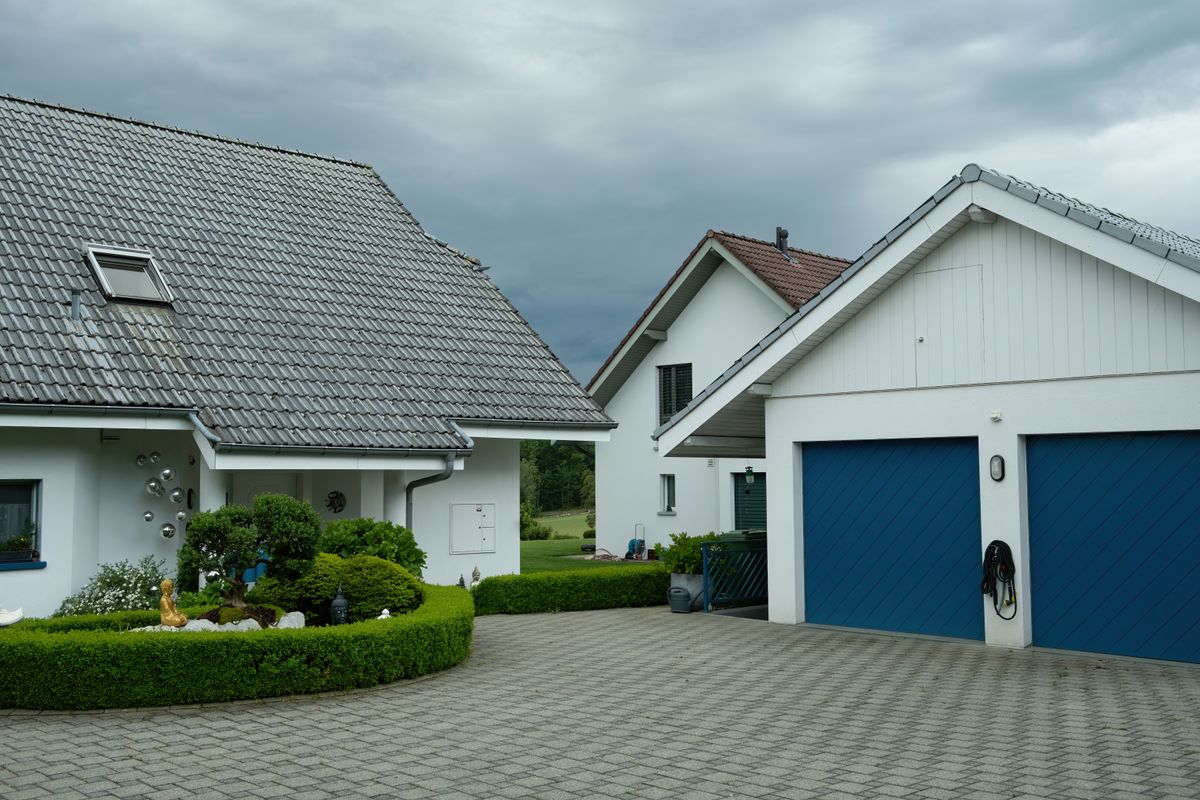
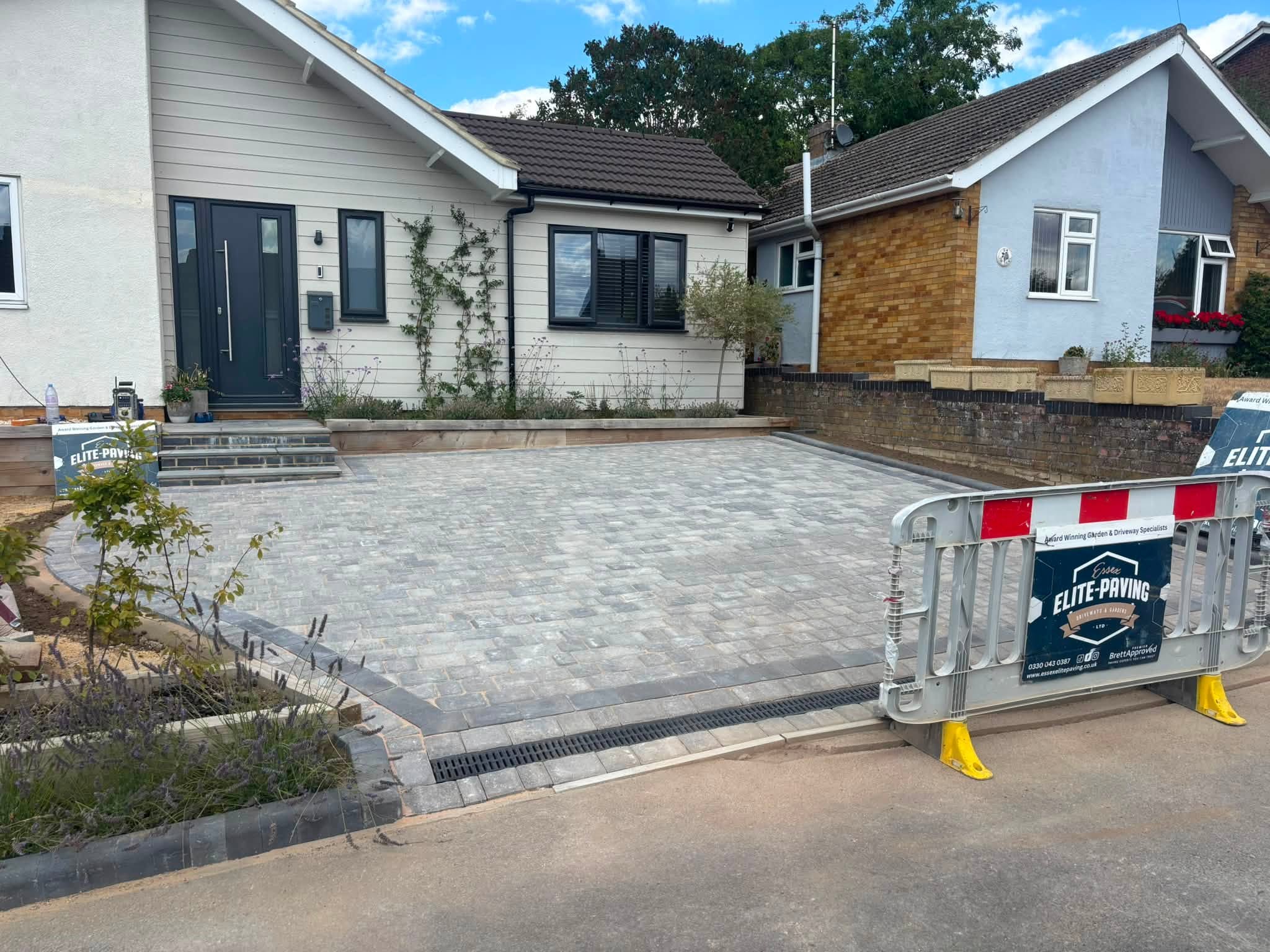
Grey block paved driveway in front of a house and garage on an overcast day

Why spring is the worst time to start looking

Every spring, demand for driveways, patios and garden work jumps at the same moment. Homeowners all see the same sunshine and have the same idea. As a result, good local firms get booked up, and anyone who rings in April often ends up waiting until later in the year.

That rush also changes the experience. Surveys get squeezed in. Decisions about block colour or edging get made on the doorstep. Meanwhile, the jobs that do get done in spring were mostly agreed months earlier, by the people who planned ahead.

So if you want your drive finished before the barbecues come out, the planning has to happen while it is still cold.

5 reasons to book a driveway in Essex this winter

1. You get first pick of the diary. Booking between November and February means you choose your build week. Wait until spring and you take whatever is left.

2. The survey is unhurried. We have time to measure properly, check levels and falls, look at where water goes now, and talk through options with you. Rushed surveys are where problems start.

3. You can see your drive at its worst. Winter shows you everything. You can see where water pools, which corner never dries and where the old base has sunk. That tells us exactly what the new drive needs to fix.

4. There is time for the paperwork. If you need a new or wider dropped kerb, that goes through Essex County Council’s highways team, and approval is not instant. Booking early means that is sorted before we arrive.

5. You can choose materials without pressure. Block paving, natural stone, resin bound or gravel all look different in the flesh. Winter gives you time to see samples, visit finished jobs nearby and decide properly.
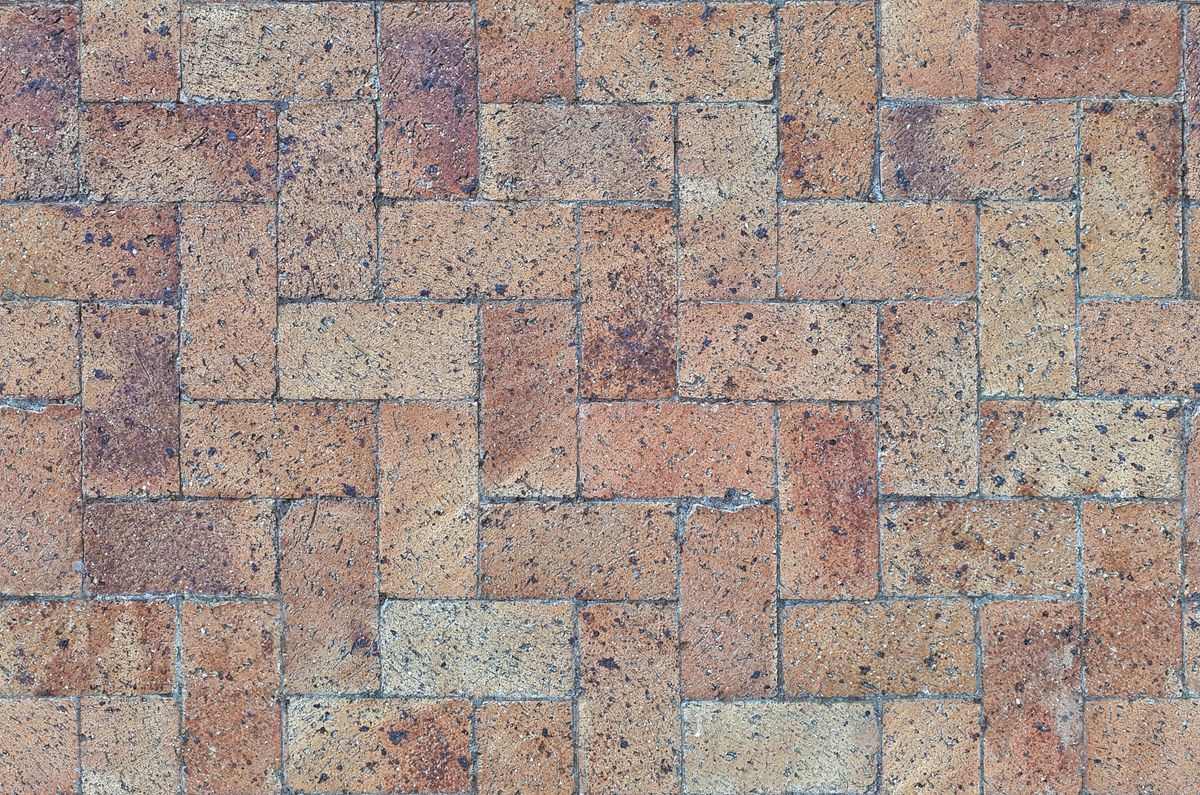
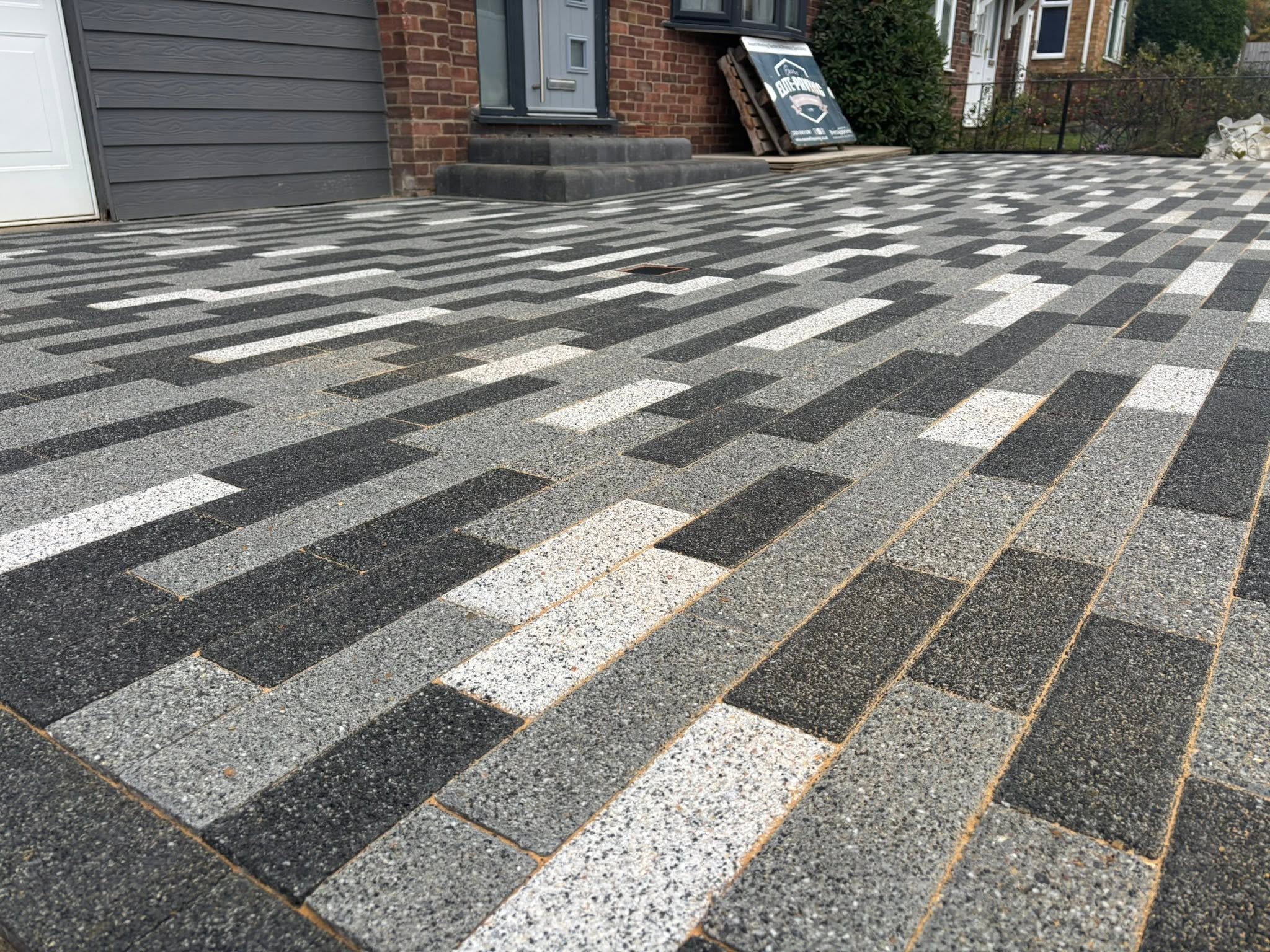
Close-up of block paving laid in a herringbone pattern

Can you actually lay a driveway in winter?

Yes, a lot of the time. This is the myth we hear most, so it is worth clearing up.

Myth: “Nobody lays driveways in winter.” In practice, a great deal of driveway work carries on through the colder months. Digging out, laying the sub-base, fitting edging and laying block paving can all go ahead on dry days. Block paving is laid on a sand bed, not wet mortar, so it copes with cool weather well.

What we do avoid: We do not lay mortar, concrete or resin when frost is forecast. Frost can weaken a fresh mortar bed, and resin bound surfaces need dry, mild conditions to cure properly. The manufacturers set minimum temperatures, and we stick to them. So on a frosty week, we switch to prep work or move your start date. We never push on and hope. If it is a patio you have in mind, our post on laying a patio in winter in Essex covers that separately.

Myth: “Booking early means paying more.” A quote is driven by the size of the job, the materials and the groundwork. Booking in winter simply gives you more choice and more time to decide.

What changes in each winter month

MonthGood forWatch out for
NovemberSite surveys, quotes, choosing materialsShorter days, so builds run to daylight
DecemberBooking spring dates, dropped kerb applicationsChristmas closures at suppliers and the council
JanuaryBlock paving and groundwork on dry spellsHard frosts stop mortar and resin work
FebruaryFinal design sign-off, early builds on mild weeksHeavy rain on clay can delay digging
March onwardsBuilds in full swingDiary fills fast, later enquiries wait longer

The Essex ground and why it matters

Much of Essex sits on clay. Around Halstead, Braintree, Witham and Chelmsford, it is mostly heavy boulder clay, while further south you get London Clay. Either way, clay holds water in winter and shrinks in a dry summer. Essex is also one of the drier parts of England, so that swing between wet and dry is real.

For a driveway, that matters more than anything you see on top. A drive on clay needs a properly dug out, well compacted sub-base, and a plan for where the water goes. Get that wrong and the surface sinks, ruts or cracks within a few years. We cover the warning signs in our post on why driveways sink in Essex.

That is another reason winter surveys are useful. When we visit in January, we see your ground at its wettest. So we can spot drainage problems that would be invisible on a dry day in June.
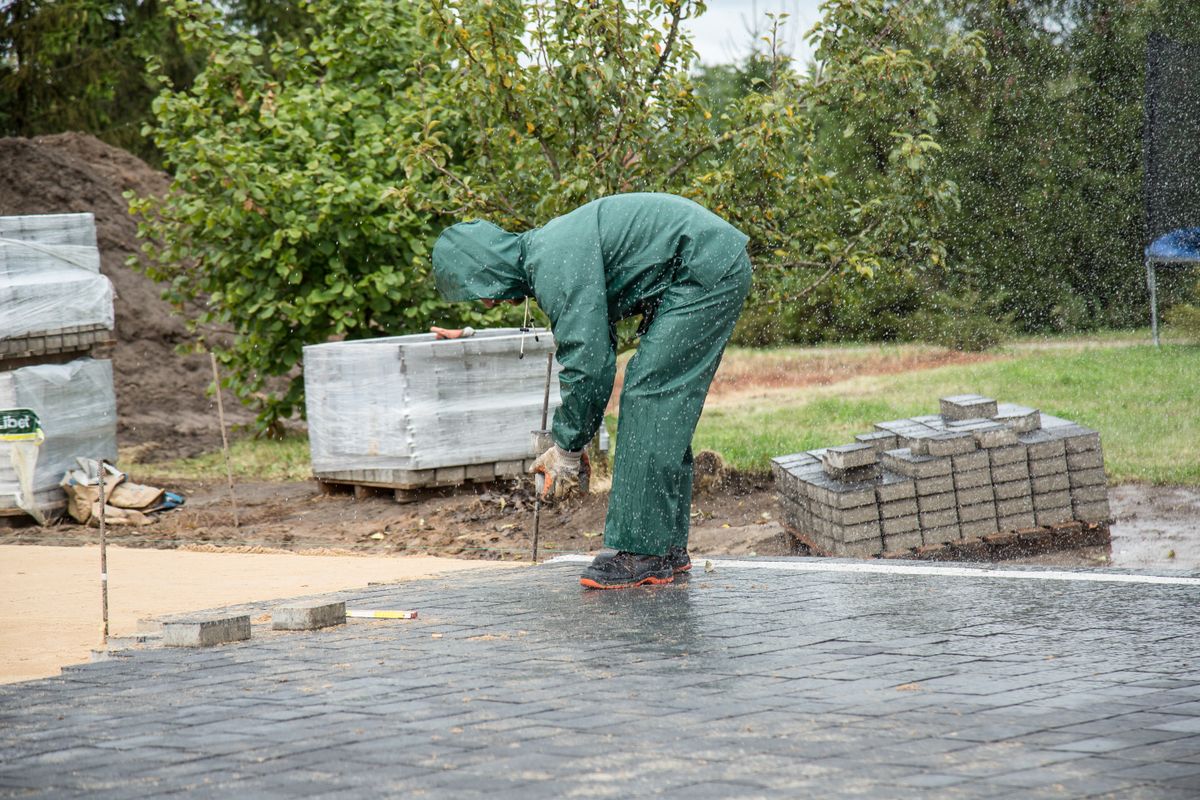
Paver in waterproofs laying block paving on a wet day, ready to book a driveway in Essex this winter

Planning rules for Essex driveways

Front driveways in England have a planning rule that catches people out. If you are paving more than five square metres of front garden with a surface that does not let water through, you need planning permission. However, if you use a permeable surface, or direct rainwater onto a lawn or border, you usually do not.

The government’s guidance on permeable surfacing of front gardens explains this in plain English. We design drives to work within it, using permeable block paving, resin bound or proper soakaways where needed. For the full detail, see our guide on planning permission for a new driveway in Essex.

If you need a dropped kerb, that is a separate application to Essex County Council. Many Essex homes, especially 1930s semis and newer estates, already have one. If yours does not, or you want it wider, booking in winter gives that application time to go through.

How to book a driveway in Essex this winter

Booking with us is simple. You get in touch, we come out and survey, and we send a clear written quote. Once you are happy, we agree a start date and take it out of the diary for you.

Before we visit, it helps to think about:

  1. How many cars you need to park, now and in five years.
  2. Whether you want to keep any lawn or planting at the front.
  3. The look you like, from crisp modern block paving to warmer natural stone.
  4. Any problems you already know about, such as puddles, cracked edges or a sloping drive.

You can see the kind of work we do on our block paving driveways page and our patios and paving page. If you are still weighing up options, our guide to block paving vs porcelain vs resin driveways and our post on what to ask before hiring a driveway company are worth a read too.

Frequently asked questions

When should I book a new driveway for spring?

Ideally between November and February. That gives time for a survey, a written quote, choosing materials and any dropped kerb application. If you leave it until March, most local firms are already busy, so you may wait longer for a start date than you expect.

Can block paving be laid when it is cold?

Yes, on dry days. Block paving sits on a compacted sub-base and a sand bed, so it is far less sensitive to cold than concrete or resin. We stop work when ground is frozen or very waterlogged, and we never lay mortar or resin when frost is forecast.

Do I need planning permission for a new driveway in Essex?

Usually not, as long as the surface is permeable or the water drains onto your own garden. You only need permission if you pave more than five square metres of front garden with a surface that sends water onto the road. A dropped kerb always needs council approval.

Is a winter driveway quote cheaper?

We price every job on its size, ground conditions and materials, not the time of year. The real benefit of a winter quote is choice. You get a proper survey, time to compare options and first pick of build dates before the spring rush starts.

How long does a driveway take to build?

It depends on the size, the ground and the surface you choose. A typical drive takes days rather than weeks once we start. We give you a clear timeline with your quote, including what we will do if the weather turns, so there are no surprises.

Ready to get your drive sorted before spring?

If you want a new driveway in place for the warmer months, now is the time to book a survey and get your date in the diary.

Laying a Patio in Winter in Essex: 6 Honest Answers Before You Book

“Can you fit a new patio in winter?” We hear that question a lot once the evenings draw in, and the good news is that laying a patio in winter in Essex is very often doable. Usually the question comes with a bit of doubt, as if we’re going to say no and tell you to call back in April.

We won’t. In fact, winter is sometimes the smartest time to get it done. That said, winter does change how we work. Frost, cold nights and wet clay all need respect, and a good installer will tell you straight when a day isn’t right.

Here are six honest answers to the questions people ask us before they book a winter patio.

The short answer: yes, you can lay a patio in winter in Essex. The key is keeping the temperature at 3°C or above while the mortar sets, including overnight, and never building on frozen or waterlogged ground. Mild, dry spells are ideal. Hard frosts mean we pause.

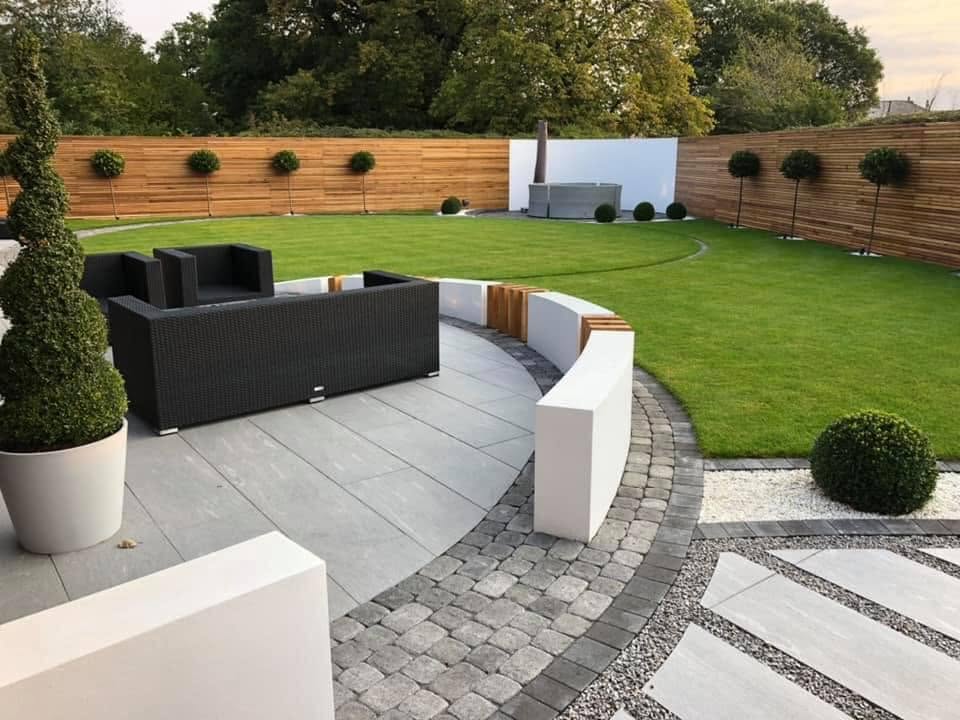
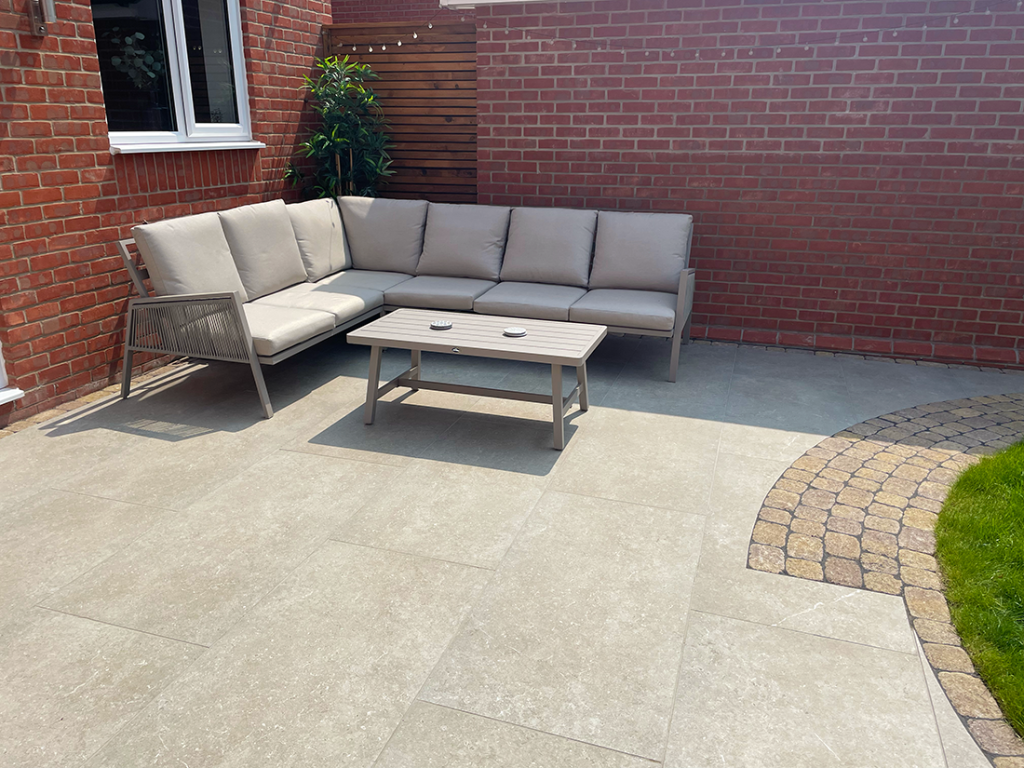
Limestone patio and circular lawn in an Essex garden, ideal when laying a patio in winter

1. Is laying a patio in winter in Essex a good idea?

In most cases, yes. Essex tends to be drier than the north and west of the UK, which helps. A dry, cold week is often better for groundwork than a wet one in spring.

Most of a patio build happens before a single slab goes down. We dig out, lay a sub-base and compact it in layers. None of that minds the cold. The careful part is the bedding mortar, because that’s what holds your paving in place for years to come.

So the real question isn’t “is it winter?” Instead, it’s “what will the weather do over the next few nights?” That one question decides whether laying a patio in winter in Essex goes ahead on a given day.

2. What temperature is too cold for laying a patio?

Marshalls advises against using traditional sand and cement mortar unless the temperature is 3°C or above. Some jointing compounds need 5°C or more. Crucially, that 3°C limit applies overnight too, because the bedding is still setting after we’ve gone home.

In practice, that means we watch the overnight low, not just the daytime high. A sunny 8°C afternoon followed by a minus 2°C night is a bad day to lay. If a frost is forecast, we cover fresh work or we hold off.

Marshalls also flags December, January and February as the months with the highest risk of hard frosts. As a result, we often plan winter patio jobs for the milder weeks either side.

3. How does Essex clay affect a winter patio?

Large parts of Essex sit on heavy clay. Clay is fine to build on when you prepare it properly. However, it holds water through the winter and can shrink back in a dry summer.

That’s why the sub-base matters so much. On clay, we make sure the depth and compaction are right, and we think carefully about where the water will go. A patio that falls the wrong way, or sits on soft ground, will show it within a year or two.

If your garden already holds water, our post on why patios hold water explains the common causes. It’s worth fixing those before any new paving goes in.

4. When is the best winter window for laying a patio in Essex?

Here’s how we tend to plan the colder months.

Month What the weather usually brings How we plan
October and November Cooler days, frost still fairly rare Usually good laying weather, so we keep going
December Shorter days, first hard frosts more likely Smaller sections, and we check the overnight forecast daily
January and February Highest risk of prolonged or hard frosts Groundwork on cold days, and we save laying for mild spells
March Milder, but the spring rush starts Busy diaries, so earlier bookings get priority

The pattern is simple. We keep the digging and sub-base moving. Then we lay the slabs when the forecast gives us a safe run of nights, which is the safest way of laying a patio in winter in Essex.

5. Which paving copes best with a winter install?

Porcelain is a great choice for Essex gardens. It’s low maintenance and handles frost well once it’s down, which makes it a popular pick when laying a patio in winter. However, it needs a slurry primer on the back of each slab to bond, and that primer has its own temperature limits.

Natural stone is a little more forgiving to lay. Even so, it needs to dry out before sealing, so in winter we often seal in spring. We’ve covered how the two compare in a cold snap in our guide to porcelain vs natural stone in an Essex winter.

Whatever you choose, it’s backed properly. Our patios come with a 10 year product guarantee from Brett Landscaping and our own 5 year installation guarantee. You can see the materials we use on our patios page.

6. Two myths about laying a patio in winter

“A patio laid in winter will crack in spring.” Only if someone lays it badly. Cracks and loose slabs come from mortar freezing before it sets, or from a soft sub-base. Both are avoidable with the right checks, decent covers and patience with the forecast.

“Porcelain doesn’t need any special care in the cold.” The slabs themselves are tough. The problem is the bond underneath. Without the right primer, used at the right temperature, porcelain can come loose. That’s an installation issue, not a material one.

Why booking a winter patio makes sense

Spring is when everyone looks out of the window and decides to sort the garden. So diaries fill quickly from March, and start dates can slip well into summer.

Laying a patio in winter in Essex gets you ahead of that. We settle your design, order your materials, and your patio is ready for the first warm weekend. Meanwhile, your borders are dormant, so there’s less to protect while we work.

If the patio is part of a bigger change, our garden design service can pull the whole space together in one plan.

Laying a patio in winter: Essex FAQs

Can you lay a patio when it’s raining?

Light drizzle is usually manageable, but heavy rain isn’t. It washes cement out of the bedding and joints, and it softens the ground underneath. We cover fresh work and plan laying days around dry spells, rather than pushing on in a downpour.

Can you lay a patio on frozen ground?

No. You can’t compact frozen ground properly, and it moves as it thaws. Any sub-base built on it will settle later. We wait for the ground to thaw, check it’s firm, and only then carry on with the build.

Does a winter patio take longer to install?

It can. Days are shorter, and we’ll lose some days to frost or heavy rain. As a result, a winter job may run a little longer than the same job in summer. We build the weather into the timeline we give you at quote stage.

Is it cheaper to have a patio laid in winter?

Prices depend on the size, the materials and the groundwork, not the season. The real benefit of winter is availability. You’re more likely to get the start date you want, and we finish your patio before the spring rush begins.

Ready to plan your patio?

If you’d like a new patio ready for spring, now is the time to talk. Contact Essex Elite Paving for a quote, or call us on 0330 043 0387.

Porcelain vs Natural Stone Patios: Which Copes Better With an Essex Winter?

Most patios look their best on the day they are finished. The real test comes a few winters later, after months of rain, falling leaves and nights that dip below freezing. That is usually when homeowners call us about flaking slabs, loose joints or a patio that has started to rock.

If you are weighing up a porcelain vs natural stone patio, it is worth understanding how each one behaves in winter. The good news is that both can last for decades in Essex. The difference is in how they are chosen and how they are laid.

How frost actually damages a patio

Frost does not harm paving on its own. Water does. When water soaks into the surface of a slab, the joints or the bed underneath and then freezes, it expands by around 9 per cent. As Marshalls explains, that expansion causes movement. Repeat the cycle every cold night through a winter and you get:

  • surface flaking or spalling on porous stone
  • cracked or crumbling pointing
  • slabs that work loose and start to rock
  • uneven areas where the bedding has been washed out

So the question is not just “which slab is frost proof?” It is “how much water can get into this patio, and where does it go?”

Porcelain: very low absorption, very frost resistant

Outdoor porcelain is fired at very high temperatures, which makes it dense and almost non-porous. Good-quality porcelain paving absorbs very little water, which is why it is so resistant to frost, staining and algae. It also keeps its colour and does not need sealing.

The catch is that porcelain is only as good as its installation. Because it is so dense, mortar does not grip it naturally. Each slab needs a bonding primer on the back and a full bed of mortar underneath. Laid on a few dabs of mortar, porcelain can sound hollow and crack under load, and water can collect in the gaps and freeze.

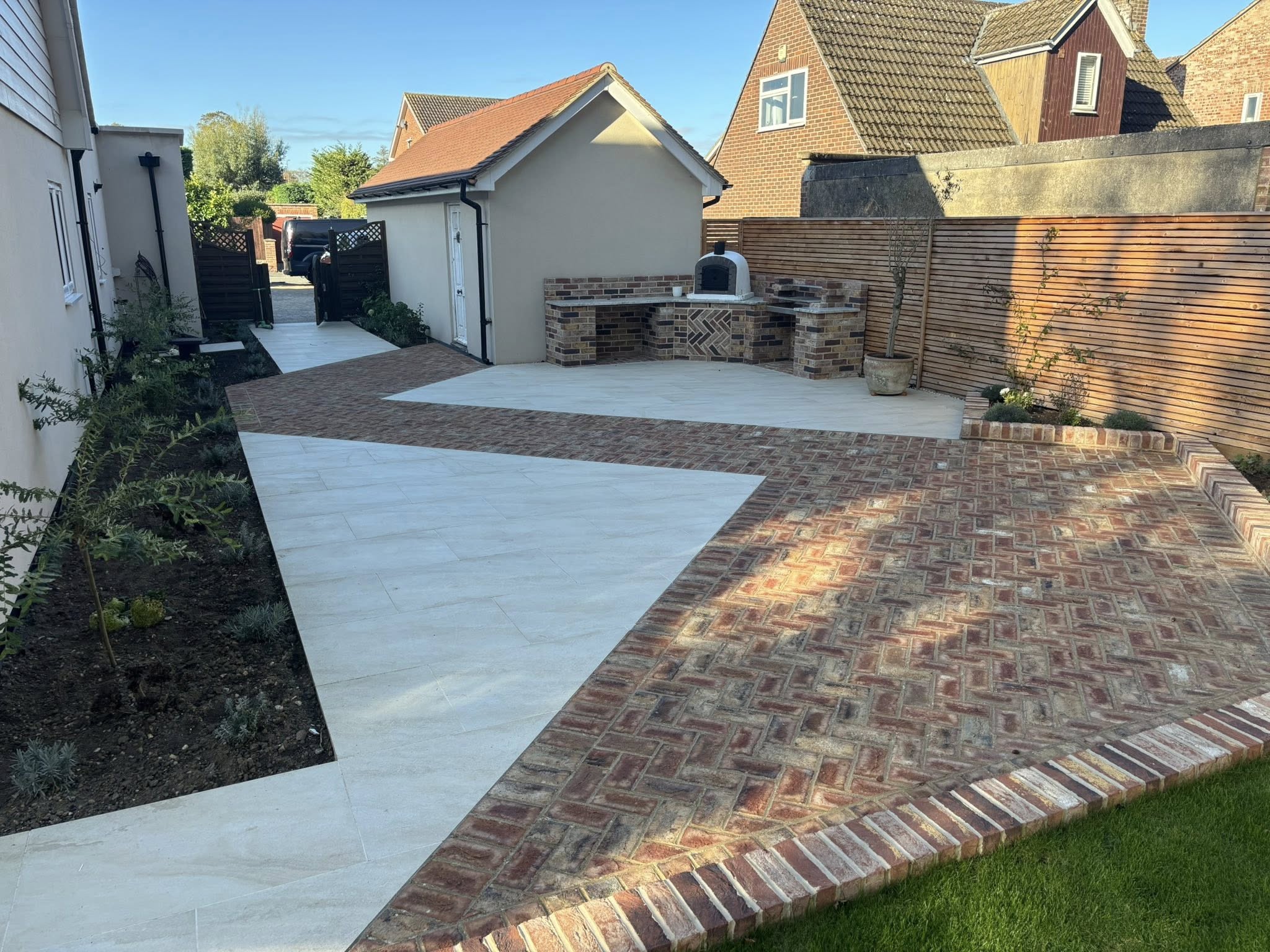
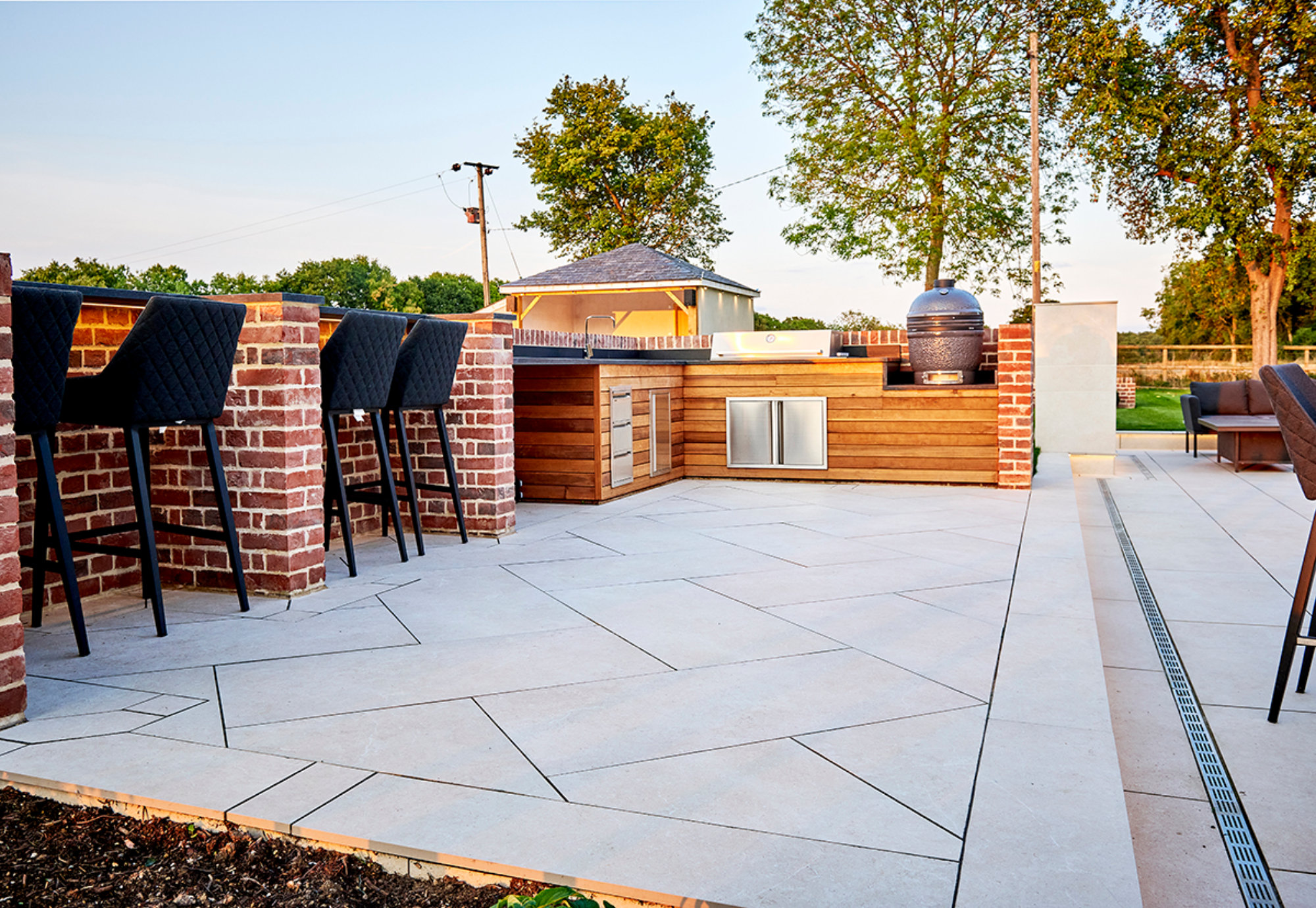
We regularly use Brett porcelain ranges, including in this garden transformation with an outdoor kitchen and pool.

Natural stone: character that improves with age, if you choose well

Sandstone and limestone bring a warmth and variation that porcelain imitates but cannot fully match. They are also more porous, so they take on water, which makes quality and installation even more important.

Well-sourced stone, cut to a consistent thickness and laid the right way up on a full bed, performs very well in UK winters. Poor-quality or thin stone is where problems start, with laminated stone sometimes flaking in its first hard frost. A breathable sealer can reduce water absorption, but it is not a fix for poor stone or poor laying. We cover the wider pros and cons in our guide to choosing natural stone for your patio.

The installation matters more than the slab

In our experience, most winter damage comes down to what is underneath. A patio that survives frost has:

  • A properly compacted sub-base that suits the ground, so nothing settles and lets water sit.
  • A full mortar bed with no hidden voids under the slabs.
  • The right falls, so rainwater runs off rather than pooling. Our post on why water pools on patios explains this in more detail.
  • Well-filled joints that keep water out of the bed.
  • Somewhere for the water to go, whether that is a border, a channel drain or a soakaway.

This is also why it pays to use an approved installer. As a Premier Brett Approved contractor, our patios come with a 10-year Brett product guarantee and a 5-year installation guarantee, and every member of our team is employed directly.

Looking after your patio this winter

  • Clear wet leaves regularly. They hold moisture and make paving slippery.
  • Keep channel drains and gullies free of debris.
  • Avoid rock salt on natural stone and pointing. Use a de-icer recommended for your paving instead.
  • Use a plastic shovel to clear snow, rather than a metal edge that can chip slabs.
  • Check before using a hosepipe or pressure washer. The Environment Agency’s latest drought report confirms that hosepipe bans remain in place for all Essex & Suffolk Water and Anglian Water customers, and in parts of the Affinity Water area.

Can you lay a new patio in winter?

Often, yes. The groundwork, sub-base and much of the build can go ahead in most winter weather. The limit is mortar, which should not be laid in freezing conditions or when a frost is forecast before it has cured. A good contractor plans the laying stages around the forecast rather than rushing to hit a date.

Booking now also means your patio is ready for spring, rather than joining the rush when the weather turns.

Choose with the next ten winters in mind

Whichever side of the porcelain vs natural stone patio debate you land on, both can give you a beautiful patio that lasts. Porcelain is the lower-maintenance choice and the most forgiving in a wet, shaded garden. Natural stone brings more character and suits period and rural homes particularly well. Either way, the build underneath decides how it looks in ten years.

Essex Elite Paving designs and installs porcelain and natural stone patios and complete garden designs across Braintree, Gosfield and the rest of Essex. If you are weighing up materials for a new patio, get in touch or call 0330 043 0387, and we will help you choose a finish that suits your home and copes with whatever winter brings.

Drought-Resistant Garden Design in Essex: 7 Smart Ideas

After an exceptionally dry summer across much of England, water-wise garden design has moved from a niche idea to something many homeowners are actively considering. In Essex, a new patio or complete garden transformation should not only look impressive. It should also make sensible use of water and cope with both dry spells and sudden heavy rain.

Here are seven ways to create a more drought-resistant garden without sacrificing style.

1. Design the paving and planting together

One of the biggest mistakes in garden design is treating the patio and planting as separate jobs. The best schemes use hard landscaping to frame planting areas, create shade and direct rainfall where it can be useful.

Natural stone, porcelain and block paving can all work beautifully, but the overall layout should include suitable falls, drainage and enough soft landscaping to stop the space feeling overly hard.

2. Choose drought-tolerant plants

Lavender, rosemary, thyme, ornamental grasses, sedums and many hardy shrubs can handle dry conditions well once established. The right choice depends on your soil, sun levels and the style of garden you want.

A professional planting plan can still deliver colour, structure and seasonal interest while reducing the amount of watering required.

3. Mulch borders to keep moisture in the soil

A layer of mulch can significantly reduce moisture loss from the soil and help suppress weeds. Decorative gravel can work well in contemporary gardens, while organic mulches can improve soil condition over time.

4. Make your patio drainage part of the design

Drought and flooding can happen in the same year. Very dry ground can struggle to absorb sudden downpours, so surface water needs somewhere to go. Correct levels, channels and permeable areas can help manage rainfall and protect the surrounding garden.

5. Harvest rainwater

If you have a shed, garage, extension or garden room, the roof can become a useful source of water. A simple water butt can provide rainwater for pots and new planting without relying entirely on mains water.

6. Reduce thirsty lawn areas

You do not need to remove the lawn completely. Instead, consider whether every square metre needs to be grass. Expanding a patio, adding a path, creating a gravel area or increasing planted borders can reduce maintenance and make the garden more interesting.

7. Build for long-term maintenance, not just day-one impact

A garden should still look good after the installation team leaves. That means choosing materials that weather well, creating accessible planting areas, using sensible drainage and making maintenance realistic for the homeowner.

Essex Elite Paving specialises in paving, natural stone, garden design and construction across Essex. By planning the paving, levels, drainage and planting as one complete outdoor space, you can create a garden that looks premium and is better prepared for hotter summers.

If you are considering a new patio, driveway or complete garden transformation in Essex, contact Essex Elite Paving to discuss your project.

Why Is My Patio Holding Water? Common Drainage Problems Explained

A small amount of water on your patio while it is raining is perfectly normal. The problem begins when puddles remain long after the rest of the garden has started to dry.

Standing water can make paving slippery, encourage algae and leave an otherwise attractive patio difficult to use. If it happens regularly, it may also point to a problem with the patio’s levels, foundations or drainage.

At Essex Elite Paving, we often find that patio drainage problems are not caused by the paving material itself. They usually come down to how the area was designed, prepared and installed. Understanding the cause is the first step towards finding a solution that will last.

Why Is Water Pooling on My Patio?

Rainwater needs somewhere safe to go. On a correctly installed patio, a subtle gradient guides it away from the property and towards a suitable drainage point, planted border or other permeable area.

When water repeatedly collects in one place, it usually means that this route has been interrupted. The patio may be too flat, one section may have sunk or the drainage system may be blocked or inadequate.

The location and shape of the puddle can provide useful clues, but it is important to look at the whole patio rather than treating the wet patch in isolation.

The Patio Has Not Been Laid with the Correct Fall

One of the most common reasons for standing water is an incorrect fall.

A fall is the slight, deliberate slope built into a paved surface. It is usually subtle enough that you would not notice it when walking across the patio, but it allows rainwater to move in the intended direction.

If the patio is completely level, water may have no natural route away. If it slopes towards the house, water can collect close to doors and walls, creating a more serious concern.

The correct gradient depends on the paving, layout and drainage strategy. This is one reason why patio installation requires careful measurement rather than simply laying slabs until the area looks level.

Part of the Patio Has Sunk

If water collects in one isolated spot, the paving may have moved since it was installed.

Patio slabs can sink when the ground beneath them has not been excavated, compacted or prepared properly. Movement may also occur if the bedding layer contains gaps or if water has begun washing fine material out from below the paving.

A sunken section creates a shallow basin where water naturally settles. You may also notice uneven joints, rocking slabs or edges that no longer line up.

It may be possible to lift and relay a limited number of slabs. However, if movement is happening across a wider area, the underlying construction needs to be assessed before the surface is repaired.

The Drainage Channel Is Blocked

Many patios use linear channels to collect rainwater and carry it away from the paved area. These channels can become blocked by leaves, soil, moss and general garden debris.

A blockage prevents water from entering or moving through the system efficiently. During heavier rainfall, the channel may overflow and send water back across the patio.

Cleaning the visible grate is a sensible first step, but debris may also be trapped further along the channel or inside the connected pipe. If the problem returns soon after cleaning, the system may need a more thorough inspection.

There Is No Suitable Drainage Point

A drainage channel is only useful if the water has somewhere appropriate to go.

Poorly planned systems sometimes collect water from the patio without providing an effective outlet. The water may be directed into already saturated soil, discharged too close to the building or sent into a pipe that cannot cope with the volume.

This can make the patio appear properly drained during light showers while problems emerge whenever there is sustained or heavy rainfall.

A professional assessment should consider both how the water leaves the patio and what happens to it afterwards.

Too Much of the Garden Is Covered with Paving

Large paved areas create more surface runoff because rain cannot soak directly into the ground. The more impermeable the garden becomes, the more important the drainage design is.

If a lawn or planted border has been replaced with paving, water that previously soaked into the soil must now travel somewhere else. Existing drainage may not have been designed to handle the additional volume.

This does not mean that you cannot have a generous patio. It means the size, levels and surrounding landscaping need to be considered together.

Using planted beds, gravel or other permeable features alongside the patio can help manage rainfall while softening the finished design.

The Patio Is Surrounded by Higher Ground

Sometimes the problem is not the patio itself. If the surrounding lawn, borders or neighbouring ground sit at a higher level, surface water may flow down onto the paving.

A patio positioned at the lowest point of the garden can effectively become a collection area. This is particularly noticeable during prolonged rain, when the surrounding soil becomes saturated and can no longer absorb additional water.

The solution may involve intercepting water before it reaches the patio, adjusting the garden’s levels or introducing drainage along the affected edge.

The Pointing or Joints Have Failed

Cracked, loose or missing jointing material allows water to move below the paving. Over time, this can contribute to instability in the bedding layer and cause slabs to loosen or settle.

Replacing the visible jointing may improve the patio’s appearance, but it will not correct movement caused by inadequate foundations. If the slabs are rocking or sinking, the construction beneath them needs attention as well.

Persistent joint failure is often a symptom of movement rather than the original cause.

Is Standing Water on a Patio a Serious Problem?

A shallow puddle that disappears soon after the rain may not require urgent work. Water that remains for long periods, repeatedly collects beside the house or covers a substantial part of the patio deserves closer attention.

Aside from being frustrating, standing water can encourage algae and organic growth. This can make the paving slippery, particularly in shaded parts of the garden.

During colder weather, water sitting in joints and damaged areas may also contribute to deterioration as temperatures change. The risk depends on the paving material, jointing and quality of the original installation.

The most important concern is water collecting against the property. If this is happening, the patio’s levels and drainage should be professionally assessed.

How Can Patio Drainage Problems Be Fixed?

The right repair depends on what is causing the water to collect. Adding a drain is not automatically the answer, particularly if the real problem is a sunken base or an incorrect slope.

Clean and Maintain Existing Channels

If the patio previously drained well and the problem appeared gradually, blocked channels are a logical place to start.

Remove leaves and debris from the grates and check whether the water flows through the system. Regular cleaning is particularly important during autumn and in gardens surrounded by trees.

Avoid forcing debris further into an underground pipe. If the blockage cannot be reached safely, professional cleaning may be required.

Lift and Relay Sunken Slabs

A small number of sunken slabs may be lifted and relaid on a properly prepared base. The surrounding levels must be checked carefully so the repaired section directs water in the correct direction.

Simply adding material beneath a slab without addressing the reason it moved may provide only a temporary improvement.

If several areas are sinking, a wider section of the patio may need to be reconstructed.

Install a Suitable Drainage Channel

A linear drainage channel can intercept water at the edge of the patio or before it reaches the house. It may also be useful where two paved slopes meet.

The channel must be installed at the correct level and connected to a suitable outlet. Its capacity should match the size of the area and the amount of water it is likely to receive.

Drainage channels should be treated as part of a complete water-management plan, not as a decorative finishing strip.

Correct the Patio’s Levels

Where the entire surface slopes incorrectly, isolated repairs are unlikely to solve the problem. The paving may need to be lifted so the bedding and levels can be reconstructed.

Although this is more involved, correcting the fall provides a more reliable result than repeatedly trying to remove puddles from individual areas.

The finished surface should move water away from the building without creating a new problem elsewhere in the garden.

Introduce More Permeable Areas

Planted borders, gravel sections and other permeable areas can help reduce the volume of water moving across hard surfaces.

These features need to be positioned carefully. Sending large amounts of water into a small border with slow-draining soil will not necessarily work.

A considered garden design can balance paving with planting and drainage so the whole outdoor space performs better during wet weather.

Can I Fix Patio Drainage Myself?

Homeowners can usually clean accessible drainage channels and remove surface debris safely. Beyond that, it is important to be cautious.

Lifting paving, changing levels or connecting new drainage without understanding the existing construction can make the problem worse. There is also a risk of directing water towards the house, a neighbouring property or another unsuitable location.

If you are unsure why the patio is holding water, an assessment can help you avoid paying for a repair that only treats the visible symptom.

How Can Drainage Problems Be Prevented on a New Patio?

Good patio drainage begins before any paving is installed.

The installer should assess the ground conditions, existing garden levels, position of the house and amount of hard landscaping planned. The patio can then be designed with suitable falls and a clear route for surface water.

Ground preparation is equally important. A stable, well-compacted sub-base and appropriate bedding system help prevent movement that can create low spots later.

The paving material also needs to suit the location. Essex Elite Paving installs patios in Essex using materials including porcelain, natural stone and concrete. The construction and drainage strategy should be tailored to the selected material and the individual garden.

Professional Patio Installation and Repairs in Essex

A patio should be somewhere you can relax, entertain and enjoy the garden. You should not have to avoid it for days every time it rains.

At Essex Elite Paving, we design and install patios with the foundations, levels and drainage considered from the beginning. If you are planning a new outdoor space, our team can help you choose an approach that looks right for your home and performs properly in the British climate.

Explore our patio and landscaping projects for inspiration, or contact Essex Elite Paving to discuss your garden.

How to Plan a Garden Landscaping Project in Essex: A Step-by-Step Guide

If you are thinking about how to plan a garden landscaping project in Essex, the biggest mistake is starting with materials before you have worked out the basics. A good landscaping project starts with a clear plan, not a skip on the driveway and a vague idea of “something nicer than this”.

Whether you want a full garden transformation or a smaller refresh, the same steps apply. Here is how to plan a garden landscaping project in Essex from the very first conversation to the final planting.

Garden landscaping project in Essex with new patio and planted borders

Step 1: Work Out What You Actually Want From the Space

Before anything else, think about how you use your garden now and how you would like to use it. Do you need more space for dining and entertaining? A quieter corner away from the house? Somewhere safe for children or pets to play?

  • List the activities you want the garden to support
  • Note which areas of the current garden are wasted or awkward
  • Think about how much of the space should be planting versus hard landscaping

This list becomes the brief you hand to your landscaping company, so it is worth taking your time over it.

Step 2: Set a Realistic Budget Before You Fall for Ideas

It is tempting to browse inspiration first and budget later, but this usually ends in disappointment. Set a realistic budget early, and build in some flexibility for unexpected groundwork, drainage or access issues.

A specialist can help you understand where your money will have the most impact, whether that is a well-built patio, quality planting or improved drainage that protects the rest of the garden.

Step 3: Look Closely at Your Garden’s Conditions

Every Essex garden behaves differently depending on soil type, drainage and how much sun or shade it gets through the day. Understanding these conditions early prevents costly changes later.

  • Where does the sun fall in the morning, afternoon and evening?
  • Does water pool anywhere after heavy rain?
  • Is the soil heavy clay, sandy or somewhere in between?

These details affect everything from where you position seating to which plants will actually thrive.

Step 4: Sketch a Layout and Choose Your Materials

With your brief and budget in place, you can start sketching how the space will work. Think about the balance between hard landscaping, such as patios and paths, and softer areas of lawn, borders and planting.

If your project also touches the front of the property, it is worth planning your garden and driveway together so the materials and style feel consistent from the street to the back garden.

Step 5: Check Access, Boundaries and Permissions

Before work begins, check practical details such as access for machinery and materials, boundary lines with neighbouring properties and whether any permissions are needed, particularly for larger structures, retaining walls or work near trees.

A good landscaping company will help you navigate this, but it helps to raise any concerns early rather than partway through the build.

Step 6: Decide on Timing

Garden landscaping in Essex can happen across most of the year, but timing still matters. Groundwork and hard landscaping often suit fine in cooler months, while planting and turfing generally do best in spring or autumn when the soil holds more moisture.

The RHS seasonal gardening advice is a useful reference if you want a general steer on when to plant, though a local specialist will know how Essex conditions affect the timing of your specific project.

Step 7: Choose a Landscaping Company You Trust

The final step is choosing who will actually deliver the plan. Look at previous completed projects, ask how they handle groundwork and drainage, and make sure you feel comfortable asking questions throughout.

A trustworthy landscaping company will talk you through each stage, from initial design to the final planting, so there are no surprises along the way.

Ready to Plan Your Garden Landscaping Project in Essex?

Planning properly before any digging starts is what separates a garden that works for years from one that needs redoing within a couple of seasons. If you are ready to plan a garden landscaping project in Essex, get in touch with our team to talk through your ideas.

Contact Essex Elite Paving today to arrange a chat about your garden.

What Is the Best Time of Year to Landscape a Garden in Essex?

Many homeowners wait until the sun comes out before thinking about their garden.

That makes sense. As soon as spring arrives, you start noticing the small patio, tired lawn, awkward levels or lack of space for outdoor dining. The problem is that by then, you may already be behind if you want your garden ready for summer.

The best time to landscape a garden in Essex depends on what you are planning. A new patio, driveway, drainage project, fencing, raised beds, turf and planting all have slightly different ideal times.

In many cases, the smartest time to start planning is well before you want the project finished.

The RHS advises that landscaping work can take place through much of the year, with autumn and winter often useful for soil preparation and spring or autumn generally better for planting.

Spring is great for finishing touches and planting

Spring is when most people want to get outside and enjoy their garden again.

It is a brilliant season for planting, turfing, adding borders and completing the final touches on an outdoor space. The weather is usually becoming more reliable and the garden starts to look alive again.

Spring can be ideal for:

  • Planting borders and shrubs
  • Laying turf
  • Updating smaller patios
  • Adding steps or pathways
  • Building raised beds
  • Refreshing tired outdoor areas

The downside is that spring is often one of the busiest times for paving and landscaping companies.

If you wait until April or May to begin looking for a contractor, you may find that availability is limited. It is much better to start conversations during winter so your project can be properly planned and scheduled.

Summer helps you see what your garden is missing

Summer is when you truly understand how your outdoor space works.

You can see where the sun falls, which areas are too hot, where you need shade and whether your patio is large enough for family gatherings. You might also notice poor access from the house, lack of privacy or nowhere practical for children to play.

Summer is ideal for deciding whether you need:

  • A larger patio
  • A dedicated seating area
  • An outdoor kitchen or entertaining space
  • Better drainage
  • More privacy
  • A new lawn area
  • Better levels and steps
  • A driveway or front garden upgrade

Summer work is absolutely possible, but planting and turfing can need more attention in dry spells. New plants and lawns need regular watering while they establish.

For larger projects, summer is often the best time to design, finalise your plans and secure a place in the diary for autumn or winter.

Autumn is one of the best times to begin landscaping work

Autumn is often overlooked, but it can be one of the best times to landscape a garden in Essex.

The heat of summer has passed, the ground is still relatively warm and there is often more natural moisture in the soil. This makes it an excellent time for many hard landscaping and planting projects.

Autumn is particularly good for:

  • Patio installation
  • Garden paths
  • Raised beds
  • Drainage improvements
  • New turf
  • Tree and hedge planting
  • Garden clearance
  • Preparing the garden for spring

Starting a project in autumn can also mean your garden is ready to enjoy as soon as warmer weather returns.

Instead of spending next spring watching contractors work in your garden, you could be sitting on a finished patio with the garden already starting to establish.

Winter can be ideal for major groundwork and paving

Winter is not necessarily a bad time for landscaping. In fact, it can be the best time to tackle the bigger structural jobs.

Projects involving excavation, patios, retaining walls, fencing, drainage, pathways and garden levels can often be completed through winter, provided the weather conditions are suitable.

Winter is a good time for:

  • Digging out old patios
  • Installing new paving
  • Building retaining walls
  • Improving garden levels
  • Installing drainage
  • Replacing fencing
  • Creating a new layout
  • Preparing planting areas for spring

There can be delays during heavy rain, frost or waterlogged ground, but a professional paving company will plan the work around conditions and keep you informed.

The key advantage is simple: by doing the major hard landscaping work before spring, you are not losing the best months of the year to building work.

Is there a bad time to install a patio?

There is no single bad time to install a patio, but some conditions can affect the schedule.

Very wet weather can make groundwork more difficult. Freezing temperatures can affect certain materials and mortar work. Extremely dry conditions can create challenges for turf and planting.

However, patio installations and paving projects can be carried out for much of the year when properly planned.

The best approach is to speak to a specialist early. They can advise you on the best time for your particular garden, access, soil conditions and project scope.

When is the best time to lay turf?

Autumn and spring are generally the best seasons for laying turf.

The temperatures are cooler than summer and there is usually more natural rainfall, which helps the turf establish. Turf can still be laid at other times, but it may need more watering and care.

If you are having a full garden transformation, it often makes sense to complete patios, drainage, levels and borders first, then lay turf at the most suitable stage.

When should you book a paving or landscaping company?

The best time to book is before you feel desperate to have the work completed.

For a garden ready for summer, start planning in autumn or winter. For a larger transformation next year, have the conversation early so you have time to make the right decisions.

If it is a new drive you are after, here is why winter is the best time to book a driveway in Essex.

This gives you time to:

  • Set a realistic budget
  • Choose materials
  • Finalise the layout
  • Plan drainage properly
  • Consider access and levels
  • Secure availability
  • Avoid rushed decisions

A new patio or landscaped garden should last for years. Taking time to get the layout and materials right is always worth it.

The best time is when you are ready to make the garden work better

The best season depends on the job, but the best time to start planning is now.

Whether you need a larger patio for entertaining, a front driveway upgrade, better drainage or a complete garden transformation, the earlier you start the process, the more choice you will have.

At Essex Elite Paving, we create patios, driveways and outdoor spaces designed around how you want to live. From paving and drainage to full garden transformations, we help homeowners across Essex create spaces that look great and work properly all year round.

To start planning your project, contact Essex Elite Paving. You can also check out our awards and see why homeowners trust us with their outdoor spaces.

FAQs

What is the best month to landscape a garden?

Autumn is often one of the best times for larger landscaping work, while spring and autumn are both strong options for planting and turfing.

Can a patio be installed in winter?

Yes. Patio installation can often be completed in winter, depending on frost, rainfall and ground conditions.

Is spring too late to landscape a garden?

No, but spring is often busy. It is best to plan ahead if you want your garden ready for summer.

When is the best time to lay turf in Essex?

Spring and autumn are usually best because temperatures are cooler and there is more natural moisture.

Should I wait until summer to contact a paving company?

No. Contacting a paving company in autumn or winter often gives you more time to plan and better availability for the following year.

Internal link suggestions:

Driveway Paving Ideas for Essex Homes (And What Actually Lasts Here)

Choosing a new driveway is one of those jobs homeowners often get wrong the first time, not because the design was bad, but because it was not chosen with Essex’s soil, weather and planning rules in mind. A driveway that looks stunning in a brochure can crack, sink or fall foul of drainage regulations within a couple of years if it is not right for the ground it sits on.

At Essex Elite Paving, we design and install driveways across Essex, from London clay areas near Chelmsford and Brentwood to the chalkier ground further out towards Colchester and the coast. Here are eight driveway paving ideas that consistently work well for Essex properties, along with the practical details most guides skip.

1. Understand Essex’s Clay Soil Before You Choose a Material

A large part of Essex sits on London clay, which expands when wet and contracts when dry. This movement is one of the leading causes of cracked driveways, particularly with poorly laid concrete or budget block paving that has not been installed on a proper sub-base.

A well-prepared foundation, typically a compacted MOT Type 1 sub-base with adequate depth, matters more than the surface material itself when it comes to long-term durability on Essex clay.

2. Block Paving Remains a Reliable Choice for Essex Driveways

Block paving continues to be one of the most popular driveway choices across Essex, and for good reason. It handles ground movement better than poured concrete because it is made up of individual units rather than one rigid slab, and it is straightforward to repair if a section does settle.

Herringbone laying patterns are particularly well suited to driveways, since they distribute the weight of vehicles more evenly than a stretcher bond pattern.

3. Resin Driveways for a Modern, Low-Maintenance Finish

Resin-bound driveways have grown in popularity across Essex over the past few years, particularly in newer developments around Basildon and Harlow. The appeal is a smooth, seamless finish that resists weeds, requires little maintenance and comes in a wide range of colours to suit period or contemporary homes.

The key with resin is installation quality. A resin driveway laid on a poorly prepared or inadequately drained base will fail regardless of how good the resin itself is.

4. Factor in Permeable Paving and Drainage Rules

Since 2008, planning rules have required permeable paving or proper drainage provision for any new or replacement driveway over 5 square metres at the front of a house in England, unless the water is directed to a lawn or border rather than the road. This applies across Essex and is one of the most commonly missed requirements by homeowners planning a DIY driveway.

Permeable block paving, resin-bound surfaces and gravel with a proper sub-base all satisfy these drainage requirements while still giving a high-quality finished look.

5. Natural Stone for Period and Village Properties

Essex has no shortage of period cottages and village properties, particularly around areas like Thaxted, Finchingfield and the Dedham Vale. For these homes, natural stone such as Indian sandstone or granite setts often suits the character of the property far better than modern paving materials.

Natural stone is more expensive upfront than block paving but tends to weather attractively over time rather than looking dated.

6. Design for Practical Parking, Not Just Kerb Appeal

Many Essex homes, particularly in commuter towns like Billericay, Rayleigh and Shenfield, need driveways that accommodate two or more vehicles comfortably. Good driveway design plans turning circles, access widths and parking bay marking or edging at the outset, rather than trying to retrofit these once the paving is down.

7. Choose Edging and Borders That Frame the Driveway Properly

A driveway without well-considered edging can look unfinished, regardless of how good the main paving material is. Contrasting block borders, natural stone kerbing or simple brick edging all help frame the space and give a cleaner transition to lawns, borders or the front door path.

8. Work with an Essex Paving Company Who Understands Local Ground Conditions

The single biggest factor in whether a driveway lasts fifteen years or needs relaying within five is whether it was installed with local soil and drainage conditions properly accounted for. A driveway plan that ignores Essex’s clay, planning rules and typical rainfall patterns is a driveway more likely to need expensive repairs down the line.

Frequently Asked Questions

Do I need planning permission for a new driveway in Essex? Most driveways do not require planning permission, but if the surface is more than 5 square metres and is not permeable or does not drain to a garden area, permission is required under national planning rules that apply across England, including Essex.

What is the most durable driveway material for Essex homes? Block paving on a properly compacted sub-base tends to be the most durable choice for Essex’s clay soil, since it flexes with ground movement rather than cracking like a single poured surface.

How much does a new driveway cost in Essex? Costs vary depending on size, material and groundwork required, though clay soil conditions across much of Essex often mean sub-base preparation is a larger part of the job than homeowners initially expect.

Is resin or block paving better for an Essex driveway? Both work well when installed correctly. Resin gives a smoother, more contemporary finish with less maintenance, while block paving is generally easier and cheaper to repair if a section is damaged.

Ready to Plan Your Essex Driveway?

Essex Elite Paving designs and installs driveways across Essex that are built to handle our clay soil and drainage requirements, not just look good on installation day. Get in touch for a free quote and site assessment.

[Book Your Free Driveway Quote

Thinking about a project like this? Get in touch with Essex Elite Paving for a free, no-obligation quote.

How to Clean Your Patio Properly in Essex

A patio should be somewhere you enjoy spending time, whether that means summer barbecues, family dinners outside or simply sitting with a coffee on a dry morning.

But after a few months of wet weather, falling leaves, muddy shoes and general day-to-day use, even a beautiful patio can start to look tired. Green algae, moss, black spots and dirt can quickly build up, especially in shaded parts of the garden.

The good news is that most patios can be cleaned and refreshed without replacing the paving. The key is using the right method for the material you have.

Manufacturer aftercare advice is clear on the basics: sweep first, test pressure washing in a hidden area, avoid excessive force and check your joints afterwards, as overly aggressive cleaning can damage paving or wash out jointing material.

Start by working out what your patio is made from

Before you bring out a pressure washer or chemical cleaner, it is important to understand what type of paving you have.

Common patio materials include:

  • Indian sandstone
  • Porcelain paving
  • Limestone
  • Slate
  • Concrete slabs
  • Block paving
  • Natural stone setts

Different paving materials need different levels of care.

Porcelain is usually one of the easiest patio surfaces to maintain because it is less porous. Natural stone, sandstone and limestone need more caution, particularly when it comes to harsh cleaning products or high-pressure water.

If you are unsure what material you have, start gently. Use warm water, a stiff brush and a cleaner that is specifically suitable for the paving.

Clear the patio before you start cleaning

The first step is simple but makes a huge difference.

Move garden furniture, plant pots, barbecues and anything else sitting on the paving. Then sweep away loose leaves, soil, weeds and debris with a stiff outdoor brush.

This lets you see the areas that actually need attention and prevents grit being dragged across the surface while cleaning.

Regular sweeping also helps prevent staining and organic build-up. Leaves and dirt left sitting on patios can trap moisture and encourage moss, algae and weeds to return.

Treat algae, moss and black spots properly

Green algae is one of the most common patio problems. It can make paving look old and neglected, but it can also become slippery when wet.

For algae, moss and lichen, use a suitable patio cleaner or biocide designed for outdoor paving. Apply it carefully, follow the manufacturer’s instructions and protect nearby lawns, planted beds and ponds.

Do not assume stronger is better.

Some harsh chemicals can damage natural stone or affect the colour of your paving. Avoid acidic products unless they are specifically approved for your patio material.

Stubborn black spots can take time to remove. It is often better to treat them, allow the solution to work and repeat if needed rather than blasting the area with maximum pressure.

Use warm water and a stiff brush for general dirt

For lighter dirt, surface marks and everyday grime, you may not need a pressure washer at all.

A bucket of warm water, a paving-safe cleaner and a stiff brush can make a huge difference. Work in smaller sections so the water does not dry out too quickly, then rinse the area with clean water.

Pay close attention to:

  • Shaded areas
  • Patio edges
  • Steps
  • Areas underneath pots and furniture
  • Paving beside lawns and flower beds
  • Places where water tends to sit

This is often the safest option for older patios, softer stone and paving with worn or loose joints.

Be careful when pressure washing a patio

Pressure washing can be an effective way to remove built-up dirt and surface algae, but it needs to be done carefully.

Using too much pressure can scar paving, chip softer stone, loosen pointing and wash out jointing compound. It can also leave stripy marks across the slabs if the nozzle is held too close or kept in one place for too long.

When using a pressure washer:

  • Start on a lower setting
  • Test a small hidden area first
  • Keep the nozzle moving
  • Use slow, controlled passes
  • Work diagonally rather than blasting directly into joints
  • Keep a sensible distance from the paving
  • Avoid maximum pressure on sandstone, limestone or natural stone

Marshalls advises using controlled movements and lower pressure on natural stone, sandstone and porcelain, as excessive water pressure can damage surfaces and joints.

Do not forget the joints between your paving

Once the patio is clean, take a look at the joints.

Pressure washing and general weathering can remove sand or jointing material over time. Empty joints can allow weeds to grow, make a patio look untidy and eventually lead to movement in the paving.

If you have block paving or a patio with sand-filled joints, you may need to brush fresh kiln-dried sand back in once the area is completely dry.

For mortar-jointed patios, cracked or missing pointing should be repaired properly before it causes further problems.

A patio can look freshly installed again once the paving is clean and the joints are neat.

Check for drainage problems

Sometimes a patio looks constantly dirty because there is an underlying drainage issue.

If water pools on your paving after rainfall, algae and moss are more likely to return. Standing water can also indicate that the patio does not have the correct falls, has settled over time or needs drainage improvements.

Cleaning will improve the appearance, but it will not solve a patio that is holding water.

If you regularly see puddles, loose slabs or areas that stay green and damp, it may be time to get professional advice.

How often should you clean a patio?

Most patios benefit from a proper clean once or twice a year.

A spring clean gets the garden ready for summer. An autumn clean removes leaves, dirt and algae before winter takes hold.

You may need to clean more regularly if your patio is:

  • Under trees
  • In a shaded garden
  • Beside a lawn or planted area
  • Used heavily by children or pets
  • Prone to standing water
  • Surrounded by fencing that limits airflow

The more regularly you sweep and treat small issues early, the easier the larger clean will be.

When a patio needs more than cleaning

A good clean can completely transform a patio, but sometimes the issue is more than surface dirt.

You may need professional help if you have loose slabs, sunken paving, poor drainage, damaged pointing or a patio that no longer works for how you use your garden.

At Essex Elite Paving, we help homeowners create patios and outdoor spaces that are practical, attractive and built to last. Whether your patio needs repaired, extended or completely replaced, our team can help.

To arrange a visit and discuss your project, contact Essex Elite Paving. You can also check out our awards to see the standard of work and recognition behind the business.

FAQs

Can I pressure wash an Indian sandstone patio?

Yes, but use low pressure, keep the nozzle moving and avoid spraying directly into the joints.

What is the best cleaner for patio algae?

Use a patio cleaner or biocide that is suitable for your paving material. Always test it in a hidden area first.

Will pressure washing remove black spots?

It can help, but stubborn black spots often need a dedicated treatment before washing.

Should I seal my patio after cleaning it?

Some paving may benefit from sealing, but it depends on the material. Always use a suitable product and follow the manufacturer’s guidance.

Why does my patio keep going green?

Shade, moisture, leaves, poor airflow and standing water can all encourage algae and moss growth.

Garden Landscaping Cost Essex

How much does it cost to landscape a garden in Essex?

It is one of the biggest questions homeowners ask before starting a garden project.

The answer depends on the size of the garden, the materials, the access and the amount of preparation needed.

A small patio or garden refresh may cost a few thousand pounds. A full garden makeover with porcelain paving, fencing, drainage, lawns and outdoor living areas can cost much more.

At Essex Elite Paving, we help homeowners across Essex create smart, practical and long lasting outdoor spaces.

What Affects Landscaping Cost in Essex?

Garden landscaping costs depend on more than the final finish.

The work underneath matters.

Ground preparation, drainage, waste removal, access and materials all affect the price.

If the garden has old concrete, poor levels, soft ground or drainage problems, it may need more preparation before new paving or turf can be installed.

This is why two gardens of the same size can have very different costs.

Small Garden Landscaping Cost in Essex

A small garden landscaping project in Essex may cost around £5,000 to £10,000.

This could include a small patio, turf, fencing repairs, gravel, edging or a simple seating area.

This type of project is ideal if you want to freshen up the garden before summer.

Medium Garden Makeover Cost in Essex

A medium garden makeover may cost around £10,000 to £30,000.

This could include porcelain paving, new fencing, lawn, drainage, raised beds, steps and a better layout.

This is ideal if your current garden feels tired, messy or hard to use.

A better layout can make the garden feel bigger and much more practical.

Full Garden Transformation Cost in Essex

A full garden transformation in Essex can cost from £30,000 upwards with some reaching over £100,000. 

This may include large patio areas, premium porcelain paving, pergolas, fencing, artificial grass, lighting, planting and water features.

For homeowners who want a true outdoor living space, this is often the best option.

Porcelain Paving Cost in Essex

Porcelain paving is a popular choice across Essex.

It looks modern, clean and premium. It is also low maintenance and easy to keep tidy.

Porcelain paving usually costs more than basic paving, but it offers a high quality finish that works well for patios, pathways and entertaining areas.

If you want a garden that feels sharp and ready for summer, porcelain paving is a strong choice.

Why Proper Installation Matters

A patio or garden may look good when first finished.

However, the real test comes later.

If the base is weak, drainage is poor or levels are wrong, problems can appear quickly.

Slabs can move. Water can sit on the surface. Edges can fail. The garden can become frustrating to use.

Essex Elite Paving focuses on proper preparation, strong installation and a finish that lasts.

Get a Garden Landscaping Quote in Essex

The best way to know the cost of your project is to arrange a quote.

Essex Elite Paving can look at your garden, discuss your ideas and give you clear advice on what is possible within your budget.

Contact Essex Elite Paving today for garden landscaping in Essex.

FAQ

How much does garden landscaping cost in Essex?

Most garden landscaping projects in Essex range from £5,000 to £35,000 plus.

What is the best paving for patios?

Porcelain paving is a popular choice because it is modern, hard wearing and low maintenance.

Can landscaping improve property value?

Yes. A well built patio, garden or driveway can improve kerb appeal and buyer interest.

Thinking about a project like this? Get in touch with Essex Elite Paving for a free, no-obligation quote.