Should I Use Porcelain Paving for an Outdoor Kitchen?

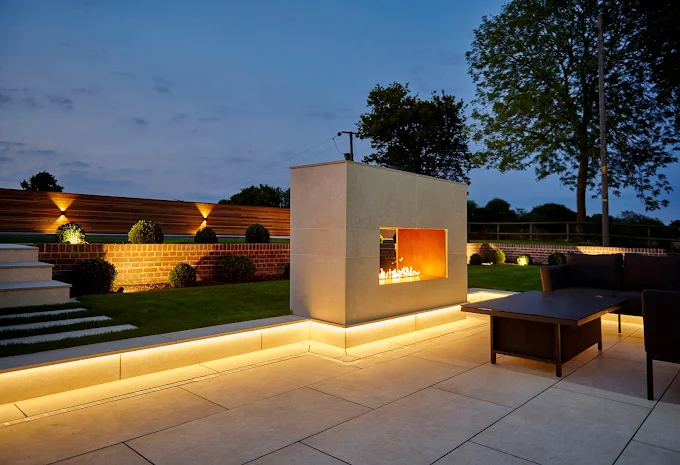
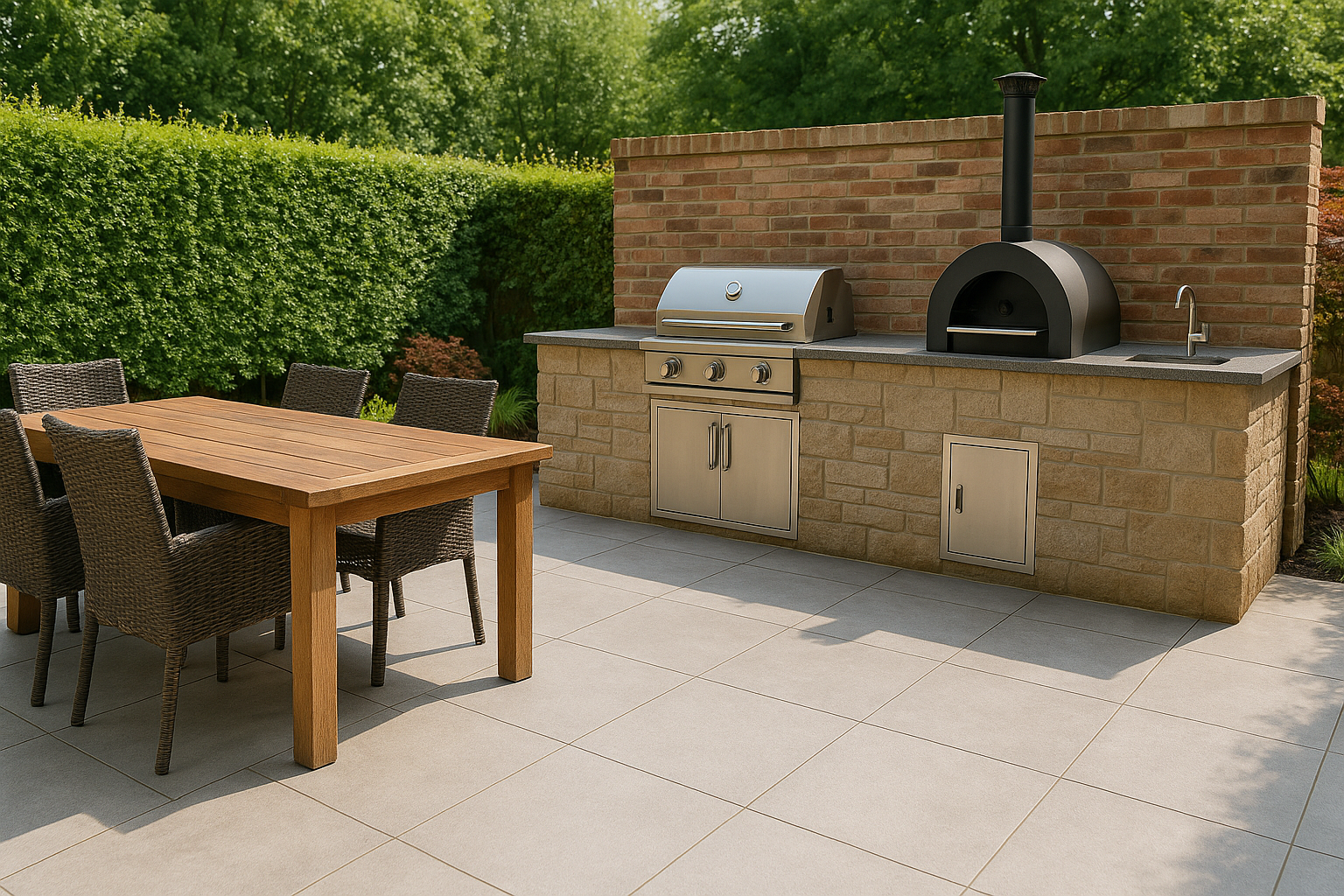
Creating an outdoor kitchen is one of the most popular ways to elevate your garden and add both functionality and luxury to your outdoor living space. However, one of the most important decisions you’ll face during planning is choosing the right paving material for the kitchen area. Porcelain paving has gained traction in recent years due to its sleek look and impressive durability. But is it the right choice for your outdoor kitchen?

In this article, we’ll explore whether porcelain paving is suitable for outdoor kitchens in the UK, its benefits and potential drawbacks, and how it compares to other paving materials.

What Is Porcelain Paving?

Porcelain paving is a type of outdoor tile made from refined clay that is fired at high temperatures to create a strong, non-porous, and hard-wearing surface. It’s designed to withstand the elements and offers a modern, clean look that suits both contemporary and traditional garden styles.

Unlike natural stone or concrete slabs, porcelain tiles have a very low water absorption rate and come in a wide variety of colours, finishes, and textures that can mimic wood, stone, or concrete.

Is Porcelain Paving Durable Enough for an Outdoor Kitchen?

One of the biggest concerns homeowners have when designing an outdoor kitchen is whether the flooring can handle the weight of appliances and the wear-and-tear of constant use. Porcelain paving scores highly in this area.

Porcelain tiles are incredibly strong, scratch-resistant, and highly resistant to staining. This makes them ideal for high-traffic areas like outdoor kitchens where spills from cooking oils, wine, or sauces are likely. Their resistance to cracking and fading also means they maintain their appearance over time, even when exposed to harsh British weather.

Is Porcelain Slip-Resistant for Cooking Areas?

Safety is crucial when choosing paving for an outdoor kitchen, particularly where cooking is involved. The last thing you want is a slippery surface near open flames or hot surfaces.

Many high-quality outdoor porcelain tiles are manufactured with anti-slip finishes that provide additional grip even when wet. This makes them a smart choice for outdoor cooking and dining areas. Be sure to look for tiles with a high slip resistance rating (usually an R11 or above) when choosing porcelain for these applications.

Can Porcelain Withstand UK Weather Conditions?

Outdoor kitchens in the UK must deal with a wide range of weather, from hot summers to rainy winters and the occasional frost. Fortunately, porcelain paving is frost-proof and UV-resistant, which means it won’t crack or fade due to sudden temperature changes or sun exposure.

Because it is non-porous, porcelain doesn’t absorb water. This prevents moisture from seeping in and freezing, which can cause cracking in some natural stone or concrete surfaces.

Is Porcelain Paving Hard to Maintain?

Porcelain paving is one of the easiest outdoor surfaces to maintain. It doesn’t require sealing like natural stone and can be cleaned with just water and mild detergent. Its non-porous surface prevents mould, moss, and algae from growing, making it ideal for busy homeowners who want a beautiful patio space with minimal upkeep.

This low-maintenance quality is especially beneficial in an outdoor kitchen, where food and drink spills are common.

How Does Porcelain Paving Compare to Other Materials?

While porcelain offers many advantages, it’s important to consider how it compares to other paving options:

  • Natural Stone (e.g., sandstone, limestone): Offers a traditional look but can be more porous and less resistant to staining. Typically requires sealing and more frequent maintenance.

  • Concrete Slabs: Affordable and strong, but less refined in appearance. Prone to staining and may fade over time.

  • Resin Bound Surfaces: Attractive and low-maintenance but less suitable for supporting heavy structures like built-in BBQs or countertops.

  • Decking: Warm and natural-looking, but not as durable or fire-resistant as porcelain.

Porcelain strikes a balance between aesthetics, performance, and longevity, making it a versatile choice for most outdoor kitchen projects.

What Style Options Are Available?

Porcelain paving comes in a wide variety of styles, including tiles that mimic natural materials like granite, slate, wood, or concrete. Whether you’re building a rustic outdoor kitchen or a modern alfresco cooking space, there is a porcelain finish to match.

You can opt for large-format tiles for a sleek, seamless look or choose textured tiles for added grip and a more tactile appearance.

Are There Any Downsides to Using Porcelain Paving?

While porcelain is an excellent choice for many outdoor spaces, there are a few considerations:

  • Installation can be tricky: Porcelain tiles require a solid sub-base and must be laid with precision. It’s not a typical DIY job and should be handled by experienced installers.

  • Higher upfront cost: Porcelain tiles can be more expensive than other paving options, but their long-term durability and low maintenance often justify the investment.

Should You Use Porcelain Paving for Your Outdoor Kitchen?

If you’re looking for a durable, low-maintenance, and stylish surface that can handle the demands of an outdoor kitchen, porcelain paving is an excellent choice. Its resistance to stains, moisture, and weather changes makes it ideal for UK gardens and cooking areas. When combined with expert installation and proper planning, porcelain paving can elevate your outdoor kitchen both visually and functionally.

Ready to transform your garden into a chef’s paradise?

Whether you’re dreaming of a built-in BBQ, a pizza oven setup, or a full al fresco dining area, porcelain provides a solid and beautiful foundation for your vision.

Essex Elite Paving specialises in premium porcelain paving installations that are perfect for your outdoor kitchen. Contact us today for a free design consultation and see how we can bring your outdoor cooking space to life — beautifully and professionally.
Outdoor Kitchens: What to Consider?

Outdoor kitchens turn patios into the heart of the garden. It is more than a built-in grill. It is a place to cook, eat and entertain without hauling trays through the house. In Essex the best outdoor kitchens are designed around our mixed weather, reliable drainage and materials that resist heat, grease and red wine. This guide explains how to plan the site, choose the right surfaces and specify a patio build that carries the weight and the wear.

1. How You Cook and Entertain

Begin with your habits. If you mostly grill for four, a compact run with a barbecue, side burner and small prep top will feel effortless. If you host big family days, plan a longer run with a sink, cold storage and a separate serving surface. Decide whether smoke and noise should sit close to the doors for convenience or slightly away so the dining area stays calm. A clear brief keeps the layout simple and the budget focused on features you will use.

2. Choosing the Right Spot on the Patio

Pick a site with easy access from the kitchen, sensible wind protection and safe routes for children and pets. Morning sun with afternoon shade is comfortable for the cook, while views back to the seating area keep everyone connected. Keep the grill away from low branches, timber fences and soft furnishings. We also allow room for a safe turning circle behind the cook, so hot utensils are not brushed as people pass.

3. Safety Clearances and Ventilation

Every appliance has a manual with minimum clearances. We always meet or exceed them, with generous space to the sides, non-combustible back panels and plenty of air flow. Built-in gas grills need ventilation to the front and base of the cabinet so any gas can dissipate. Pizza ovens and smokers run hot and can stain nearby surfaces with soot, so we specify a heat resistant splash zone behind and above the unit. If you plan a roof, choose a design that breathes. Louvres or a high ridge prevent smoke from hanging over the cook.

4. What the Patio Sub-Base Must Do

Outdoor kitchens are heavy. Cabinets, stone worktops, pizza ovens and fridges add significant point loads, and that weight needs a stable foundation. We build a rigid sub-base, then lay external grade slabs on a full mortar bed, not on dots. Levels are set flat enough for appliances to sit square, with a very gentle fall away from the house so rain and cleaning water move off the working zone. Where a kitchen run meets garden soil, we include proper edge restraints so nothing drifts over time.

5. Heat and Grease Resistant Surface

Mid tone porcelain is the most forgiving floor surface around a kitchen. It is dense, low porosity and easy to clean after oil splashes or dropped marinades. Textured, matt finishes give grip when wet and reduce glare on bright days. If you prefer natural stone, choose dense, fine textured options and seal them with a product that resists food and tannin stains. Behind grills and ovens we use non-combustible back panels. Sintered stone such as Dekton, stainless steel or well specified granite worktops cope with heat far better than timber.

6. Drainage, Water and Waste

A small prep sink is a luxury that becomes a habit. We run a frost resistant supply with an isolator inside the house so you can shut it off in winter. Waste usually ties into an existing gully, with traps to control odour and access for maintenance. At floor level, we keep joints tight, falls even and include slot drains where needed, which helps with quick hose downs after busy weekends and keeps smells in check.

7. Gas, Electric and UK Compliance

Gas work must be installed and certified by a Gas Safe engineer. For electricity we specify outdoor rated wiring, RCD protection and IP66 sockets in sensible positions for fridges, rotisserie motors and task lighting. If you plan an induction hob outside, allow a dedicated circuit. Controls and outlets sit where they stay dry, and we provide discreet service cavities so cables and hoses are protected and invisible.

8. Smoke

Cook stations benefit from light cover that softens strong sun and keeps the worktop usable in showers. Pergolas with retractable canopies, aluminium louvre roofs and clear side screens extend your season without creating a smoke box. If you are tempted by a solid roof, keep a high, vented ridge and consider a flue kit for heavy smokers.

9. Layout

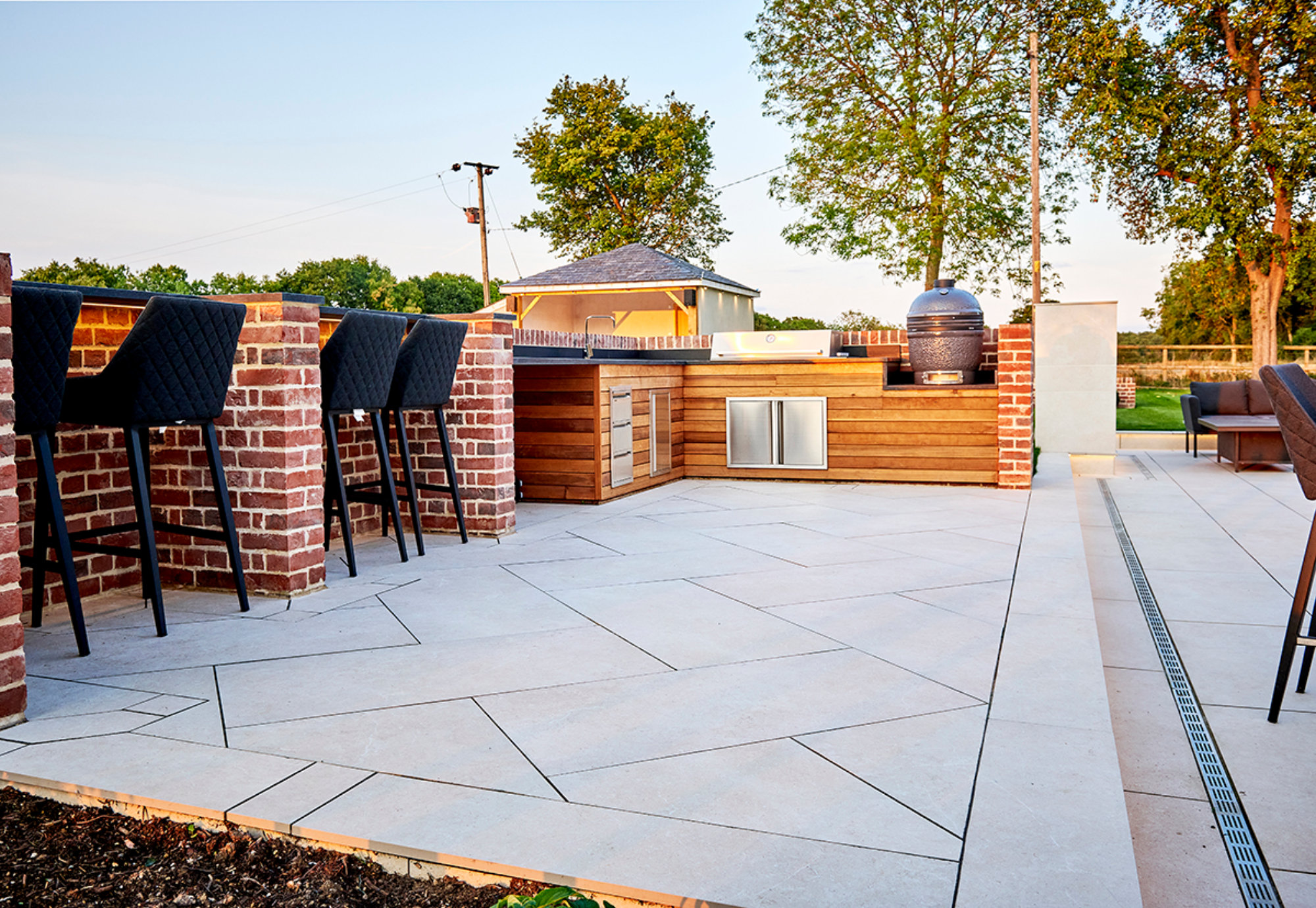
On compact terraces a straight 2 to 2.4 metre run with grill, drawer storage and a small fridge keeps everything at arm’s reach and leaves space for a table. On medium patios an L-shape separates prep from plating and gives a natural corner for a pizza oven. On larger spaces a back wall with a short island creates a social hub, with guests sitting at the island while the cook works at the back. We keep hot zones a little away from the main circulation so children are not tempted to touch controls as they pass.

10. Lighting and Power Planning

Layered lighting makes evenings feel relaxed and safe. Warm wall lights set the mood, small downlights under shelves give task illumination, and low level path or step lights guide movement back to the table. We add a couple of covered sockets at counter height for blenders or a pizza oven light and keep the main switchgear close to the house so you can isolate the kitchen in winter.

11. Storage and Winter Care

Choose weatherproof cabinets with proper drainage and stainless fixings. Soft close hardware lasts longer when rain and grit are in the mix. In late autumn, shut off the water, drain the lines and clean grills and ovens thoroughly so fats do not sit through winter. Porcelain patios usually need only a sweep and an occasional rinse. Natural stone benefits from a gentle clean and a periodic re-seal according to the manufacturer’s guidance.

Three Proven Specs We Build Often

For everyday family use we like a porcelain floor, compact built-in gas grill, sintered stone top and a short run of cabinets under a timber pergola with a retractable canopy. For the keen pizza host we add a small dome oven on a reinforced plinth with a stainless splash zone and a tall tool store close by. For all-season entertainers we pair a louvre roof, back-wall kitchen with sink and fridge, low glare lighting and a contrasting seating island that turns the cook into part of the party.

Essex Elite Paving can design and build a patio kitchen that cooks beautifully, cleans easily and looks good for years. Book a free site survey and we will map the best location, confirm drainage and services, specify heat and grease resistant materials and provide a clear fixed quote. Let us turn your patio into the most popular room in the house.

Family-Friendly Patio Design: Low-Maintenance & Safe for Kids & Pets

Families use patios differently from show homes. You need a surface that is safe for small feet and paws, simple to clean after muddy adventures, tough enough for scooters, and smart enough for weekend barbecues. This guide sets out how to plan a family patio for Essex homes so it looks great on day one and still feels effortless in five years.

What Makes a Patio Truly Family-Friendly

A family patio should be non-slip in the wet, quick to dry after rain, resistant to stains and scratches, easy to clean, and kind to bare feet and paws. The build needs to be solid so nothing wobbles, the layout should separate lively play from hot grills, and edges, steps and thresholds should be secure, smooth and well lit. When these foundations are right, you spend more time enjoying the garden and less time policing it.

The Best Low-Maintenance Surfaces

Outdoor porcelain is the current gold standard for busy households. It is dense and very low in porosity, so spills and muddy paw prints sit on the surface rather than soaking in. Choose an outdoor-rated tile with a textured finish and a slip rating suited to external use, typically R11 or similar. Mid-tone colours hide day-to-day dirt better than very light or very dark slabs and feel kinder in bright sun. Textured natural stone can also perform brilliantly when specified and installed correctly. Sawn and lightly textured granites or well-sealed sandstones bring warmth and character without the deep clefts that trap water and grit. Resin-bound aggregate is useful for side paths or a small play spur because it is smooth, permeable and paw-friendly, provided you opt for UV-stable resin for even colour. If you prefer a softer feel underfoot in a shaded nook, modern composite decking works well, as long as boards have a good wet slip rating and the subframe is ventilated so it stays dry.

Safety First: Slip, Heat and Hard Edges

Safety is about small, consistent decisions. External-grade slabs with a textured finish give reliable grip, especially around hose points or near a paddling pool. In south-facing plots, very dark paving can feel hot at midday and very pale paving can dazzle, so mid-greys and warm taupes are a comfortable balance. Details matter too. Bullnose or pencil-round copings on steps and planter edges reduce knocks, while benches and outdoor kitchen worktops with radiused corners make circulation safer for children racing around the garden.

Joints, Levels and Thresholds

Family patios earn their keep when the hidden specification is right. High-performance resin or slurry jointing resists weeds and ant runs and keeps joints neat so small wheels do not catch. A rigid base with gentle falls away from the house ensures surfaces stay even and dry, and correct door threshold detailing protects the damp proof course. Steps should have consistent risers with generous treads, and a discrete contrast on the nosing or a run of step lights helps everyone move confidently after dusk.

Zoning the Space for Real Life

Zones keep family life flowing without clutter. The main dining area belongs close to the house for easy serving and is best paired with a retractable awning or a pergola canopy to give shade at midday while allowing winter light. An active play strip, perhaps a straight run of tough paving or resin-bound aggregate, becomes the natural route for scooters and chalk art, keeping the dining area calm. A quiet corner positioned for gentle morning light works for story time or a coffee, and the grill zone sits slightly apart so smoke moves with the prevailing breeze and hot surfaces are not in foot traffic. Built-in storage, for example a bench with lift-up lids or a slimline store, keeps balls, bats and dog leads to hand without leaving them underfoot.

Pet-Smart Choices

Pets shape the brief as much as children do. Textured porcelain or fine-textured stone offers grip without being abrasive on paws. A simple outdoor tap with a short hose and a boot-wash tray near the back door makes clean-ups painless and encourages good habits. Good drainage prevents odours from lingering, and a neat edging keeps any gravel in borders from migrating onto the slabs. Planting in high-traffic areas should be both tough and non-toxic, while raised planters protect delicate plants and double as soft boundaries for play.

Lighting and Power

Layered lighting helps the space work after sunset. Warm wall lights for general ambience, small step markers for safe movement, and under-bench strips for a cosy glow create visibility without glare. A weatherproof double socket near the seating area covers bike chargers, paddling pool pumps and the occasional laptop on homework nights, and avoids trailing extension leads.

The Maintenance Routine

Low-maintenance does not mean no maintenance, but it should be realistic. A weekly sweep or leaf blow in autumn stops moisture trapping and discourages algae. After messy play or a barbecue, a quick rinse and a pH-neutral cleaner with a soft brush will freshen porcelain. Pressure washing should be occasional and gentle, using a fan nozzle at moderate pressure to protect the joints. Natural stone sealers should be reapplied as the manufacturer recommends, while porcelain usually needs no sealer at all.

Ready for a Safe, Low-Stress Family Patio?

Let Essex Elite Paving design and build a patio that is safe for children, kind to paws and simple to live with. Book a free site survey and we will map the sun, confirm drainage, recommend the best low-maintenance surface for your plot and give you a clear fixed quote. Your family gets more outdoor time and you get your weekends back.

South vs North-Facing Patios: Sun, Shade & Seating Plans

Designing a patio isn’t just about picking a slab and a size. In Essex, orientation is one of the biggest factors in how comfortable, practical and beautiful your outdoor space feels across the year. A south-facing terrace can be a sun-trap in July but harsh in glare and heat; a north-facing garden can be blissfully cool in summer yet feel flat in spring. This guide explains how each orientation behaves through the seasons, what materials and features work best, and how to plan seating so you actually use your patio every week, not just on the three hottest days of the year.

How Orientation Shapes Light (and Life)

At our latitude, the sun tracks low in winter and higher in summer, rising roughly in the east and setting in the west. South-facing patios receive the strongest, longest midday sun; north-facing spaces get mainly ambient light and brief, low-angle sun in early morning or late evening at midsummer. That difference drives temperature, glare, planting choices, and how long your furniture stays dry after rain. Get orientation right, and your patio will feel “set and forget” comfortable; get it wrong, and you’ll constantly chase shade or warmth.

South-Facing Patio

A well-planned south-facing patio is your all-day entertainer from late spring to early autumn. You’ll enjoy warm, bright conditions from late morning through late afternoon, perfect for long lunches, outdoor kitchens and loungers. Drying times are faster after showers, which helps with maintenance and algae control, and solar gain means evening meals can still feel comfortable without heaters in shoulder seasons.

The trade-offs are heat build-up and glare at the height of summer, plus sun bleaching on some materials and fabrics. Without shade, porcelain or pale limestone can dazzle around midday. Wind exposure also matters: in open plots the combination of heat and breeze can dehydrate planting and make parasols unstable without proper bases or fixed structures.

Seating Plans

Think in zones rather than one big rectangle. Place the primary dining area close to the kitchen doors to reduce back-and-forth, ideally under a pergola or retractable awning that gives midday shade but lets low winter sun in. Create a secondary “late-sun” lounge further from the house to catch the softer afternoon light, perfect for a small L-shaped sofa and a fire bowl. If you’re adding an outdoor kitchen, locate it to the side of the dining zone so smoke exits with prevailing breezes and doesn’t blow across seats.

Small south-facing patios benefit from vertical shade: slim pergola posts, climber-covered screens and a narrow planting strip with tall ornamental grasses soften glare without consuming floor area. For families, reserve a shaded corner for a play mat or sand table, ensuring anti-slip paving and smooth transitions between levels.

Best Materials and Finishes

Choose surfaces that manage glare and heat gracefully. Mid-tone porcelains (light greys, warm taupes) balance brightness and comfort better than very pale whites or polished finishes. Textured, matt porcelain helps underfoot grip and reduces visual glare. If you love natural stone, look for sawn sandstone or lightly textured limestones in mid tones; sealers with UV protection will slow colour fade. Dark pavers absorb heat and can be great for evening use, but may feel hot under bare feet at midday, so use them in shaded sections or mix with lighter borders.

North-Facing Patio

North-facing patios shine when the rest of the garden is too hot. They’re naturally cooler and more even in light, which is ideal for reading, working from the garden and relaxed conversation. Furnishings last longer with less UV fade, and you’ll rarely need heavy shade structures. In dense urban plots, north-facing spaces can also feel pleasantly private.

The drawbacks are slower drying and limited direct sun outside midsummer. That means algae and black spot can be more persistent, and winter can feel gloomy unless you plan lighting well. Planting should favour shade-tolerant species, and your material choices should resist damp staining.

Seating Plans

For comfort, design two micro-zones that track the day. Place a compact “morning coffee” perch nearer the eastern edge to catch any early sun. Your main seating, sofas, a reading chair, or dining for four to six, can sit centrally where light is even and cool. If you have space, add a small raised pad or step-out deck on the western edge to catch the last of the evening rays in midsummer. North-facing patios pair beautifully with soft furnishings, cushions, throws, outdoor rugs, because they’re less prone to bleaching; just allow for fast-dry covers and storage to handle showers.

Best Materials and Finishes

Prioritise durability in shade. Dense porcelain with a light-to-mid tone is low-porosity and resists algae better than many open-grained stones. If you prefer natural stone, sawn and flame-textured granites or well-sealed sandstones are practical choices. Avoid highly riven stones with deep crevices that harbour moisture. Choose a jointing system suited to damp conditions; resin-based or high-performance slurry joints often outlast basic brush-in sands in shaded, wetter areas.

Drainage, Levels and Door Thresholds

Orientation influences how quickly surfaces dry, but good drainage is non-negotiable either way. We design falls away from the property, maintain correct DPC clearances at thresholds, and specify channels or discreet slot drains where needed. On south-facing patios, adequate falls reduce glare from standing water; on north-facing patios, they’re your first defence against algae growth by limiting puddling. If your garden slopes, consider a two-level solution: a sunny upper breakfast terrace and a lower, shaded lounge, linked with wide, well-lit steps.

Shade, Shelter and Wind Management

South-facing spaces need planned shade more than umbrellas pulled out in a panic. Fixed pergolas with retractable canopies, timber slat screens, and vine-covered frames create dappled light that’s comfortable for eyes and skin. In breezier Essex plots, louvre roofs and glass wind screens can extend your season without turning the patio into a greenhouse. North-facing spaces often benefit more from shelter than shade: a slimline awning keeps drizzly days usable and protects furniture, while clear polycarbonate over a side return lets light in but sheds rain.

Planting for Microclimate

Use planting to tune temperature and privacy. On hot, south-facing terraces, combine evergreen structure (bay, pittosporum, small olives) with airy grasses and long-flowering perennials to break up heat and soften edges. Consider a climber-covered pergola, wisteria, grapevine, or star jasmine, for scent and seasonal cover. In north-facing gardens, lean into texture and foliage contrast: ferns, hostas, heuchera and hydrangea thrive, while variegated species brighten shade. Raised planters improve drainage and define seating nooks without building high walls.

Lighting and Heating

South-facing patios generally need less heat but more layered lighting to counter long twilight glare. Low-level step lights, under-bench strips and warm white wall lights keep things comfortable without attracting insects to a single bright source. North-facing patios benefit from a couple of discrete heat sources, a compact electric infrared heater near the main seats or a sheltered fire bowl for weekend evenings, plus generous ambient lighting so the space feels welcoming after dusk in shoulder seasons.

Two-Stop Garden

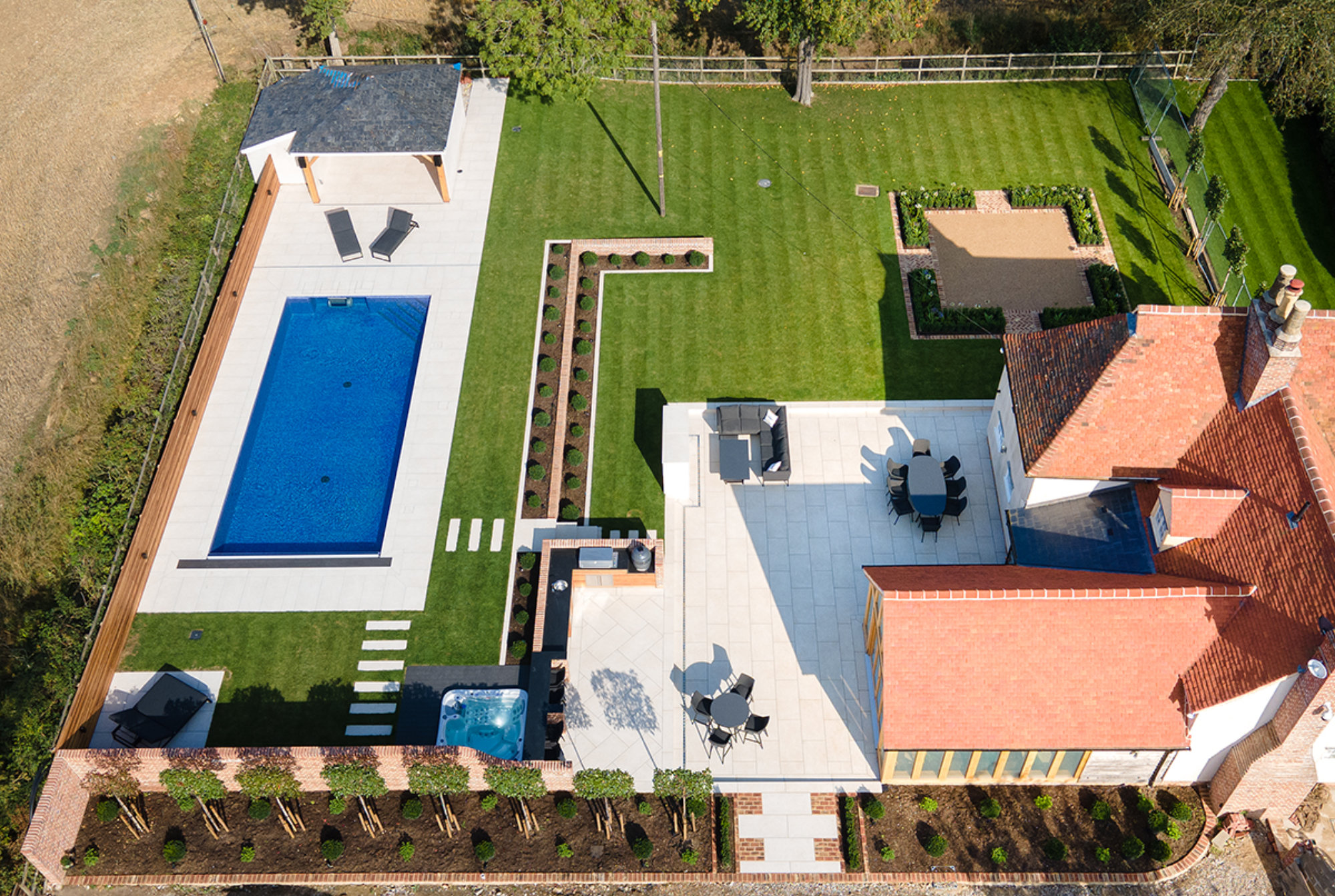
If your plot allows, the most flexible solution is two smaller terraces with different aspects: a sunny breakfast nook and a cooler evening lounge. A simple path, stepping stones or a central lawn connects the two. This approach spreads wear, gives you seasonal choice and often looks better than one oversized slab of paving. We frequently pair a light mid-tone porcelain near the house with a contrasting, slightly darker stone or sett detail further out for a more intimate feel.

What We Recommend

When Essex Elite Paving visits, we look at how the sun moves across your plot in spring and summer, neighbouring boundaries that cast shade, prevailing winds, privacy lines, and door thresholds. We’ll discuss how you actually live: do you eat outside on weeknights, work on a laptop outdoors, host big family gatherings, or want a quiet morning spot with coffee? From there we shape your layout, choose materials that behave well for your orientation, and specify drainage, lighting, and shade so your patio performs year-round.

Ready to Plan a Patio?

Whether your garden faces south, north, or you’re not sure yet, our design-and-build team can map the sun, solve drainage, and create seating zones that work with your lifestyle. Book a free site survey with Essex Elite Paving, and we’ll propose a tailored layout, material palette and fixed quote to suit your aspect and budget. Let’s build a patio that feels “just right” in June and October.